Tag: personal-growth

  • Three lessons from Poor Richard’s Almanack

    As a younger man just getting my start in the world of work, I found myself wanting more structure and consistency than I was used to having. I had just finished a modified trade school experience amid the covid lockdowns and there was still a lot of uncertainty – there would be a lingering sense of it for quite some time. Not knowing what to do with my undeveloped welding skills, I got the first decent job I could find in manufacturing.

    At the time, I was living in the basement room of a house I shared with two roommates. I desperately wanted better but was happy to have my basic needs met. Each day, I went into work to spool cables and solder connector pins.  It was not glamorous, but it wasn’t the horrific stress and strain I thought manufacturing would be, either. There were many nice people and even some friends to be had there. But I couldn’t shake the feeling that I was wasting my time. I was impatient for a better life in which I had the resources I needed to enjoy myself, to pursue meaningful goals, to create projects and art, to travel and meet people, to provide opportunities for others and to help them when I could. But I felt stuck, dragging myself into work each morning to continue the same drudgery as the day before. It never let up and it never meant anything more. I wondered how to get out.

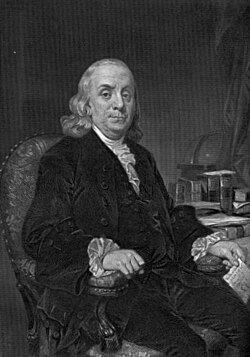
    I started to listen to the sayings and proverbs of Poor Richard’s Almanac, written by Ben Franklin, while I worked on my cables. Maybe it was the sayings themselves or the soothing voice reading them but for whatever reason, they brought me great comfort. They would talk about work, money, time, or virtue and I was slowly convinced that these messages represented the way forward. I wanted structure and consistency and here were these proverbs preaching just that. I wanted a plan to move forward, to get out, and these one-or-two-line sayings helped me take the first steps. Below are some of the lessons I learned from the sayings of Ben Franklin, collected from Poor Richard’s Almanac.

    Lesson One: Don’t Waste Your Time.

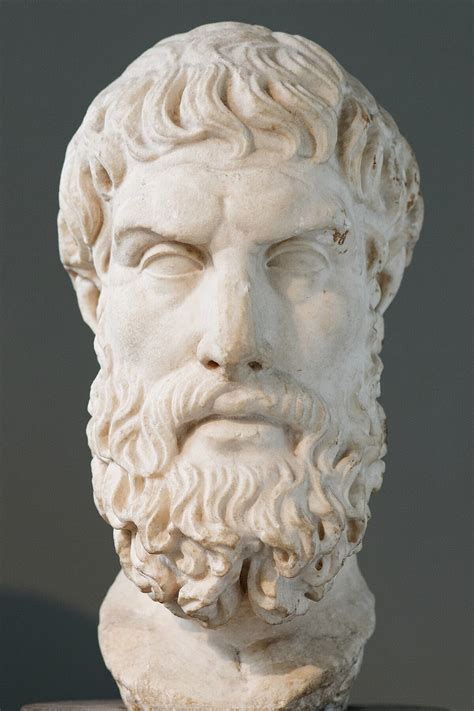
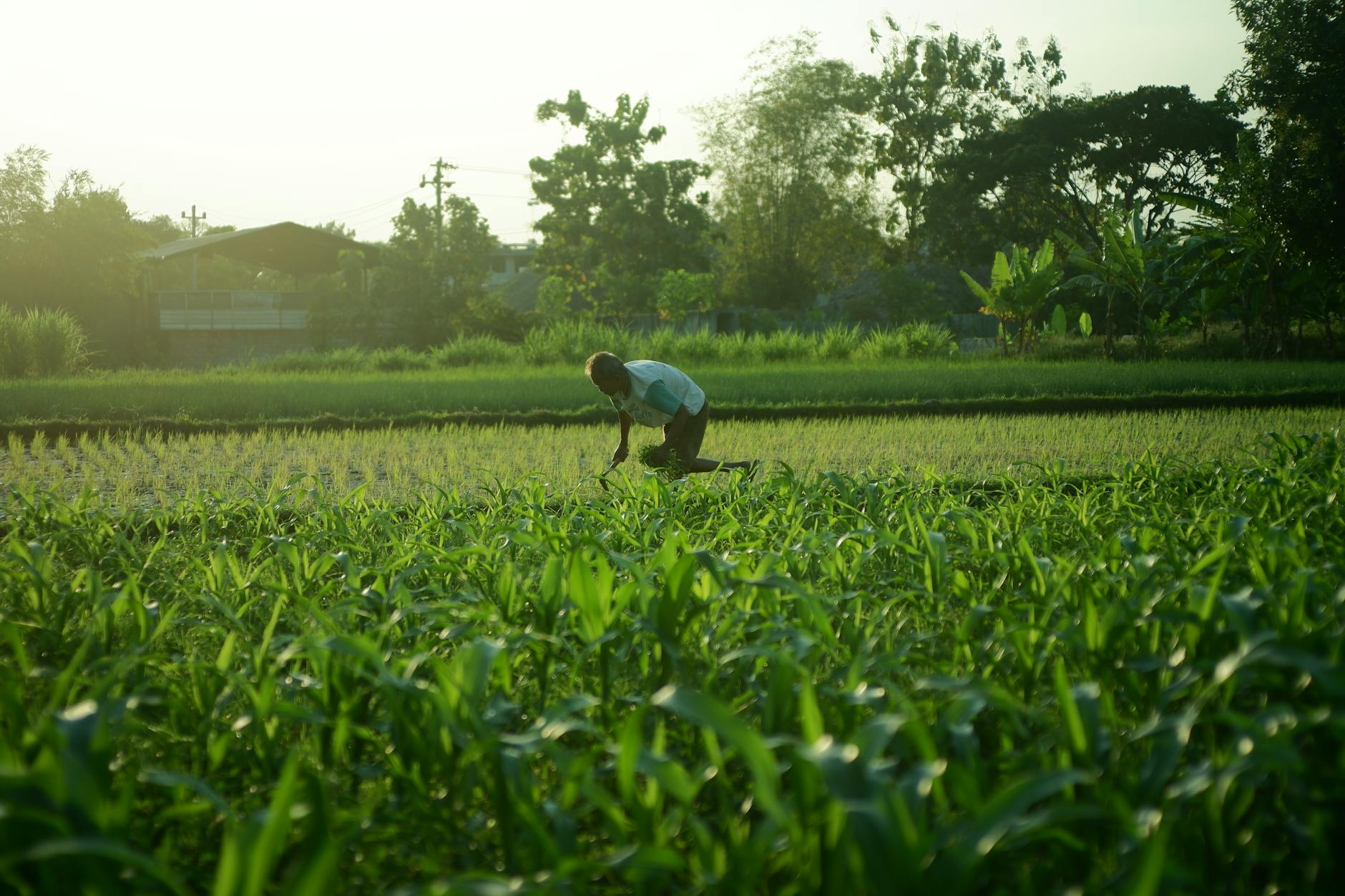
    Photo by Ono Kosuki on Pexels.com

    Do you love life? then don’t squander time, for that is the stuff life is made of.

    Poor Richard’s sayings about time are geared toward encouraging productive activity. It is painfully true that we only have a limited time allotted to each of us. He encourages us, “To be up and be doing and doing to the purpose.” The idea is to find your purpose and to use your time as efficiently and as wisely as you can. I wanted that daily trip into work to mean something, I wanted those forty hours of work to work for me. I realized that how I spent my time would deeply affect the trajectory of my life. The paycheck I got every two weeks represented eighty hours of my life that I had exchanged and I wasn’t going to let it be for nothing.

    This may be more relevant than ever with the tools we have at our disposal to waste our time in ever more ingenious ways. With our wasted time, could we learn an instrument, a second language? Could we write a book, play a sport, connect with community? There is always a minute here or there that will be wasted or lost to distractions, but the point is to find your focus again and to take up the responsibility of using your time productively –whatever that means for you and your specific purpose.

    It is at this point we must understand a kind of paradox. We want to live today because tomorrow is not promised to us, but we must act as if tomorrow is promised if we are to make the best decisions today.

    Every day I went into that dead-end job, I felt I was wasting my time. I wanted to live now. What if all the time I had left was wasted going to work, doing these pointless things? But I also realized that in order to build a life that included all the wonderful things I wanted – travel, connection, creativity – I had to believe in the future first and begin to build a life that looked nothing like my dream in order to eventually attain it. In short, I began to believe in effort, patience, and productivity. Though I still struggle with these things, I have made them a practice of my daily work.

    Lesson Two: Work can be a wonderful – and helpful – part of your life.

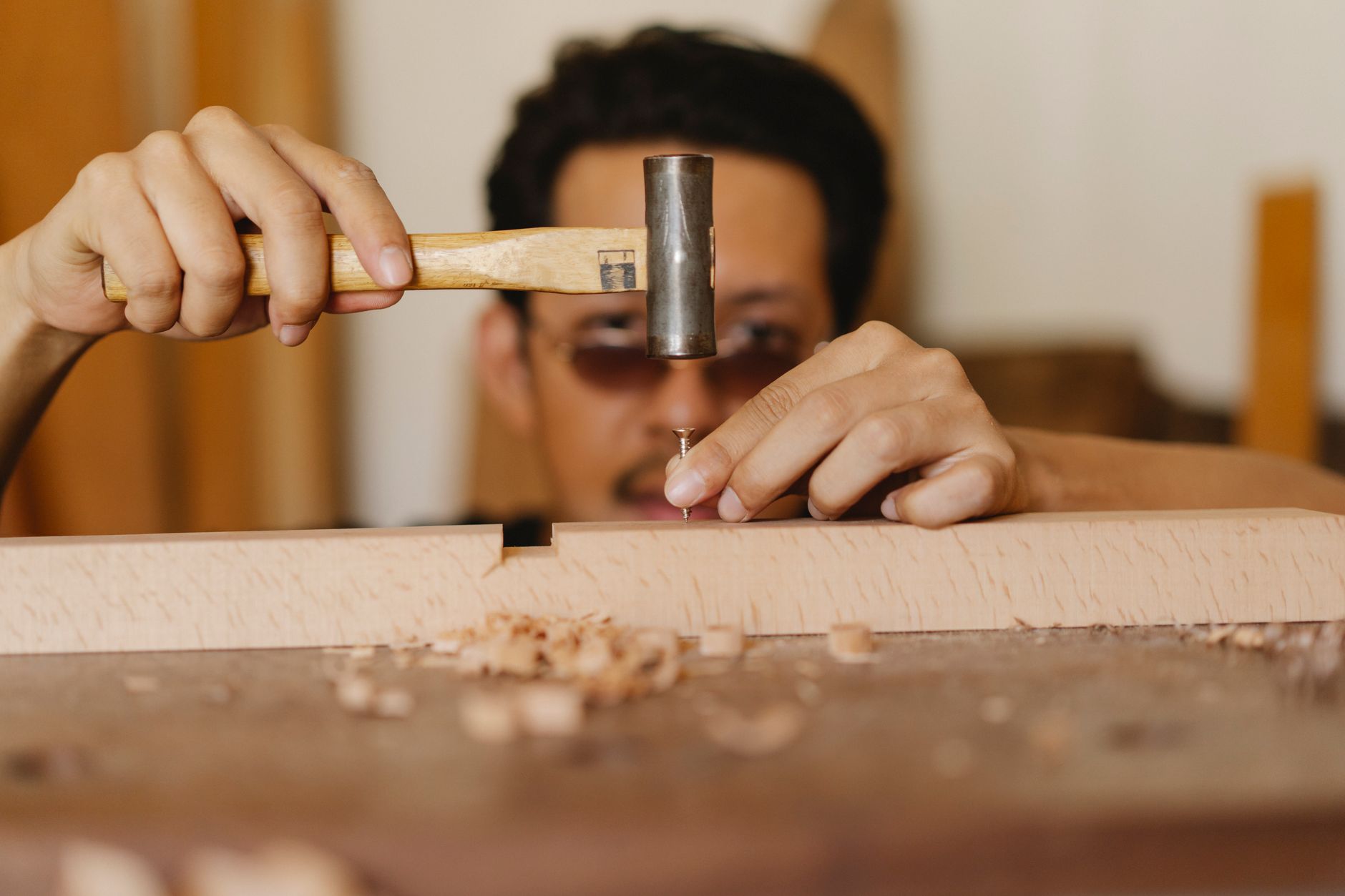
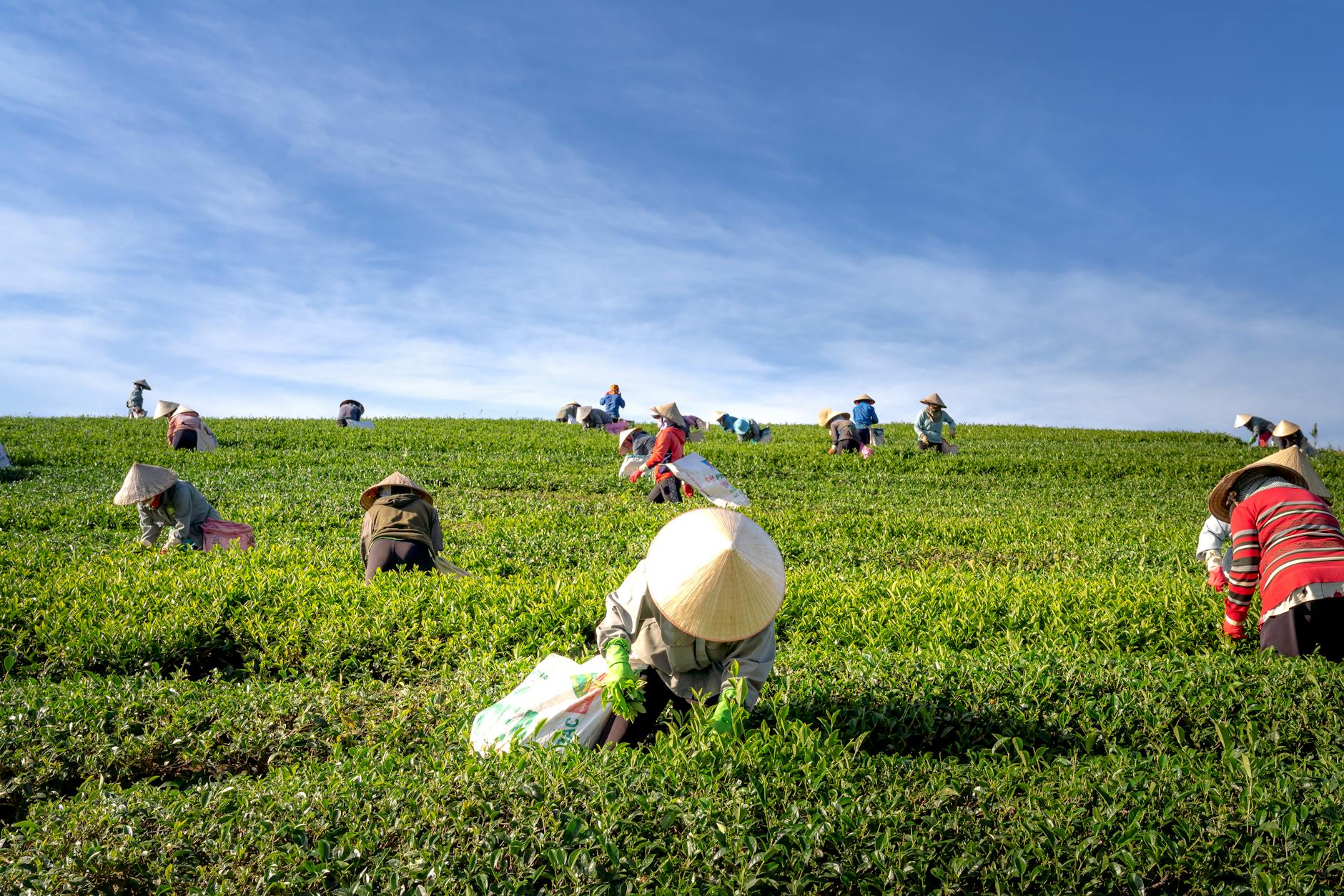
    Photo by Meaw Zara on Pexels.com

    Industry need not wish.

    Poor Richard’s admonitions usually include some mention of industry or hard work. He constantly reassures us of the ability of our work to sustain our lives — “Keep thy shop and thy shop will keep thee.”

    Our relationship to work can become somewhat murky and impersonal. Work can also be an integral part of life, meaning it is integrated into your life, rather than kept at arm’s length. In the past, a craft was so deeply personal that someone’s surname was their profession, and they taught their children and their children’s children their craft, weaving it into the identity of generations.

    It is more common nowadays to have an ambivalent or even negative relationship towards one’s work. For many now, work is just some place they go to in order to pay the bills. Resentment can build toward work when you have no intentional relationship with it.

    I would say it is a rare case that someone will find their most meaningful work right off the bat. For many of us, we will have to wade through several years of dead-end or pointless jobs to make ends meet before we find a mission or calling that inspires us to pursue something greater. I started working in a movie theater at sixteen. I have been a painter, a plumber, a grocery clerk, a nomad farmer. I have worked in manufacturing for several years. It has all continued to develop the skills I need to do the work I really want to do. The moment where everything clicks still eludes me, but I work toward that every day.

    Even after this click occurs, it can be quite some time before you feel effective and competent enough in your work for it to be truly rewarding. But the point is to seek this out. I have known many who wallow in their pointless jobs until they retire. They make sure to remind you that they are not where they want to be. But they also don’t do anything to work toward a more purposeful calling. Their association with work is that it is terrible, something to avoid, and they never pursue a work that can help them fulfill their potential while also providing meaning and order for others. “The trade must be worked at and the calling well-followed,” Poor Richard says.

    As I mentioned, I wanted work to mean something and that means coming away from it having gained more than I’ve lost. I had lost time and energy that I would have rather put towards other things but that meant I wasn’t going to let my gain be for nothing. At times, I denied the things I wanted briefly in order to work towards the things I wanted the most. I followed Poor Richard’s wisdom, “It is easier to suppress the first desire than to satisfy all that follow it.” No small contribution to my eventual success was going to be scoffed at, or, as Poor Richard says, “Many a little makes a nickel.”

    The path is not straightforward or easy but with consistency, we can begin to make our moves.

    Lesson Three: Consistency will take you where heroic effort can’t.

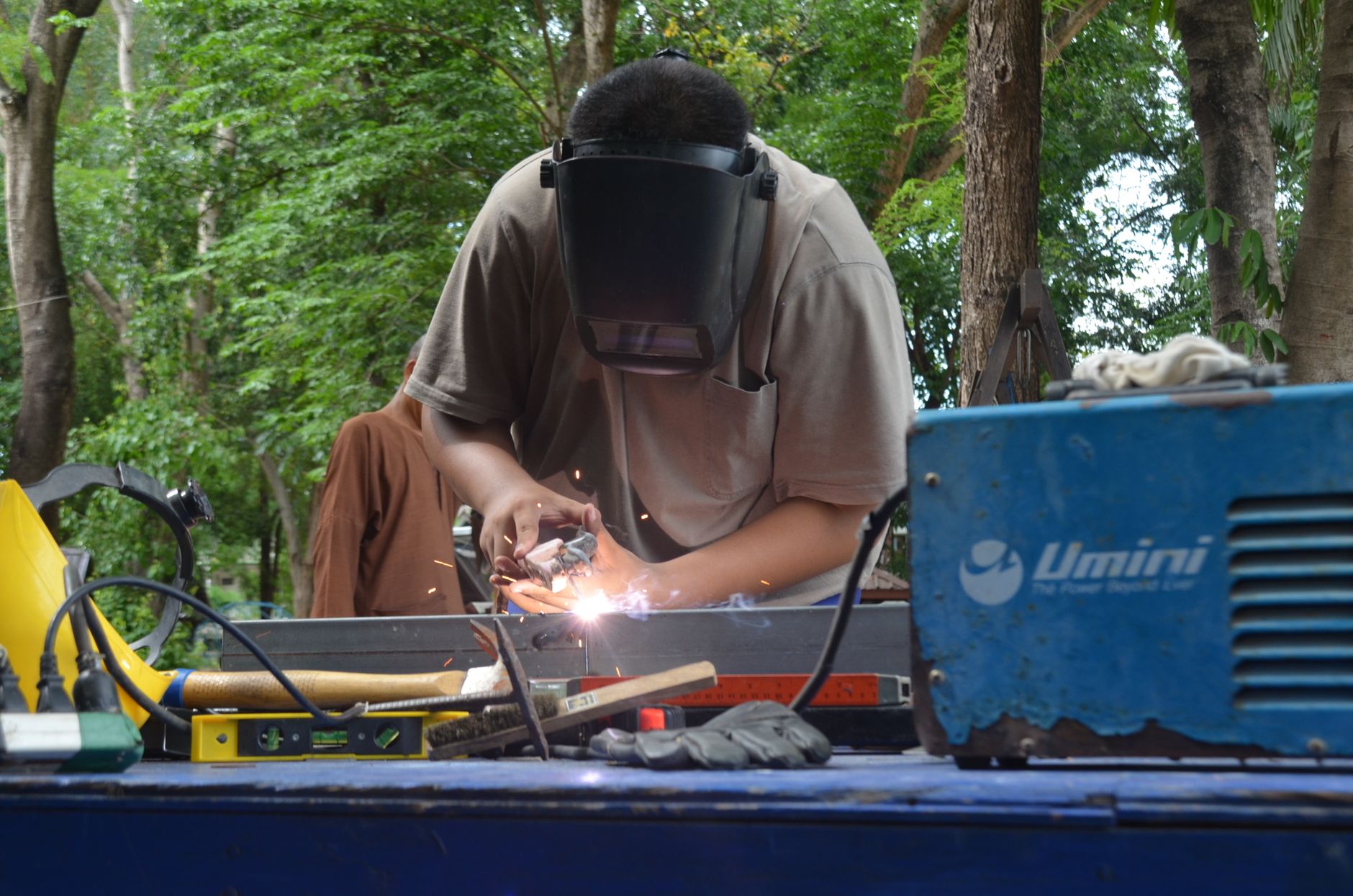
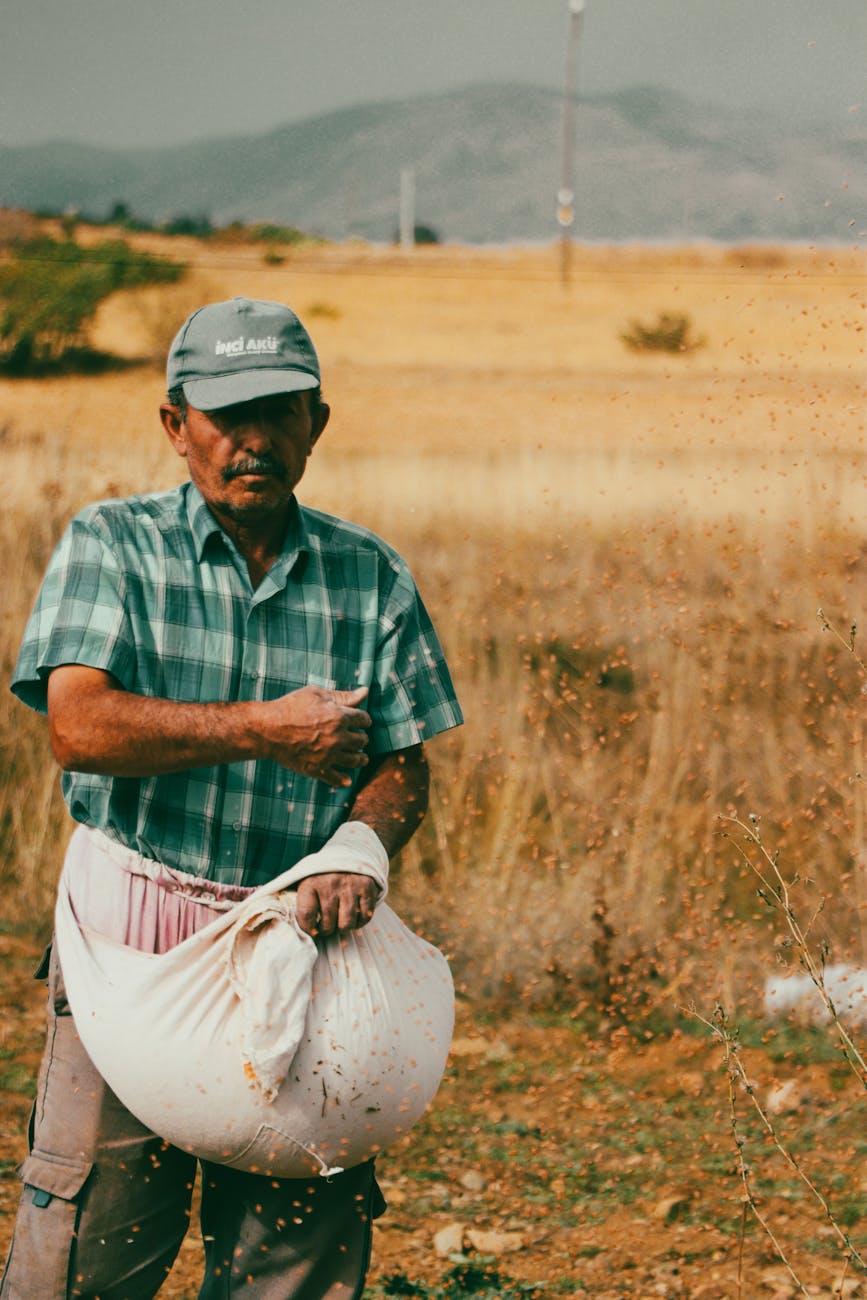
    Photo by Thanh Long Bu00f9i on Pexels.com

    Little strokes fell great oaks.

    Huge undertakings and overnight successes can be enticing concepts to those who have much ambition and not enough patience. You want to work eighty hour weeks, make a massive return on a penny stock, win the lottery, strike it rich. The consistency and patience of daily work can hardly be made to be romantic compared with the richness and aesthetic of the overnight success. But the possibilities of consistency are always far greater than the short-lived win. They are certainly greater than waiting for luck to come save us.

    Once again, Poor Richard’s world involved plain, regular people making a life for themselves and for others. Many of his sayings preach patience, contentment, and consistency as the means to attain the good life.

    It is part of the Goodwork philosophy that we must find work that appeals to our nature and our purpose in order to live a fulfilled life. In this philosophy, work is not merely a means to an end, it is not something you use just to get enough money in order to do what you really want. Work should be a purposeful and meaningful act which allows you to express something deeply personal about yourself and your relationship to the world. And when that is not available, we should be steadily working to get to that point.

    I knew if I quit that awful job, I would find myself in another one not long after. As long as I refused to engage with the inconvenience of work I did not like, I would never have the resources or skills to find the work that was meant for me. I looked to the summit of the mountain, but I had no respect for the first steps, so I never moved. I wanted to fall into my ideal rather than work up to it. Having found respect for the process, one can begin to move within its channels. But we must be content to be beginners, humbled by new experiences every day, in order to attain to the level of masters.

    I am a huge fan of any philosophy that includes some element of continual improvement. Why? Because goals, aspirations, and ambition that swell beyond actionable steps can actually demotivate you and cause you to disengage from the work that could be accomplished now. This initial work is inevitably linked to the end goal, a goal which may be massive, and they are connected by a thread called continual improvement. We have to learn to be okay with being beginners. We have to believe that any progress is good progress. We have to believe that we have a hand in our future, that we have the power to continually improve our circumstances so that we may do the most meaningful work we can. For ourselves as well as for others, we make the slow trudge of consistent effort. Or, as Poor Richard says, “Vessels large may venture more but little boats should stick near shore.”

    Poor Richard sends a message throughout his collection of wisdom to be steady, settled, and careful in your daily business. This involves attention to detail and diligence in attending matters that we sometimes have impatience or disdain for. For it is true, “a small leak will sink a great ship.”

    Work hard, don’t spend more than you make, and use your time wisely. As you can see, these lessons are the same basic lessons we have always known and the same lessons we have always had to relearn as time goes on. While today we may have several schemes or hacks for going about these goals, Ben Franklin through his pseudonym Poor Richard, preached virtues like diligence, frugality, and industry as intentional, daily practices that would do more for people than their short-lived schemes. While I was certainly impatient when I was younger, I realize now that the best accomplishments come from the long game, the committed endurance of an entire life.

    Thanks for reading!
  • Midsummer

    Growth is not the Goal

    We have arrived at the longest day of the year once again. With this and other astronomical events, I have always enjoyed a meditative pause on the passage of time, the slow evolution of the season, and the deepest expressions of nature that pour out of every corner of the landscape and become like recognizable features of a close friend. You can get to know them and see their moods and traits returning each year and you can celebrate them and love them. This year is no different. We celebrate the longest day, bask in the generous helping of summer light that we are given, and meditate on what this means in itself as well as what it means for the months to follow.

    As I look around the landscape, it is overflowing with lush, green foliage that felt almost impossible just four months ago. The longer days give themselves to an abundance of activity and you can see it in the faces of the people you pass in the street. We are all going somewhere, doing more and planning more, overwhelmed with the possibility a day holds which in winter was only a hope. Getting off of work in the dark does not really add to one’s motivation but when the sun is out until nearly nine o’clock, suddenly the day takes on so much added possibility, you are inclined to take advantage of the extra time. We may never think of it consciously but our internal clock, the wisdom of our bodies, remembers the cold and dark nights that last so long in December and January. It is urging us to explode with as much life as the landscape in which we find ourselves.

    It is important to stop and note this longest day, as it will soon recede into late summer evenings, and then the crisp days of fall and finally, like a rising tide, the winter will come again. On some level, we must remember how constraining the winter can be so that we can more fully enjoy this summer season. Here we stand on the precipice and then we begin our descent again. It is a time filled with meaning and passion, here for us to act upon if we wish.

    Nature provides us with many relevant metaphors for the living of our own lives and this season is no different. I looked around the garden the other day and realized an important truth about gardening and life in the midst of June: everything is overgrown and almost heavy with life and yet this pinnacle of light, the solstice, cannot be considered the end goal of all this abundant growth. It is almost as if this outpouring of growth is the construction of an intricate background which will decorate the stage on which the real activity will begin to play itself out. Growth is not the goal. Growth alone cannot be called fulfillment or purpose. Growth plays toward the fulfillment of some purpose outside of itself.

    Imagine a fruit tree which becomes dense with new branches and leaves in the spring and is thickly covered over with this life in midsummer. How ridiculous it would be to assume that this was the endgame of all its efforts. Of course, we can say, this is only really the beginning of its effort to set flower and fruit, to become full and heavy by late summer and fall, to strive toward that all-out expression called the harvest. The attainment of perfect expression for a flower is its open blossom, not the thicket of greenery it produces in late spring. All of its effort in unfurling its leaves is effort towards attainment beyond itself.

    Growth is not fulfillment. There is a distinct difference between growth in certain areas of your life and finding purpose and fruition in these areas. The difference can be seen in the separation of quantitative measures of success and qualitative measures of success. You may have a lot of money – this is quantitative success. But what are you able to do with it? This would be a qualitative answer. You find yourself overwhelmed with activity and surrounded by relationships but what meaning do they create, where are they going? You build muscle in the gym, maybe lose a certain amount of weight, you can lift XYZ number of pounds in deadlift or squat. But what do you do with your bodily strength and energy? Perhaps you build strength for its own sake but the purpose of strength can be found in some applied good, some purpose outside of itself.

    This midsummer, I wanted to meditate on the idea of measuring success qualitatively. We may be used to ascribing a numerical value to our successes because this is the easiest way to measure progress but our progress can also come in how we feel in our daily lives. We can progress in how much we believe in the effectiveness of our effort, how much we believe in our internal locus of control, essentially. The timid and unsure novice attains experience, mistakes, and finally the proof of their success. The evidence of their success may be quantitative but the fact that they proved to themselves that they were capable is a qualitative measure. We could measure our success by the level of independence we have created – perhaps we no longer rely on the day job and we can do more of the things we are truly passionate about.

    A huge achievement for many would be creating a life you do not want to escape from. This cannot easily be measured quantitatively, it is a quality of life we must find for ourselves. Doing the same things with much less fear and anxiety is a massive success but a success which is not as easily measured as money in the bank. Some people work tirelessly for tangible wealth while others work to be free from the people their circumstance has forced them to be around. Being able to live your life around the people you most want to spend your time with is a win. It means bliss and success.

    Often, we get entranced by convincing others we are doing well rather than pursuing the goal of actually doing well. Proving our success often inherently comes with quantitative measures, as that is the easiest thing for others to see and measure in someone else’s life. How many houses and cars do you own, how many vacations do you take, the list goes on. But the qualitative measures are personal, refined, and difficult to express to someone other than ourselves. Contentment, fulfillment, purpose, a commitment to life, a meaningful connection to others. These can be difficult to measure and difficult to display for others but if you have a trained eye you can recognize it right off.

    When you see someone truly living in their purpose, there is a hint of it in every move they make and every word they speak. They live comfortably in the world and in their skin without being affected by others or by circumstance. Their preternatural calm is infectious, their faith in themselves and their abilities dyes every moment with confidence. If you are attuned to this reality, you can see it. If you are not, you will be looking for some sign or quantity with which to measure their success and you will lose yourself to irrelevant calculations.

    This is not meant to discard quantitative measures entirely. This is not meant to dismiss growth in all areas of your life as unimportant. Because growth, in us as in the natural world, must precede the deeper expressions we can make of ourselves. As I mentioned earlier, the massive undertaking of growth in spring, at its height in midsummer, sets the stage for the fruition that takes place later. Wealth, strength, influence, connection – growth in these areas is an important prerequisite for qualitative success in other areas. Having resources means having more options, which means having the responsibility of impactful decisions. Having strength and energy means having the ability to do more for others and for yourself, it means developing a larger bandwidth for life, to show up for your relationships and community in ways you would not be able to if you had not developed such a capacity.

    The key is not to get caught up in quantitative measures for themselves. This is where shallow obsession with cash comes from. This is where the hyperfixation on GDP and economic growth comes from, separated from wellbeing and standard of living. Steroid abuse, diet trends, quick fix drugs, destructive mentalities tied to impersonal measures of success. The capacity for growth, turned back on itself rather than aimed at a higher purpose, becomes malignant and inhuman. The human world has gotten caught up in the sterile and numerical measures of life and, as such, no qualitative success can develop from it.

    On its surface, this may appear to be a strange lesson to learn from the longest day of the year. It feels necessary and relevant. Though we may not consider it, we are still deeply embedded in the ebb and flow of the seasons and the solar year, the movements of nature and its deepest lessons. It still informs our lives though we think we are separate, above it. Looking back to the shortest day, looking ahead to the dwindling light of fall and winter, we find ourselves on the precipice, bathed in light and potential. We take the time and the growth for granted, but we do not have to.

    Meditations and Practice

    Where in your life have you done well quantitatively? Net worth, athletic achievements, awards and accolades, number of projects completed? Now, what measures of qualitative success can you find? Which seem the most important to you and which would you like to cultivate over the next year, from this longest day to the next? How would you like to feel in the next year and what would you like your life, relationships, and work to look like?

    Practice the balance between quantity and quality. Try to make the same or more money (quantity) doing more meaningful work (quality). Try to spend more time (quantity) pursuing goals of connection, awareness, and authenticity (quality). Incorporate more projects or activities in your life which do not have a clear return or measure and see what qualities you can find in them or in yourself which you had not experienced before.

    Thanks for reading!
  • Masanobu Fukuoka

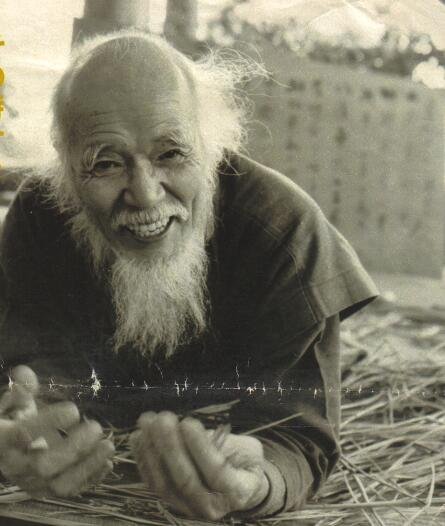
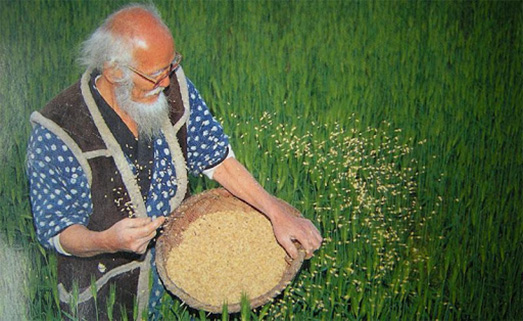
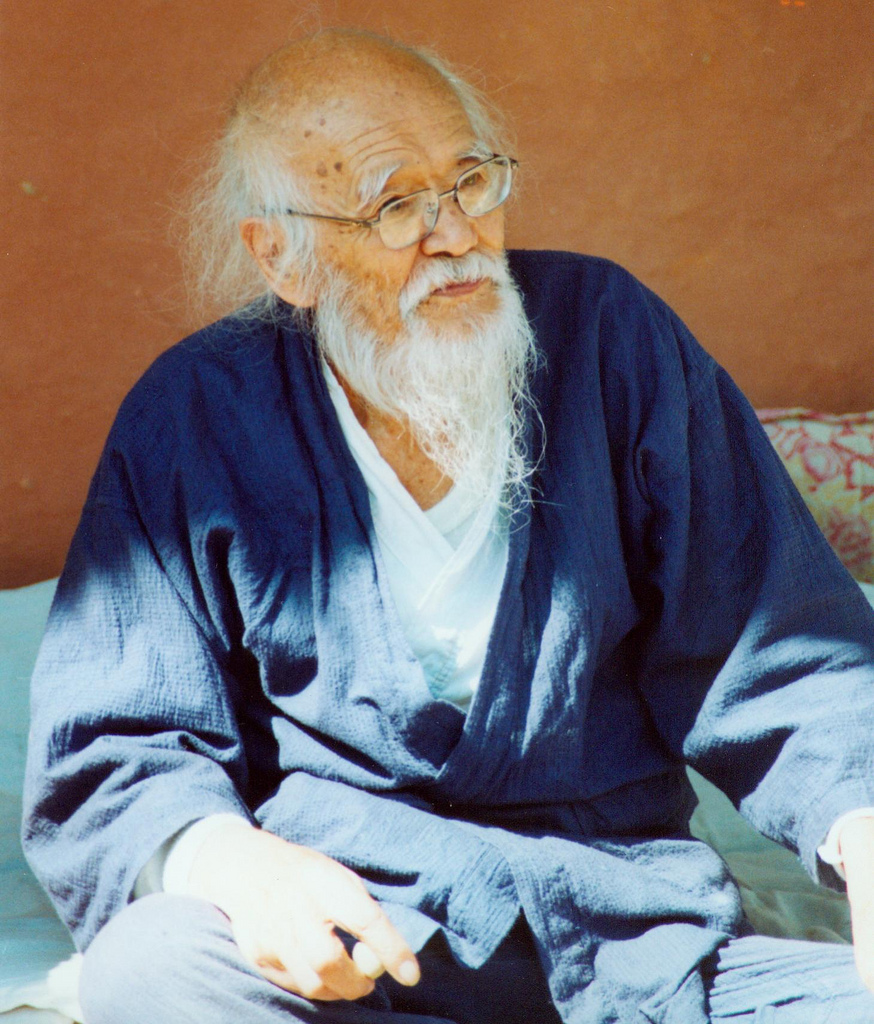
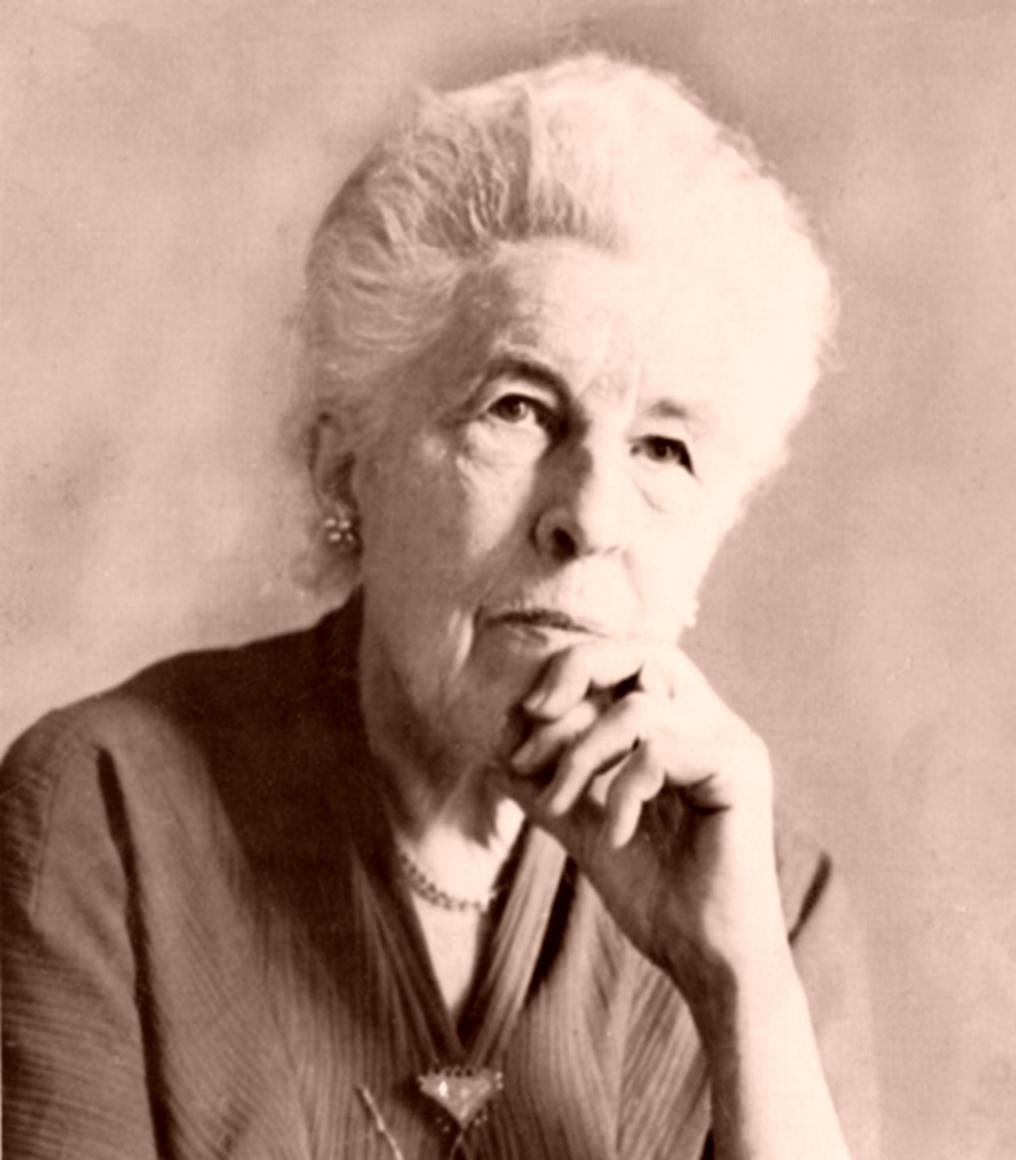
    Masanobu Fukuoka

    Spotlight on Goodwork

    One of the giants of the “Natural Farming” movement, as well as a proponent of a multitude of valuable nature-based ideas and philosophies, Masanobu Fukuoka embodies several elements which are common to the goodwork archetype.

    His dedication to his craft had him traveling the world, helping others implement his ideas, putting his philosophy down in writing, and working on his own farm until the ripe old age of 95. His ideas went so far beyond farming as to be considered a holistic view of the world – one in which humans would be developed in their capacity just as the natural systems Masanobu worked with, and not seen as inherently destructive or irrevocably flawed. Masanobu’s contributions are celebrated worldwide and I would like to shed a light on them today, as part of the continuing series of examples of goodwork.

    Born in Japan in 1913, Masanobu Fukuoka became educated in agricultural sciences, working in research in plant pathology. After a disillusionment with modern agricultural practices, he returned to his family farm to practice and experiment with new techniques in natural farming. His farm included citrus orchards as well as rice and barley. Unlike other farms in the area, the fields were not flooded for rice production. This was unusual at the time but Masanobu maintained that his no-till methods, paired with crop rotation and native biodiversity prevented the need for tilling, herbicide and pesticide usage, or even flooding the rice fields.

    In 1975, he published his most widely known book, “The One-Straw Revolution” – a book I would recommend to anyone interested in the ideas of natural farming or nature conservation efforts. It is a mixture of how-to guides, spiritual meditation, and philosophical musing over the relationship between human effort and natural ecosystems. There is a tone of hopeful endurance as well as a melancholic exasperation with the state of the world, and even the human spirit. This book provides much fodder for thinking on the continued integration of human and natural systems.

    After his book became popular, around 1979, Fukuoka travelled to assist in the work of returning productive as well as natural areas to equilibrium. This work included planting efforts as well as a series of lectures given on the benefits of his methods. He travelled to the U.S., Europe, Somalia, Ethiopia, Thailand, Tanzania, the Philippines, Greece, and China to mention only a few areas he touched.

    I find a lot of valuable ideas and inspiration in Masanobu’s work and efforts and I continually return to him as a person of intrigue and emulation. I like to imagine carrying the spirit of his work forward, and to embody his philosophy of nature in all aspects of my own life and work. I would love to work in a purposeful manner up to the age of 95, spreading seeds and inspiring people to return to balance. Included in this article are just a few meditations on the ideas Masanobu frequently discussed.

    The Integration of Humans and Nature

    “The ultimate goal of farming is not the growing of crops but the cultivation and perfection of human beings.”

    This is an idea that has intrigued me for several years. It seems that every animal in nature finds a home, a niche, and a way of being that is intertwined with all the systems of their surroundings. Yet we have so many degrees of separation from natural systems in our modern age. Our homes, our technology, our way of life is at odds with other organisms, ecosystems, and processes that we often find it necessary to completely separate the two ideas. There is ‘our world’ and then, when we find it necessary or interesting, we ‘return’ to nature.

    Masanobu Fukuoka’s philosophy entailed people becoming “natural people” again. That is to say, aligning their desires and behavior with natural ways of life. Natural farming, and the cultivation of nature, would not be possible unless people became natural people. As long as people viewed themselves as separate from nature, their behavior would lead them down the path of opposition and conflict with nature.

    This separation becomes strikingly apparent when observed through the lens of modern agriculture. In this system, we are dealing in the cultivation of natural organisms – crops, livestock – but we have also gone to great lengths to separate the organism from everything else.

    In a natural landscape, each organism is interconnected with every other organism in their ecosystem. Their inputs are someone else’s outputs; their outputs are someone else’s inputs. But in modern agricultural practices, a pig is not even a pig, it is a unit of output, and it is subsequently separated from any other organism through a system of constraints – fences, concrete, confinement houses.

    Repeat this for cows, chickens, even crops. No other organism is welcome in the field of a monoculture, and I doubt they’d be met with anything other than hostility if they popped up. To the monoculture, any other plant is considered a weed.

    This philosophy leads me to wonder what it would look like if humans were completely integrated into their natural setting like other animals. We would make our homes in our niche, part of nature and contributing to nature. We would find or cultivate our food as part of nature and contributing to nature.

    What advantages and disadvantages would this bring? Would it even be possible? Is this an all-or-nothing approach or could we still have technological intervention for disease and injury, some semblance of comfort? Is natural living necessarily hard scrabble living? Is there something in us that makes us act at odds with natural systems, and what type of spiritual evolution would have to take place to reconcile ourselves to the natural world? These are the questions that Masanobu’s work helps to explore; not always to answer, but to explore.

    The Do-Nothing Philosophy

    “There is no one so great as the one who does not try to accomplish anything.”

    Fukuoka’s philosophy was called shizen nōhō. Occasionally, it is translated as ‘Do-Nothing’ farming but this is partially a misnomer, in my opinion. More accurately, it could be called ‘Do Nothing Unnecessary’ farming, as there is still plenty to do in this philosophy.

    Fukuoka observed that in modern agricultural practices, people intervened in natural processes when they felt they noticed some inefficiency or disorder. This initial intervention then caused other things to take effect, which required another intervention. Each intervention caused another side effect which was not planned and which required more work, technology, and intervention to correct it. The process seemingly had no end.

    When Fukuoka began to practice his natural farming methods, he would often respond to issues by asking himself where he could stop doing something. By cutting back on interventions in natural processes, he found he could make less unnecessary work for himself and let nature accomplish the same ends using its own processes, its own effort. The question of what not to do would, in theory, lead to a final practice where nothing unnecessary is done and the farmer has become a ‘natural person’ whose existence is in harmony with nature’s process.

    Let’s take modern agriculture as an example once again. The soil is treated like any other part of this ongoing project – sterilized, standardized, stripped of its life and structure through pesticides, herbicides, and tilling. Then it is desperately tended to via systems of watering and fertilizing. This is a strange setup which seems to contradict its own ends and which makes more work than is necessary. First, the natural processes are minimized, interrupted, or halted entirely because they appear to be inconvenient or counterproductive, then they are mimicked by great interventions of machinery and technology.

    I think Fukuoka would ask, “Wouldn’t it be better not to intervene in the first place, and save yourself the work of all these later measures?” Instead of plowing and tilling, robbing the soil of its structure and ability to retain water, and then going back later to irrigate and manage watering systems, why not forego the plowing and the tilling in the first place?

    Biodiversity and Balance

    “The only sensible approach to disease and insect control, I think, is to grow sturdy crops in a healthy environment.”

    The way to begin handing these tasks back to nature was, according to Fukuoka, through biodiversity and finding balance. Nature regulates itself through biodiversity, with different populations of organisms growing and shrinking in relation to hundreds and thousands of others. It is not about ‘achieving’ a state of perfect balance but about allowing processes to work themselves out to find their own stasis. Water will find its own level through the process of waves, movement; nature’s movement is the same.

    One of Fukuoka’s initial efforts to return his farm to natural balance was to sow different varieties of seeds and to begin growing many different varieties of crops. When there is a single crop, all in one location, the pests that use this plant as a host find themselves in heaven. But if you begin to separate these plants with other plants, suddenly that same pest does not have the same chance to spread. This is what is meant when we say that nature regulates itself through biodiversity. The greater the mixture of plants and animals, the less likely it will be that explosions of pests and disease will occur.

    Economics – Advantages and Disadvantages

    The main criticism that is put at the feet of natural farming is that it may not be as economically viable as modern agriculture. It either does not have the same potential for output or it is not cost effective. When we look at it through the eyes of mechanized systems and economies of scale, this is correct. A confinement chicken house is economically successful because all its chickens are grown to be more or less identical – all the better for standardized machinery to process them. And each operation limits itself to one product, as having multiple products increases the cost of processing, requiring different types of machinery and technology for different outputs. You cannot pick strawberries with the same mechanisms with which you pick corn, for example.

    But the smallholding does not work in the same way that the large operation works, economically speaking. Its advantages are different than the advantages of a large operation. This is normal. As long as the smallholding does not try to act like a large operation, it can still be successful. By being exactly what it is and capitalizing on its unique advantages, it can still be economically viable.

    In this example, the smallholding may not produce as much as the large operation but it also does not have the same machinery costs and overhead costs typical of a large operation. Also, if the smallholding focuses on custom work or retail level sales direct-to-customer, they can increase the amount they get for their products. If they would attempt to achieve the same economies of scale as the large producer, they would take on far too many costs to make their product worthwhile. But keeping costs low and fostering relationships directly with their buyers, they can move in an economically viable way.

    I think this method applies to work of other types as well, especially craftwork. Those who do not match pure output still have much quality and value to offer. Often, that is their advantage: they still offer something human, and of high quality, that the large producers cannot mimic in their quest for standardization.

    Joel Salatin’s book, “You Can Farm” is also helpful in expounding on this idea. He recommends having a main enterprise and cultivating several side enterprises that are complementary in nature. (This also is in line with the biodiversity idea, applying it even to income streams.)

    Meaningful Work and Connection

    This brings me to the last lesson, one of connection and humanity. All too often, people decry their work as something that takes them away from life, away from meaningful experience, and provides only an uncomfortable alienation from themselves and from others. In reading about Masanobu Fukuoka’s life and contributions to his field (pun intended), you get the idea that genuine connection and meaningful work are massive forces that still live in us, just under the surface. This man travelled the world because people wanted to meet with him, learn his ways, and connect with him on a personal level over their shared interest and passion.

    There will be more posts in the future about the relationship between economics and ecology, as well as work in general, because I find it an interesting path full of questions. But at the very least, we should be able to recognize that we do not have to choose between a good income or meaningful work. We can have both. There is still opportunity to engage in meaningful work in such a way that we can provide massive value to others and receive value through income in our own lives.

    If Fukuoka’s example has taught us anything, it is that perhaps we have to do a lot less than we think we do in order to attain this goal. Whether your work is with plants or people, crafts or commodities, we can always take a closer look to understand how our decisions and behaviors can better align with nature. Through our work, we can transform ourselves and our situations so that we can become better, more thoughtful, more productive, less harmful. We can become natural people.

    For anyone interested in learning more about Masanobu Fukuoka and his natural farming outlook, I would highly recommend reading “The One-Straw Revolution” or watching interviews and videos available about Fukuoka and his longtime student, Larry Korn. Listening to them and reading their work inspires and educates.

    Meditations and Musings

    Is there some part of your work you could stop doing? Are there systems or interventions in place that you could get rid of to get to a more efficient and natural work? What do you do that could be considered unnecessary?

    What could you do to become a more ‘natural’ person? What role does your work play in developing yourself as a person, physically, spiritually, or mentally? What would your life look like if you made this natural work a part of your daily practice?

    Where could you cultivate diversity in your life to make yourself or your income more resilient, more productive, or more natural? What could you incorporate into your life that would complement your main goals, and help you in your effort?

  • Making the Leap

    Making the Leap

    Finding and pursuing your goodwork

    Many people will begin the journey of their life’s work doing something entirely irrelevant to their nature, their goals, and perhaps even their character. I started work at seventeen at my local movie theater, working the concessions counter part-time on evenings and weekends. From what I can recall, I was paid a low wage to get berated by the general public because they made the mistake of ordering movie theater nachos and hotdogs. This was my first encounter with work. And it was not great. It was also where I grew my appreciation for employees in the service industry, a place where brave hearts fear to tread.

    Throughout my twenties, I worked a handful of odd jobs. I traveled both Europe and the U.S. working on small farms in exchange for room and board. I worked in a bookstore, as a house painter, as a plumber. I worked one shift as an overnight shelf stocker at my local grocery store before deciding it wasn’t for me. In each job, I felt keenly that I did not belong. Each time I tried something that did not work out, I felt a lot like I was being rejected by the world, like I would never belong anywhere. There was always going to be this friction or resistance when I wanted to pursue some aim.

    What’s worse, I looked around and some people were actually passionate about their work. They didn’t drag themselves to their jobs, they didn’t complain about the ins and outs of their profession. They liked to work. And it wasn’t an isolated incident! You could see people working in restaurants, gyms, bookstores, offices, landscaping companies, and they actually wanted to be there. You could see it right off, it was something in their eyes.

    I wanted to have what they had, I wanted to do something that I felt connected to, that I could be engaged in. I wanted to make something that had utility, that provided value. I wanted to make something that could provide joy, guidance, and beauty.

    In my mid-twenties, I got a job in assembly manufacturing, gluing one part to another part and screwing wires into circuit boards. It wasn’t what I wanted but it was something. It was in this period of my life that I started to change how things were going to be. I had changed my attitude toward my path. I wasn’t going to quit at the first chance and I wasn’t going to let the negative aspects dissuade me from continuing on.

    As I was soldering circuits at work one day, I had my first mental glimpse into the future that I wanted to create. Since then, I have realized the various pitfalls common to this process and I have discovered some practices in mental outlook that have helped along the way.

    This, by no means, is to suggest I have attained success and prestige in the field of my goodwork but merely that I have found the path and have begun to understand the process. I hope the same for others. When travelers meet, they may talk about the places they have been and the experiences they have had there. They say things like, “Did you ever make it to Edinburgh? Me too, there was a little pub there I always liked.” And then maybe, “Oh yes, we went in late summer and the weather was nice but I returned some years later in March and it was much colder than I would have liked. But all the lines were short and the castles empty for us to enjoy alone.” That’s something along the lines of what I aim for here. Travelers meeting and exchanging notes.

    EFFICIENCY v. EFFECTIVENESS

    One of the first lessons you learn in any pursuit is that things do not go smoothly in the beginning. The beginning of any endeavor has us accruing endless costs and expenses and the few wins here and there can spur us on but certainly do not begin to cover costs, let alone provide for growth.

    When I began my various gardening projects, I wanted things to go smoothly and efficiently. Digging garden beds in the sun feels anything but smooth or efficient. But I would remember that the point of digging the beds was not to be efficient, as it only had to happen that one time. The point of these large time and labor costs was to be effective. To get it done and get the plants in the ground. So, it took several more afternoons than I had planned to get the soil prepared, and it took more than one trip to the hardware store for different tools and materials. The costs kept mounting and it destroyed my expectations of a smooth and inexpensive project. It didn’t matter. When the project was done, the garden was ready for the planting and I would never have to dig the beds out again.

    The same is true for other pursuits. School, for example, is not an efficient process but an effective one. It is more time consuming and more expensive than you plan on but the point is not to get to the end as quickly and efficiently as possible but to put the time and study in that is required for you to get your degree. Going through the effort to set up the assembly line takes the majority of the time and energy and then when it is running smoothly you can put your mind toward efficiency and productivity. You will not make a ton of money on your first few clients, or on your first transactions with a new client, because creating the new relationship is about effectiveness, not efficiency.

    Advice for this phase of your goodwork involves mostly mental rewiring. Because this phase does not involve the gratification of rewards but the collection of costs, it can be discouraging and frustrating. Try to adopt an attitude towards these challenges that reinforces your path – they are like milemarkers showing you the way. They may test your commitment, make you question your abilities, but they tell you that you are on the right path toward achievement.

    Try to separate your activities into projects and production. Projects are your high cost endeavors with no return in the short run. Production is highly rewarding and more efficient. If you make the mistake of thinking your project will be as efficient as your production, you may become unnecessarily discouraged and frustrated. Instead, take it for what it is. Keep the faith that this project will eventually lead to an increased capacity for whatever your goodwork is, and do the work with that in mind. High expectations and delusions of grandeur will burden your mind and your project and may turn into procrastination, overwhelm, and maybe even quitting.

    LOGORRHEA, THE ROLE OF PLANNING and ORDER

    Logorrhea is defined as the excessive use of words. The way I use it here, I am also including other logical forms like plans, dreams, expression, calculations, thoughts, and discourse. It is quite common that people will get trapped in a state of logorrhea when they go about beginning a project or task. They talk about doing it, they fantasize about it or the rewards they will get from it, they will read about it and watch videos about it, they will write out detailed plans and to-do lists about it, they will crunch the numbers about it. Going even further, they will chastise themselves for not doing it sooner or not doing it as good as someone else. They will hate the obstacles and focus their energy on them rather than their aim. They will look for recognition and accolades, they will search for reasons, answers, and reassurance. They will imagine the perfect circumstances, look for them, wait for them. But all of these things have one thing in common: none of them will replace actually doing the thing.

    To avoid this pitfall, try to keep your planning, accounting, and advertising in balance with actually doing the work, making the product, and pursuing action that brings substance. These planning activities should be limited to a small percentage of your time and the rest of your time should be used in working the plan and bringing it to fruition. There is always going to be a need for thorough plans and accurate accounting but the key is not to be carried away by the allure of purely abstract thought. You think, “Maybe if I change this around a little bit, I can make a few extra dollars per unit and then if I increase my sales by about ten percent a year it will compound to this amount after ten years and if I just capture one percent more of the business in the market I can make this much more money…” And soon enough you’ve done nothing but crunch numbers about goods and services that do not exist. You can’t eat a garden plan, so be sure to plant those tomatoes!

    Do not complain, do not explain. It is my impression that people engaged in work waste precious time and energy in two key areas – complaining about the work and explaining themselves. There is a time and place for the expression of these two things. If something is bringing about far too many complaints, maybe it is time to sit back and consider if there is a better approach. And explaining yourself to others will always be necessary in this world of navigating other people, until we become telepathic. But watch carefully that you do not give in to endless complaining that has no ideas for betterment – this is whining. And make sure you are not spending excessive time and energy explaining yourself to others, as this may build the habit of seeking validation from others rather than satisfaction in the results of your work.

    MAKING THE TRANSITION

    “Do what you can, with what you have, where you are.” – Theodore Roosevelt

    This cannot really be called advice but is actually an immutable law of nature. We have to focus on what we can do since the alternative is what we cannot do. We have to use what we have since it is impossible to use what we do not have. And while we may end up in different places and conditions throughout our journeys, we must recognize in each moment where we are in reality in order to make real progress. The grass is greener where you water it.

    People start their journeys toward their most meaningful work from all different backgrounds and positions. Some find a way to make it happen with relatively little education or support, these are entrepreneurs and business owners. Other lines of work like medicine or teaching require more educational inputs and involve a long process of improvement that is not as open to ‘overnight success’. I certainly don’t want to get surgery from someone who did not go to medical school and is just hustling for love of the game.

    Whether the journey to your work is long or short, it is common to start from a place that is far divorced from the path you’d like to be on. Personally, I have been working in assembly for several years now and am actively engaged in changing that path. I am not sure what that will look like over the next few years but I know I will continue to work to get closer to doing something I care about, which helps others, and in which I can become a true master.

    Patience is a difficult concept to grasp at times. The moment you think you have achieved patience, you start looking around for your reward… oops! That’s the point of patience! Keep going. There will never be a moment when you outgrow the need for patience. There is no one-size-fits-all answer to how long your journey will last but let’s just say, for the sake of ease, that it will last you the rest of your life. While you are on the way, make sure you are becoming the type of person you would like to be, someone you can be proud of. The daily work does a little work on us, too, reforming us like clay over months and years.

    Begin your journey where you are, have the humility to recognize and respect your starting point. It is easy to get used to the movie montage transformation, the zero-to-hero training sequence, the overhaul makeover, and the end credits rolling at the perfectly written conclusion. Our lives are not like that. They are littered with beginnings and endings of many different phases, interests, and personalities. This could be said to be the reality of goodwork. There is no end to goodwork because there is no moment in your life in which you would ever be content to live without connection, value, or creativity.

    CONTINUOUS IMPROVEMENT

    The silver lining to the fact that you must start where you are is that you can also improve much faster than you think you can. As long as you are continuing to be honest with yourself about your limits, your resources, and your starting point, you can begin to make small gains in skills and resources that will compound over time.

    A pitfall to avoid: assuming that your progress will always look the same as it does now, when you are beginning your pursuit. If it takes someone six months to save one thousand dollars, they despair that it will take them decades to get to where they want to be. But they do not account for the process of continuous improvement that they will undergo as they keep to their journey. In this example, they may begin to earn more as a result of a job change, they may find unnecessary expenses to cut from their budget, and the money they have saved begins to earn interest. They thought it would take them several decades to get to their goal but it ends up happening at an accelerated rate.

    The prerequisite for continuous improvement is to commit to life and engage with the work. If you are constantly looking outside of yourself for happiness and fulfillment, you forfeit the ability to create your own. You will not be able to improve on something you refuse to work with, so you must be dedicated to this practice.

    It may be discouraging to begin with little gains here and there. Certainly, these first improvements will seem unremarkable or insignificant. You may even feel embarrassed that things are going so slow, or that you are not making the leaps and bounds you envisioned for yourself. Consistency above all else will win you continuous improvement.

    Conclusion

    So, you start where you are. It is anything but perfect. The goals you wish to attain are specks in the distance. The point is to begin. Not to begin perfectly, not to fulfill your potential all at once, but just to get started. This is one of those pesky lessons you have to keep learning all your life. To be honest, I am not good at it. I have always wanted to be the prodigy, the natural, the chosen one. I want to pick things up quickly and without effort. That is a habit we have to work on, to learn that effort and work are glorious things to undertake and not an inconvenience from which we should escape.

    Thank you for reading!

  • Farmstrong

    Farmstrong

    When personal development is discussed, strength is often one of the first attributes people desire. Perhaps they feel physically weak or ineffectual, bullied by others who are bigger and physically stronger. They want to get stronger so that they never have to feel so small again. Others do not feel emotionally strong, they feel they cannot speak up for themselves or endure the burden of everyday obligations. They ask for strength so they can make it through another day. If we are to carry on, we must ask ourselves what it means to be strong.

    In our age, virtues and values are interpreted through a warped lens. The virtues or values themselves may be good and useful but because they are distorted by misunderstandings, they are turned into useless and harmful versions of themselves. Through this lens, values such as youth, productivity, efficiency, and detachment are championed to a degree that causes many imbalances.

    Our fixation on youth has made us neglect our health and longevity, as we try to continue to live as children in a dreamy and consequence-free lifestyle. Even when people try to mimic longevity, they pursue it in a way that they may achieve eternal youth. An entire industry of health gadgets promises to make us ‘age backwards’ when we could simply age gracefully, try to live long and happy lives. Many feel the push and the urge that they must continue the creativity and productivity of their youth long after middle age, neglecting the natural limits of our capacities or the developed talents we might otherwise put to use such as wisdom and guidance. And our emotions are not contemplated, integrated, or healthfully processed but shut down, ignored, and treated as inconvenient. This often leads to emotional outbursts that are far worse and more ill-conceived than the original emotions. I think of my coworker making fun of the younger generation for crying while he walks around work berating people and having angry meltdowns every other day. So much better!

    I do feel there are values here that are worth embracing, if only we can find a healthy way to do it. Youth is something that can be celebrated, and we could also put more effort towards navigating the loss of youth and the gain of experience, wisdom, and self-control that comes with later ages.

    Longevity is a wonderful goal. I would love to live a long, happy, and productive life. But it would be unwise to try to remain twenty forever, not to mention creepy and unnatural. Instead, we should encourage the development of our personalities and goals as we age, trying to live healthy lives of connection and value, until we can become the wisdom-bearers, the old sages, the elders.

    Finally, it is wise to learn the nature of our emotions so that we do not let them overwhelm and control our behavior. This is the main tenet of Stoicism, and it has nothing to do with shutting down, ignoring, or rejecting emotion but learning about yourself through emotion, accepting them when they arise, and maintaining your sense of what you can control so that your emotions do not control you.

    In any of these cases, strength is asked of us. Physical, emotional, and relational strength is developed throughout life, slowly, sometimes painfully, as we work to become the truest versions of ourselves and bear witness to others becoming themselves too.

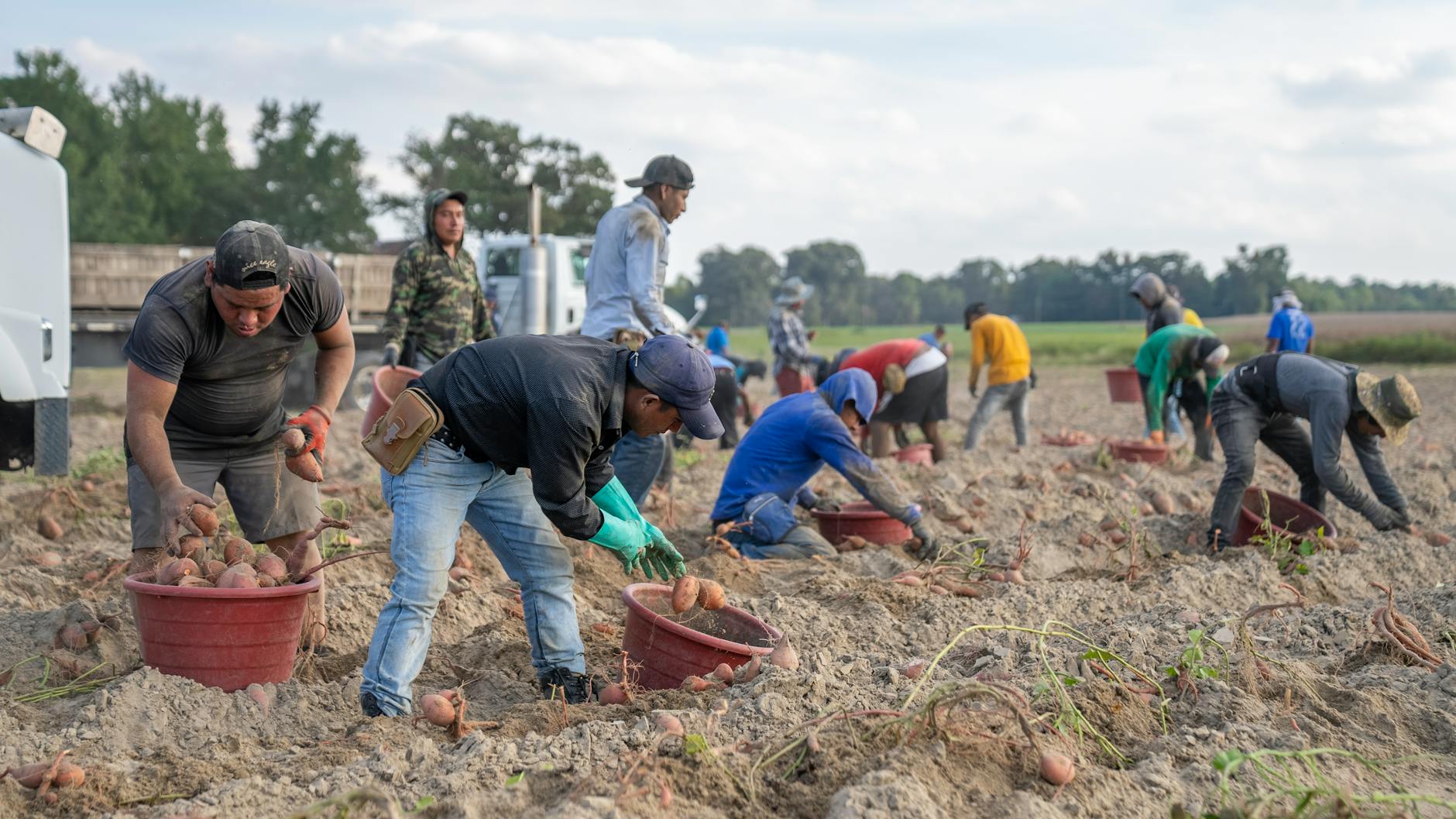
    Photo by Elkhan Ganiyev on Pexels.com

    There is a certain archetype that comes to mind when I imagine the abundant, healthy life of a fully formed individual: the farmer. I imagine them as a burly and stout-hearted person, strong grip, calm eyes under a discerning brow. They are quiet, but their intelligence is demonstrated in the deftness of their movements and the skill of their craft. They do their speaking with action rather than words. When they do speak, each word is dense with meaning. Words carry a premium; words are slow and burdensome compared to the act itself. There are years of setbacks and resilience in their eyes, you can count them like rings on a tree. And after every catastrophe, their strong hands pick up their well-worn tools and begin again.

    Physical Health and Longevity

    The nature of the farmer’s work tends to be physical. There are chores enough to keep the farmer occupied as long as they’d like. Often their work can overtake their personal lives. This is where a healthy relationship to one’s work and person calling can come in handy. We want to be profitably and meaningfully employed but losing health and enjoyment from overwork is entirely possible and should be avoided.

    Photo by ahmad dian fitrah jamaluddin on Pexels.com

    Having regular, physical movement throughout the day keeps the body healthy. Many people today have sedentary jobs or professions and do not opt into a regular exercise routine. Those with physical jobs accomplish both the demands of their work and also the demands of the physical body – to move, and keep practiced in movement, for as long as one can.

    One of the primary goals of goodwork is to ‘Stay as strong as you can, as long as you can.

    Farm chores also tend to include a lot of low-impact movements paired with higher-repetition strength movements and occasionally the high-effort compound movement such as picking up something extremely heavy or lifting something above one’s head. If these movements are done with a mind toward joint care and proper form, they are the building blocks of a healthfully aging body which retains much of its strength and endurance while sedentary bodies tend to wither, break down, and accumulate compounding injuries.

    There is much information available to us now that suggests the importance of exercising our muscles as a practice throughout life in order to improve the condition of our later years. Developing our muscles through vigorous exercise improves four areas that people tend to struggle with as they age.

    First, it will help with balance. Imbalance leads to falls and slips and the injuries from these falls can compound over time to worsen the condition of our lives. The skeletal muscles, their strength and agility, as well as the strength of our core muscles, assist us in keeping balance.

    Secondly, it helps with our hearts and circulatory systems. Many people will have issues with their heart and arteries as a result of sedentary living and diet issues. Regular exercise helps prevent heart disease and arteriosclerosis, the hardening of the arteries over time.

    Third, it helps us keep stronger bones. When the body is sedentary, the bones may become weak and brittle which will lead to breaks. These injuries lead to more sedentary living, in order to give them a chance to heal, but may also affect our mobility and strength forever after. Lifting weights and exercising muscles helps to strengthen our bones and keep them strong even as we age.

    Last but not least, regular exercise helps us keep our minds sharp, improves and maintains cognition. Many people will struggle with routine cognitive issues such as memory degradation and slowed processing time as they age. Some will struggle with more severe cognitive decline such as dementia. Regular exercise can lessen the likelihood that we experience these effects and diseases. These four areas (balance, cardiovascular health, bone density, and cognitive health) are all improved by an active lifestyle integrated with strength movements that prioritize proper form and joint health.

    The kind of physical work I am describing can destroy a person if they are not careful and do not have a mind for their limitations and recovery. There are countless people who have neglected their limits only to injure themselves with recurring stresses, do not pay heed to bodily or mental recovery, and as a result push themselves into a state of decrepitude and decay. A life without boundaries is self-destruction. I have worked with many people, especially in the trades, who have pushed themselves and others beyond their limits and have suffered setbacks and injuries as a result. This kind of behavior inspires negative associations with work and unhealthy relationships with each other, as well as an unhealthy relationship to one’s body.

    Photo by Ebahir on Pexels.com

    Community and Connection

    A farmer’s lifestyle can be said to contain two important relational elements. Those are strong individualism and connected community life. There are many opinions floating around that overemphasize the importance of rugged individualism to the point of isolation. And there are many opinions that disparage individualism to the point of neglecting individual development and expression entirely, preferring to focus on the ideas of community life and collective markers of well-being.

    But what is the community made up of? Individuals. And how can the individual exist without the support and care and connection of the love of their community? You cannot separate the two. If the community is made up of people who refuse to take individual responsibility for their lives, disconnection and chaos ensue. If the community is made up of people who refuse to acknowledge their connection to community members in mutually beneficial relationships, everyone becomes isolated, ineffectual, and hollow.

    Of all the farmstrong people I have met, they have done well to develop both the attribute of their individuality and the deep connection that comes with community-making.

    Photo by Quang Nguyen Vinh on Pexels.com

    Their work is reflective of this. Each farm is unique and specific, it must be worked in a certain way and it is not often that the same methods will apply to many different areas of the land. They must take responsibility for their work, which they do in direct relationship to the land they inhabit. At times it can seem the working farm is isolated or remote, being tucked away into foothills and valleys far from the bustle of the cities and towns, traditionally. But the farmer balances this when they come into town to sell or trade their goods. They must maintain this connection if any of their work is to be meaningful and productive. And often they create a niche on their own land to host visitors, helpers, family, and neighbors.

    I lived and worked on several farms in my early twenties, traveling through Europe and the northern United States. Each farm had deep connection to its community and to the other farmers in their area. On an olive farm in Italy, we hosted a dinner for thirty people working and living on neighboring farms. They each brought their specialty olives, a recipe they each inherited and loved from generations past, and we shared in the moment and the connection of our work together.

    We walked up the hill to town where they were having an autumn harvest festival. The hunters brought wild boar, the farmers brought their food, the locals brought homemade wine. We sang and danced in tents in the town’s parks and we stumbled back to our beds around nightfall. On a goat farm in France, we made cheese and hosted cheese-making classes as well as cheese tasting events. We slept in a hut folded into the treeline, warmed by a little stove at its center.

    Each day was about meeting the current task in a personal, direct way, whether it was collecting the olives or pounding fence posts. It was also about finding connection and harmony within the community we wanted to cultivate.

    Photo by Mark Stebnicki on Pexels.com

    Mental Health

    The nature of the farmer’s outlook tends to be, consciously or unconsciously, practical and persistent. They work with the ground and are, by no coincidence, well-grounded. It is the reality of their work that they must accept unforeseen circumstances and work to overcome them or at the very least to endure them. I think this can be a unique outlook, given these various forces.

    The farmstrong know that they must contend with reality and so their fantasy worlds are tempered by the capacity of their work to bring things out of their imagination. Their continuance in their daily chores and projects suggests a vote of confidence in the future, though they are more than willing to embrace the uncertainty of their lives and profession, with which they are painfully familiar.

    Photo by Makara Eam on Pexels.com

    Experience of the disappointments of life’s endeavors do not embitter them towards honest effort; in fact, honest effort is quite often their guiding light and daily devotional, it imbues all their work with ritual goodness and attention, and the firsthand experience of disappointment cultivates a healthy detachment from the painful images of expectations. ‘Oh, well…’ might be a common refrain of the farmstrong.

    I have often found myself enamored with people of this character, who can so easily have faith in tomorrow that they may content themselves with the honest work of today, this moment. It can be somewhat more common to see the unrelenting plans, schemes, and hollow wishes of those who are resigned from daily life and content themselves with fruitless daydreaming. All dreams and no delivery. I have certainly found myself distracted by endless waves of planning, rather than returning to the humbling act of daily work.

    Photo by Beyza Yalu00e7u0131n on Pexels.com

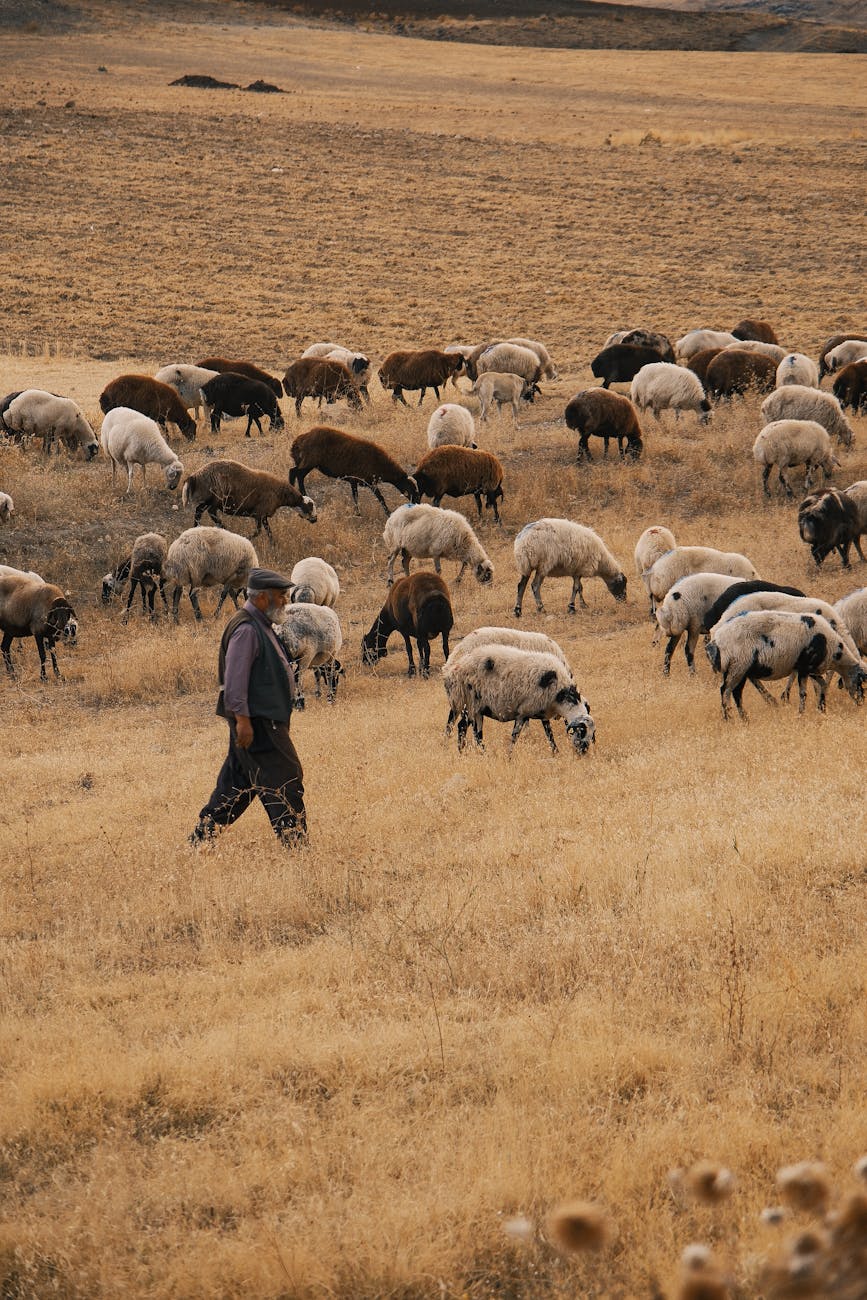
    I have often thought of the farmer as the Stoic ideal. Not all farmers are like this, of course, but the ideal itself is the absolute picture of resilience, courage, wisdom, and virtue. After getting a taste of life on a working farm, you begin to understand why this would be the place to create that tempered steel of pure stoicism – the chores must be done no matter the weather, no matter the circumstances, no matter the mood. Whether it is freezing winter or pouring rain or gale force winds, the livestock must be fed and watered, the work must continue to get done. Whether it is a little Russian babushka tending to the cows or a goatherd in Greece walking the hills and the fields, there are those whose work has polished them against the difficulty of life and as a result they exude a strength and endurance that is without comparison. They may never set out to fulfill this ideal of virtue, and they may never put a word to paper about it in order to describe their process or their thoughts, and yet they have embodied this philosophy better than the most prominent minds of antiquity.

    A word on Stoicism, a sometimes-misunderstood term. I have occasionally seen Stoicism portrayed as the rejection or suppression of emotion, perhaps an enthusiastic withdrawal from life, or a cold and uncaring posture taken with an attitude of disregard. After reading some of the classic Stoics, such as Marcus Aurelius, Epictetus, and Seneca, one may come to know the nuance of this philosophy better and to consider it a great deal more relevant than other systems of thought from ancient history.

    It is not about stifling or repressing emotion but consciously approaching emotion in a way that allows us to contend with it. When we meet with our emotions in a calm and level-headed manner, we can better understand where they come from, what they are trying to express, and how best to integrate them in a way that does not disturb our lives. It is also not about withdrawing from the necessary actions of life but rather focusing on what we can control and engaging in these things with virtue, rather than losing ourselves to the uncertainty and doubt of events and circumstances entirely outside of our influence, which may pull our valuable time and energy away from constructive and useful action. It is about engaging with life and committing to life in a way that we are prepared for setbacks and inconveniences and whatever else fate may send our way.

    Photo by RDNE Stock project on Pexels.com

    One may encounter difficulties but with the right practices they may work through these difficulties without adding a greater burden with their own unhelpful behaviors. Surely, we have all been in a difficult spot before with someone who would not stop complaining, making negative predictions, or refused to work through the issue. This not only doesn’t help the situation but makes it much worse.

    Conclusion

    These attributes do not have to belong to the farmer alone, of course. Anyone of any background can develop these habits and channel these characteristics through their own work and relationships in order to build resilience, strength, and connection into their lives. That is the aim of my sharing these thoughts, and my continuing to write on subjects related to the farmstrong idea in the future.

    I find that there are many misconceptions about strength, stoicism, individuality, and work in general. Useful ideas are co-opted by the irresponsible and the immature every day, so I think it is important to bring these terms back into the expression of usefulness and maturity. I hope to shine light on topics that have been painted with a negative brush and perhaps come away with a more constructive view of things.

    If I could ever express my view on these topics and provide a useful thought to someone in search of answers, I would be delighted with my contribution. I value minding my own business, so I’d like to reiterate that I am not telling anyone how to live but merely discussing the lifestyle and characteristics of interesting people and philosophies.  

    Below I have provided a link on the benefits of strength training, as a reference for the claims I have put forth in this post. I encourage you to read further on the topic, as I am a layman.  

    https://emedicalhub.com/strength-training-for-longevity-why-lifting-weights-is-important-for-aging/

  • What is Goodwork?

    What is Goodwork?

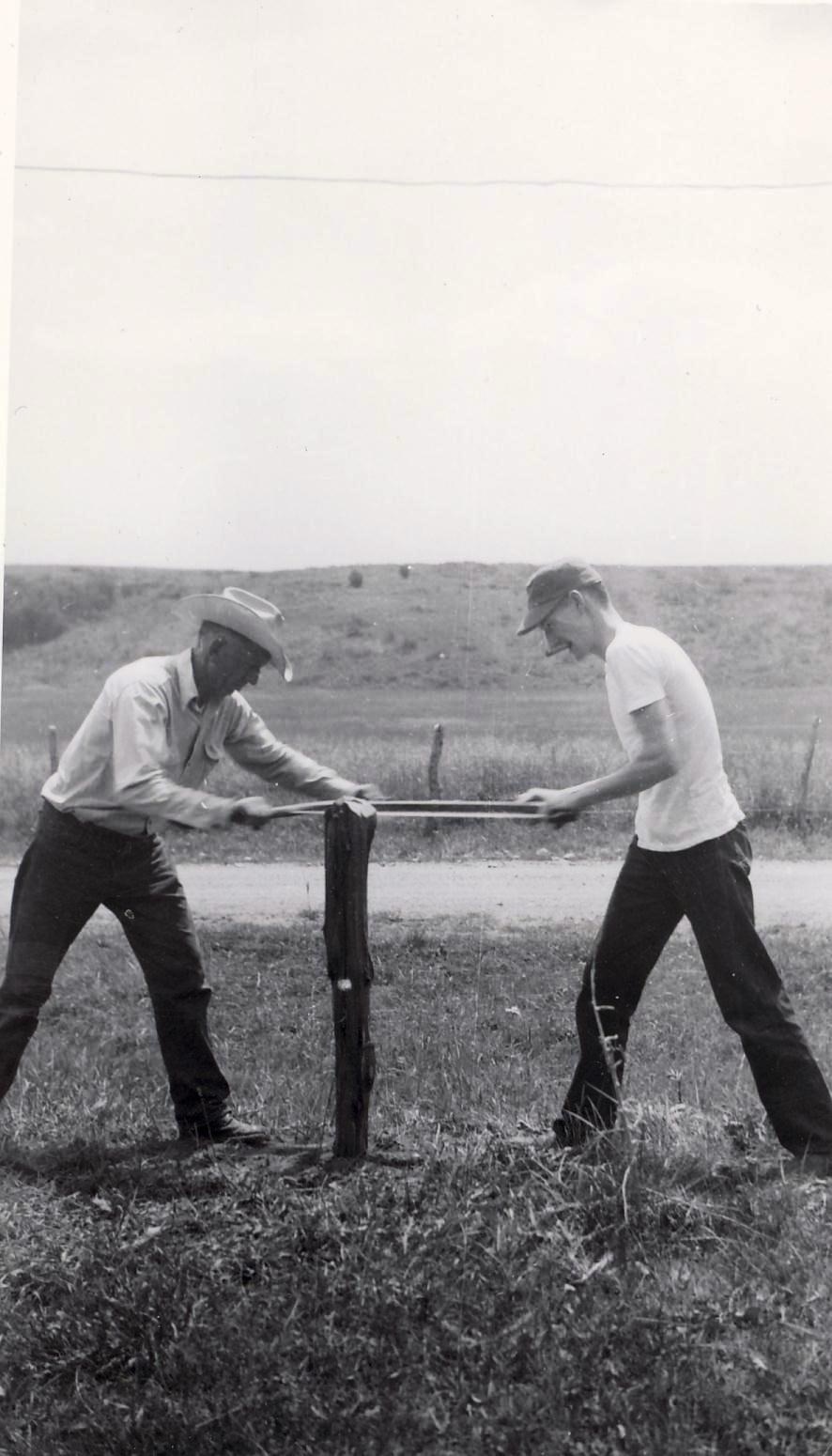
    My grandfather and great grandfather working on their family farm.

    Work is how we reconcile ourselves to our worlds, our surroundings, and to each other. Work is a natural process that unfolds in people as well as in other aspects of nature throughout all of time.

    As such, we should probably deem it worthy of some respect and attention, right? Yet a Gallup pole shows that, along with dissatisfaction, workers also report high rates of disengagement and unhappiness.

    60% of people reported being emotionally detached at work and 19% as being miserable.

    50% of workers reported feeling stressed at their jobs on a daily basis, 41% as being worried, 22% as sad, and 18% angry. 33% reported feeling engaged.

    Something is amiss if so many people report being unsatisfied with their work lives. People typically have working lives that span a period of forty years – age 25 to age 65, roughly. For those of us who started working in our teen years, that window of time is even longer. Would anyone want to spend that time feeling disengaged and unhappy rather than being engaged with meaningful work and productive behavior? So where is the disconnect, and what do we do to remedy these issues?

    Goodwork is Natural

    There is a misunderstanding about work, stemming from the definition we use to categorize work in the human sphere of activity. But if we look at the natural world for examples of work, we find it as common as the work we are inclined to do as people. The beaver goes about cutting logs and making dams. It is their home, and it is fundamental to their nature as beavers. In order to create it they must do good work.

    This is the same as with the bird’s nest, the dung beetle’s dung, the dens of any number of forest critters. In order to connect themselves to their world, they each must do their work. Even the worm, the greatest little workman the world has ever known, creates a layer of soil fertile enough for the rest of life to function in abundance, and they do this work unassumingly beneath our feet, content to churn through the dirt in obscurity. The worm’s work is part of his existence, it is woven into the fiber of his being, and it builds the world which we stand on.

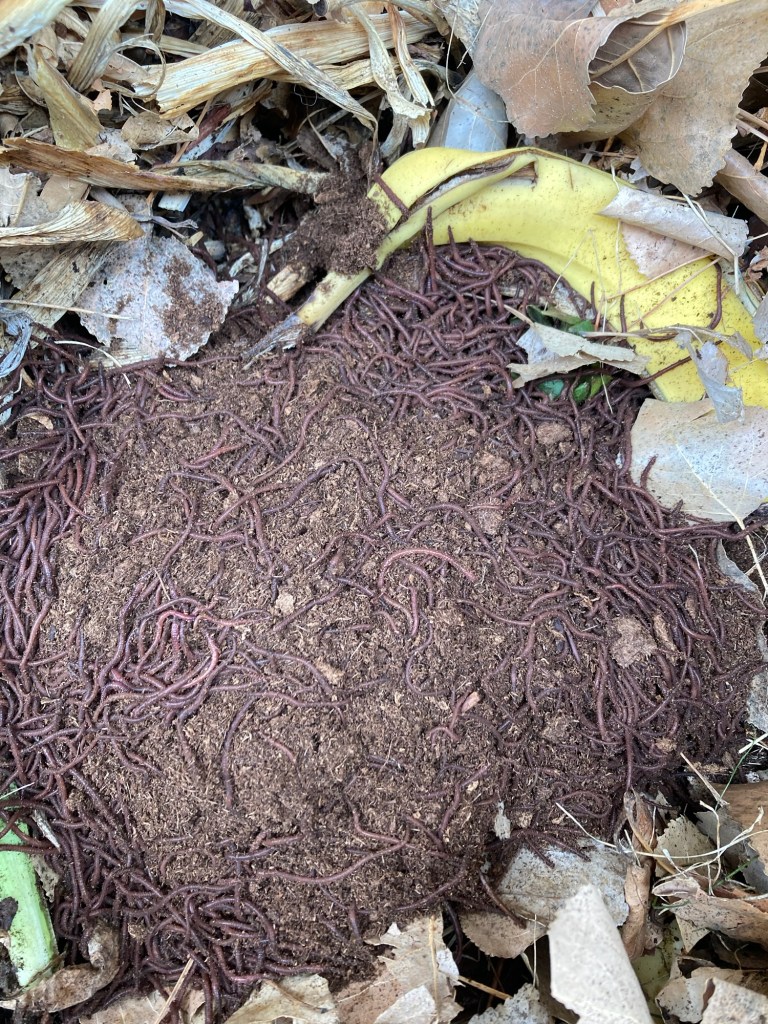
    Composting worms are introduced to their worm bin.

    “If a man is called to be a streetsweeper, he should sweep streets even as Michelangelo painted, as Beethoven composed music, as Shakespeare wrote poetry.” – Martin Luther King Jr.

    Frequently, I have heard the lament that “Humans are the only animals that have to work.” And while I understand the underlying sentiment and the frustration that goes along with it, I would say that all animals must work in order to live. It is only that the work of the animals is hardly recognizable to us as work because it is so engrained in their nature. When we see a bird collecting worms or making a nest, we do not say to ourselves, “Look at that robin, hard at work.”

    Our goodwork should resemble something like this. It should be so tightly woven into our nature that onlookers should be curious as to whether or not it is actually work at all. Our work should not be something we ‘go to’ but something that comes from us. I have never liked the term ‘work-life balance’ and would instead like to strive for ‘work-life integration’, in which my work and my life are harmoniously joined together rather than demanding portions of myself be doled out equally.

    Goodwork Involves the Whole Person

    Part of the frustration in the work that humans have come to do is that it has become highly specialized, fragmented, and noncreative. For example, I had a highly specialized job once packing medical materials. I stood on one spot by a conveyor belt and would place one alcohol swab in the plastic pack as it passed by my station. That is all I did for eight hours a day.

    By fragmented and noncreative, I simply mean that the work is separated from any satisfaction that could be earned from an end product. It does not satisfy our need for creativity because nothing ever comes to fruition under our watch in these deadend jobs, we only contribute our small part and then clock out.

    In an ideal goodwork, one would find a path toward personal growth and self development. This would be part of the process that Carl Jung called ‘individuation’, or becoming yourself. Our work reflects this pattern, and if we are allowed to be creative, and to follow our work to the satisfaction of its end result, we can more earnestly develop our unique purpose.

    Some specialization always takes place but it keeps in line with the development of skill, craft, and engagement rather than disengagement or fragmented roles. I was tempted to say ‘repetition’ as an aspect of highly specialized work but I find that goodwork can be equally repetitive, though this may occur in a way that is satisfying rather than demoralizing.

    Our jobs have also become much more sedentary as they have become more about information and processes that demand we be more cerebral. This has led to an unsurprising decline in health. Our bodies and minds are most healthy when they are deeply involved in movement and engagement.

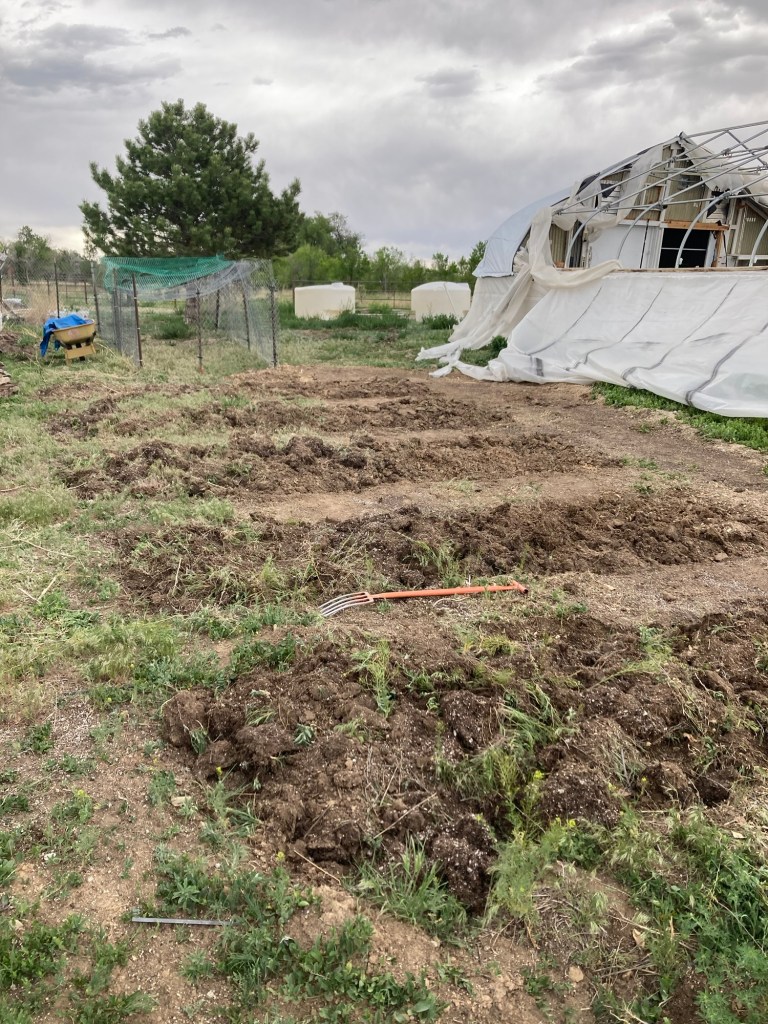
    Digging new garden beds in a field taken over by weeds.

    We are at our best when we are kept active in body, mind, and soul. Finding our goodwork means finding something that contributes to our mental and physical health as we attend to our duties. When I am attending to my farm and garden chores, I am using the muscles of my legs, back, shoulders. I get good exercise hefting feed bags or digging garden beds. My mind is engaged in planning projects, schedules, and organizing resources to fulfill the needs of my customers. These are just simple examples but one can see how such work can be fulfilling and engaging rather than stifling or overly monotonous.

    Goodwork is Peaceful, Voluntary, and Contented

    In this way, goodwork does not resemble the modern ‘hustle culture’ that you see online. Hustle culture asks you to just grind and hustle no matter the idea, the method, or the outcome. This kind of senseless frenzy may sound appealing at first but it is soon found to be exhausting, self-defeating, and empty. If you do not care what you are hustling for, what will you care when you achieve it? Don’t get me wrong, I believe in working hard, in self-discipline, and pursuing and achieving goals. But the way of the hustle is typically smoke-in-mirrors, empty promises, and multi-level marketing schemes that sell a dream rather than provide tangible value.

    Goodwork, then, sets itself apart from hustle philosophies and aligns itself more with conscientious, consistent work that builds upon itself until it compounds into something valuable and sustainable, providing meaningful work and wealth for generations rather than a flash in the pan windfall that the grind promises.

    Those involved in pursuing their goodwork are able to look their customers in the eye when it comes to upholding quality and consistency and these people often want to engage with their client base or community in long term relationships. Steady gain paired with consistent quality, all made possible by the principles outlined here, mean strong and resilient businesses and communities founded on mutual trust.

    When I say peaceful, I mean goodwork lacks much of the self-imposed stress that follows from meaningless grind and hustle culture allure. When I say voluntary, I mean customers know exactly what they are getting and from whom they are getting it, and the producers know exactly what they are producing and go to great lengths to be the best to offer their product. When I say contented, I do not mean complacent. I mean that the work is not filled with a desperate dash for validation or recognition but is allowed to unfold with the dedication necessary for a long-lasting enterprise worthy of respect. If you have aspirations of becoming the biggest, you may not be the best when you get there. If you aspire to be the best, you may become bigger than you ever thought possible. When you get there you will be able to stand by your systems with pride and confidence.

    Goodwork is About Connection

    As someone who has worked in many different roles and in different trades, I believe that our work is important and can be approached in a positive and healthy way, regardless of what we may be led to believe. I want to share my work with the world and I want the world to share its work with me. If I could be so bold, I would love to help others find their goodwork and help them to put their corner of the universe in order.

    “No matter how isolated you are and how lonely you feel, if you do your work truly and conscientiously, unknown friends will come and seek you.” – Carl Jung

    Like nodes in a network, we connect and spread the information we need to grow in every way. The information I seek to discuss and share through this medium is not new or unique but it is my duty to pass along all useful experience to my network.

    My goodwork is Goodwork. Through this blog and other written works going forward, I want to discuss relationships with work, wealth, and nature. I am not an expert in any of these areas. These writings are about musings, discussion, and progress. Perhaps more than its fair share of daydreaming. I draw on the wisdom and practicality of dozens, if not hundreds, of people that came before me and are much more articulate and qualified than I am. The areas I enjoy exploring – gardening, psychology, soil science, history, economics, bugs, personal finance – have been around much longer than I have. I have no illusions of adding any remarkable insights into these things but wish to provide a field guide in order to explore them more easily. I want to synthesize the widespread information that others have made the effort to pass along. I hope I can present this information in a way that each person finds something relevant to themselves and their life’s journey.

  • Lessons from My Chickens

    Focus on what you can control

    The lessons of life wait to be unraveled from the plainest of circumstances. Collect the chicken eggs and the mind wanders. Work in the quiet and you will learn many lessons. This one is straightforward, though difficult to put into practice.

    When we first started raising our chickens, they were two or three days old. Little, fuzzy chicks are just about the cutest animals there are. As you are watching them in those first days, you want to control everything about their environment to protect them.

    We obsessed over giving them the correct feed and cleaning their water. They love to sit atop the waterer and poop directly down into the tray. Cleaning it became a chore multiple times per day. Chicks are also prone to something called ‘pasty butt’ which is basically a mean case of constipation that their delicate systems can’t handle. We would pick up each chick to check their butts and would perform the procedure of removing their pasty butt as if we were performing surgery. In those first days, we paid them almost constant attention.

    We rent the land that our flock is currently living on, and it is a fifteen minute drive from our house. This fact alone prevents us from controlling a lot of factors that we might otherwise have obsessed over in the beginning. Whether we were turning the heat lamp on and off or checking to make sure all of the chickens got in before their automatic door shut, those early days were filled with a lot of unnecessary trips to the coop.

    It wasn’t until a few months into this that we learned a key lesson. Even if we wanted to, we could not control all of the variables we were worrying about. If a fox got into the coop, we wouldn’t even know about it until the next day, let alone be able to do anything to stop it. You simply cannot live your life listing all of the things that could go wrong – you wouldn’t have time for anything else!

    Though we realized the importance of this lesson, it is not something that people naturally do. Like I said before, it is difficult to put this idea into practice. I told myself I could not control X, Y, or Z variable but the thought of it still consumed me. It wasn’t until later that I would be able to remind myself of this lack of control, as a daily practice, and then go the next step to put those thoughts out of my mind. For me, it was all about repetition. Eventually, it becomes habitual to recognize what you can and cannot control and then to put all irrelevant things out of your mind for the time being.

    Whether it is other people’s emotions or behavior, the state of the world at large, or the basic and inconvenient facts of life, we are constantly reminded of things we cannot control and we must take responsibility to shift our focus to those things we can control. We control our behaviors, our responses to situations, our efforts and how we use our time. We can control what we say, what we focus on, and what we can work toward.

    Everywhere you turn, you will find people who are fixated on listing the things of this world that they have zero control over. They remind you of the various ills befalling people, such as disease, economic hardship, and governmental abuses at home and abroad. Maybe they list some of the atrocities and disasters of history, both recent and remote. What begins in compassion or concern ends in powerlessness. In seeking control, one finds themselves controlled by others.

    Let me be the one to remind you today: it is not your responsibility to care for the world at large. It is your responsibility to put together your corner of the universe. You are not evil, cowardly, or ignorant for opting out of the hysteria in order to be more productive and efficient in your own life.

    I would go so far as to say that the inverse is true. Those people who make a habit of focusing on the things they cannot control are also the people who have little or no control over their own behavior, habits, or paths in life. They make demands of others which they cannot satisfy in themselves.

    This is not to say they are bad people – it is easy to fall into this pattern. Focusing on what one cannot control is easier than working on what we can control. We should remind ourselves daily that we control only a certain number of things, and it is not a shortcoming or a character flaw to focus only on those things we can influence. What would the alternative be? To lose sight of the things we can control so that we may pay attention to the things we don’t? That is the perfect way to lose everything.

    “I do what is mine to do, the rest does not disturb me.” – Marcus Aurelius

    Why does focusing on what we control not sound like enough? Because it is not glamorous. Watering and weeding the crop can be mundane. Focusing on our work has no monuments, no parades. It has no flags or banners. It is simple. Often filled with dirt and toil.

    Agitating under the weight of daily life and its monotony, we begin to look for a crown or a halo, some altar to worship at, some savior to rise from the crowd. Something to save us from the inconvenient task of putting our lives together one day at a time.

    I am not trying to sound aloof. More often than not, the routine of daily life is burdensome. Though I make gratitude a part of my daily practice, there are some days when that little voice in my head chirps up again: “What is the point? What is the point to any of this?” This is not an easy question to answer. Often, one can only answer it with the sum of the effort of their lives.

    I collect my eggs in the morning, plant my carrots in the garden beds. I hope there can be a new universe on the other side of my daily tasks. But we cannot always be looking elsewhere for a life to live.

    We cannot control where we begin but we can control the direction in which we journey. We cannot control the future but we can control the work we do today in the here and now.

    We should not look for things outside of ourselves but cultivate it mindfully in our own daily practices. If you desperately seek love in the external, you will not find it. But act with love in your own daily life and you will have all you want. You can seek money or you can create value. You can shout and beg for peace or you can foster connection and collaboration. You can give yourself over to desiring the results or you can learn to love the process. What world would you like to inhabit? Start building it with the bricks of your own habits.

    Focusing on what we control is part of the essential daily practice of accepting reality as it is. I always thought that accepting reality meant limiting my potential or that it meant others would have control over me. Once again, the opposite seems to be true. The more I focus on the work at hand, the quicker I can begin actually fulfilling my potential. The more I focus on observing and managing my own behavior, emotions, and thoughts, the less control other people have over me.

    There are many different behaviors and emotions which stem from losing sight of our circle of control. These can include comparisons, envy, jealousy, and impatience. We may become convinced that there is nothing within our control and this may lead to much anxiety and depression. Thankfully this is not true. The things we are capable of have always been enough to build a genuine and purposeful life. Don’t let the vague and desperate moans of others convince you that there is “no point” in trying.

    Practices and Meditations

    Learn to use your words. Communicating our thoughts and experiences can be a valuable tool in navigating the world outside our direct control. Just because you cannot control others does not mean you cannot communicate with them in a clear and concise manner. Ask for things you need, set proper boundaries, give a compliment, seek advice on things you are unsure about. Don’t assume others will know what you are experiencing if you remain silent. Don’t assume they will understand you as soon as you say something. This process lasts forever.

    Never disparage the act of trying. With yourself and with others – it is an unforgivable act to take the enthusiasm from someone’s honest efforts.

    Mind your business. Benjamin Franklin recommended the motto on our currency be “Mind Your Business”. I find this as relevant today as it was in 1776, since people seem to struggle with this tenet more than ever. It has two interpretations: the first would be to focus on your work, to be disciplined in commerce. The second would be to keep your nose out of other people’s business. They also seem to go hand in hand, for the more you are focused on your work, the less attention you are able to give to gossiping about your neighbor or passing judgments and regulations on the behavior of other people. Focusing on what you can control, on the work you are capable of doing and which sits in front of you waiting to be done, is the surest way toward peace and prosperity.