Disclaimer: Although I am working toward it, I am currently a professional in nothing and an amateur in many things. At the end of the day, I am simply someone who likes to write and to garden. Always do your own research or seek out guidance from professionals doing goodwork in their field.
As a younger man just getting my start in the world of work, I found myself wanting more structure and consistency than I was used to having. I had just finished a modified trade school experience amid the covid lockdowns and there was still a lot of uncertainty – there would be a lingering sense of it for quite some time. Not knowing what to do with my undeveloped welding skills, I got the first decent job I could find in manufacturing.
At the time, I was living in the basement room of a house I shared with two roommates. I desperately wanted better but was happy to have my basic needs met. Each day, I went into work to spool cables and solder connector pins. It was not glamorous, but it wasn’t the horrific stress and strain I thought manufacturing would be, either. There were many nice people and even some friends to be had there. But I couldn’t shake the feeling that I was wasting my time. I was impatient for a better life in which I had the resources I needed to enjoy myself, to pursue meaningful goals, to create projects and art, to travel and meet people, to provide opportunities for others and to help them when I could. But I felt stuck, dragging myself into work each morning to continue the same drudgery as the day before. It never let up and it never meant anything more. I wondered how to get out.
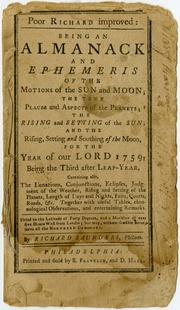
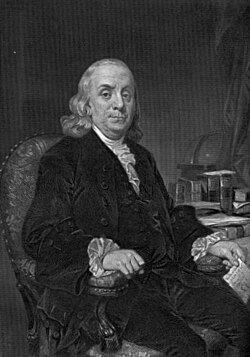
I started to listen to the sayings and proverbs of Poor Richard’s Almanac, written by Ben Franklin, while I worked on my cables. Maybe it was the sayings themselves or the soothing voice reading them but for whatever reason, they brought me great comfort. They would talk about work, money, time, or virtue and I was slowly convinced that these messages represented the way forward. I wanted structure and consistency and here were these proverbs preaching just that. I wanted a plan to move forward, to get out, and these one-or-two-line sayings helped me take the first steps. Below are some of the lessons I learned from the sayings of Ben Franklin, collected from Poor Richard’s Almanac.
Lesson One: Don’t Waste Your Time.

“Do you love life? then don’t squander time, for that is the stuff life is made of.”
Poor Richard’s sayings about time are geared toward encouraging productive activity. It is painfully true that we only have a limited time allotted to each of us. He encourages us, “To be up and be doing and doing to the purpose.” The idea is to find your purpose and to use your time as efficiently and as wisely as you can. I wanted that daily trip into work to mean something, I wanted those forty hours of work to work for me. I realized that how I spent my time would deeply affect the trajectory of my life. The paycheck I got every two weeks represented eighty hours of my life that I had exchanged and I wasn’t going to let it be for nothing.
This may be more relevant than ever with the tools we have at our disposal to waste our time in ever more ingenious ways. With our wasted time, could we learn an instrument, a second language? Could we write a book, play a sport, connect with community? There is always a minute here or there that will be wasted or lost to distractions, but the point is to find your focus again and to take up the responsibility of using your time productively –whatever that means for you and your specific purpose.
It is at this point we must understand a kind of paradox. We want to live today because tomorrow is not promised to us, but we must act as if tomorrow is promised if we are to make the best decisions today.
Every day I went into that dead-end job, I felt I was wasting my time. I wanted to live now. What if all the time I had left was wasted going to work, doing these pointless things? But I also realized that in order to build a life that included all the wonderful things I wanted – travel, connection, creativity – I had to believe in the future first and begin to build a life that looked nothing like my dream in order to eventually attain it. In short, I began to believe in effort, patience, and productivity. Though I still struggle with these things, I have made them a practice of my daily work.
Lesson Two: Work can be a wonderful – and helpful – part of your life.

“Industry need not wish.”
Poor Richard’s admonitions usually include some mention of industry or hard work. He constantly reassures us of the ability of our work to sustain our lives — “Keep thy shop and thy shop will keep thee.”
Our relationship to work can become somewhat murky and impersonal. Work can also be an integral part of life, meaning it is integrated into your life, rather than kept at arm’s length. In the past, a craft was so deeply personal that someone’s surname was their profession, and they taught their children and their children’s children their craft, weaving it into the identity of generations.
It is more common nowadays to have an ambivalent or even negative relationship towards one’s work. For many now, work is just some place they go to in order to pay the bills. Resentment can build toward work when you have no intentional relationship with it.
I would say it is a rare case that someone will find their most meaningful work right off the bat. For many of us, we will have to wade through several years of dead-end or pointless jobs to make ends meet before we find a mission or calling that inspires us to pursue something greater. I started working in a movie theater at sixteen. I have been a painter, a plumber, a grocery clerk, a nomad farmer. I have worked in manufacturing for several years. It has all continued to develop the skills I need to do the work I really want to do. The moment where everything clicks still eludes me, but I work toward that every day.
Even after this click occurs, it can be quite some time before you feel effective and competent enough in your work for it to be truly rewarding. But the point is to seek this out. I have known many who wallow in their pointless jobs until they retire. They make sure to remind you that they are not where they want to be. But they also don’t do anything to work toward a more purposeful calling. Their association with work is that it is terrible, something to avoid, and they never pursue a work that can help them fulfill their potential while also providing meaning and order for others. “The trade must be worked at and the calling well-followed,” Poor Richard says.
As I mentioned, I wanted work to mean something and that means coming away from it having gained more than I’ve lost. I had lost time and energy that I would have rather put towards other things but that meant I wasn’t going to let my gain be for nothing. At times, I denied the things I wanted briefly in order to work towards the things I wanted the most. I followed Poor Richard’s wisdom, “It is easier to suppress the first desire than to satisfy all that follow it.” No small contribution to my eventual success was going to be scoffed at, or, as Poor Richard says, “Many a little makes a nickel.”
The path is not straightforward or easy but with consistency, we can begin to make our moves.
Lesson Three: Consistency will take you where heroic effort can’t.

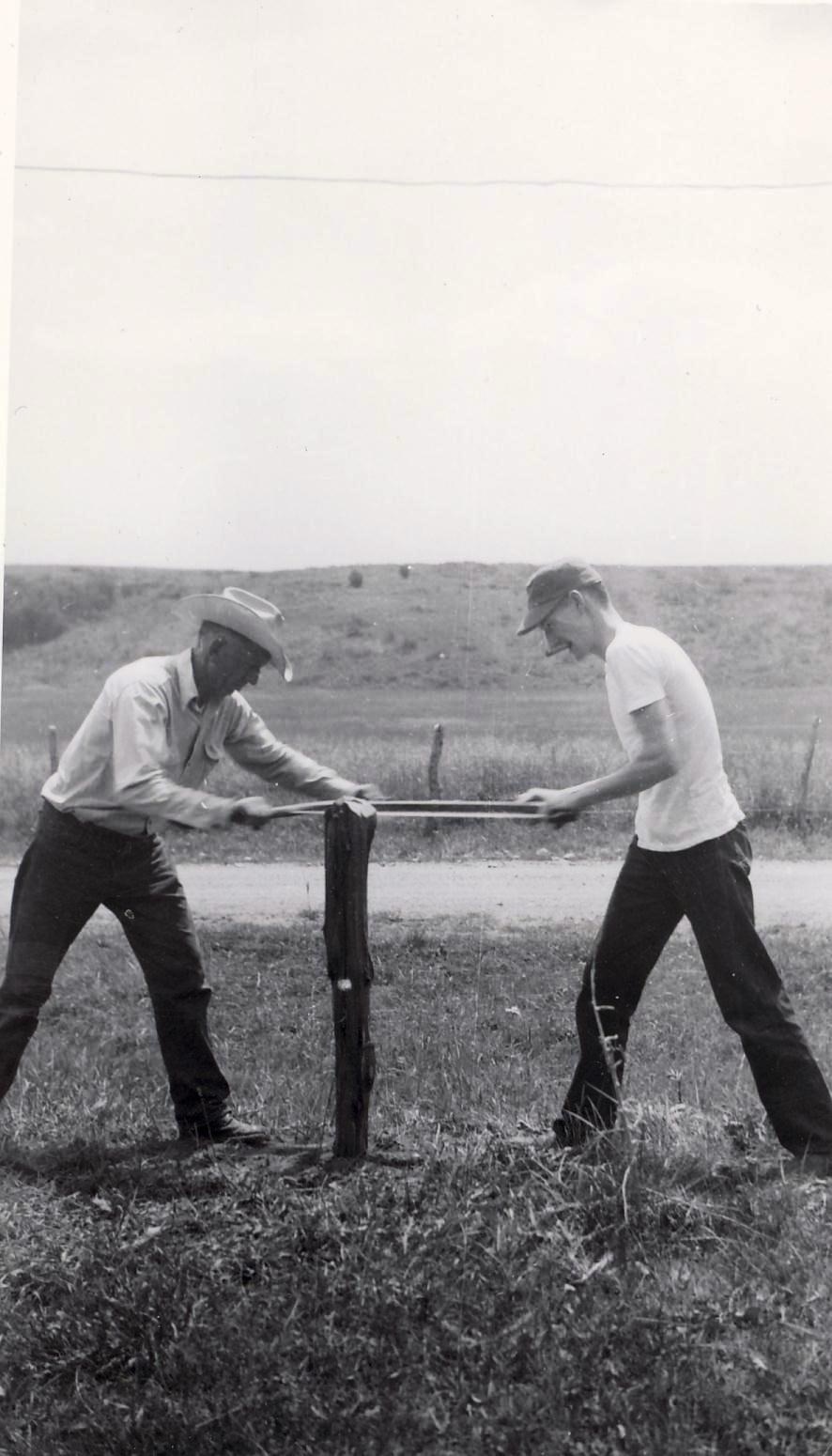
“Little strokes fell great oaks.”
Huge undertakings and overnight successes can be enticing concepts to those who have much ambition and not enough patience. You want to work eighty hour weeks, make a massive return on a penny stock, win the lottery, strike it rich. The consistency and patience of daily work can hardly be made to be romantic compared with the richness and aesthetic of the overnight success. But the possibilities of consistency are always far greater than the short-lived win. They are certainly greater than waiting for luck to come save us.
Once again, Poor Richard’s world involved plain, regular people making a life for themselves and for others. Many of his sayings preach patience, contentment, and consistency as the means to attain the good life.
It is part of the Goodwork philosophy that we must find work that appeals to our nature and our purpose in order to live a fulfilled life. In this philosophy, work is not merely a means to an end, it is not something you use just to get enough money in order to do what you really want. Work should be a purposeful and meaningful act which allows you to express something deeply personal about yourself and your relationship to the world. And when that is not available, we should be steadily working to get to that point.
I knew if I quit that awful job, I would find myself in another one not long after. As long as I refused to engage with the inconvenience of work I did not like, I would never have the resources or skills to find the work that was meant for me. I looked to the summit of the mountain, but I had no respect for the first steps, so I never moved. I wanted to fall into my ideal rather than work up to it. Having found respect for the process, one can begin to move within its channels. But we must be content to be beginners, humbled by new experiences every day, in order to attain to the level of masters.
I am a huge fan of any philosophy that includes some element of continual improvement. Why? Because goals, aspirations, and ambition that swell beyond actionable steps can actually demotivate you and cause you to disengage from the work that could be accomplished now. This initial work is inevitably linked to the end goal, a goal which may be massive, and they are connected by a thread called continual improvement. We have to learn to be okay with being beginners. We have to believe that any progress is good progress. We have to believe that we have a hand in our future, that we have the power to continually improve our circumstances so that we may do the most meaningful work we can. For ourselves as well as for others, we make the slow trudge of consistent effort. Or, as Poor Richard says, “Vessels large may venture more but little boats should stick near shore.”
Poor Richard sends a message throughout his collection of wisdom to be steady, settled, and careful in your daily business. This involves attention to detail and diligence in attending matters that we sometimes have impatience or disdain for. For it is true, “a small leak will sink a great ship.”
Work hard, don’t spend more than you make, and use your time wisely. As you can see, these lessons are the same basic lessons we have always known and the same lessons we have always had to relearn as time goes on. While today we may have several schemes or hacks for going about these goals, Ben Franklin through his pseudonym Poor Richard, preached virtues like diligence, frugality, and industry as intentional, daily practices that would do more for people than their short-lived schemes. While I was certainly impatient when I was younger, I realize now that the best accomplishments come from the long game, the committed endurance of an entire life.
For those who are interested, all of Poor Richard’s sayings have been collected in a work called ‘The Way to Wealth’ by Benjamin Franklin. I will include a link here.
Thanks for reading!