
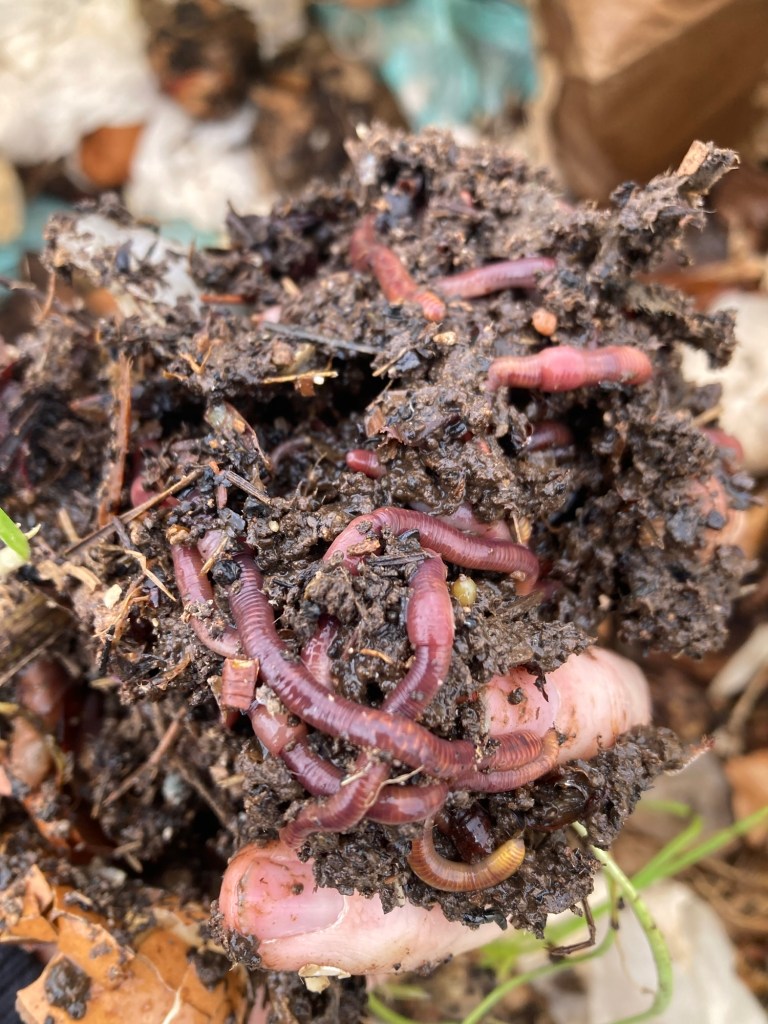
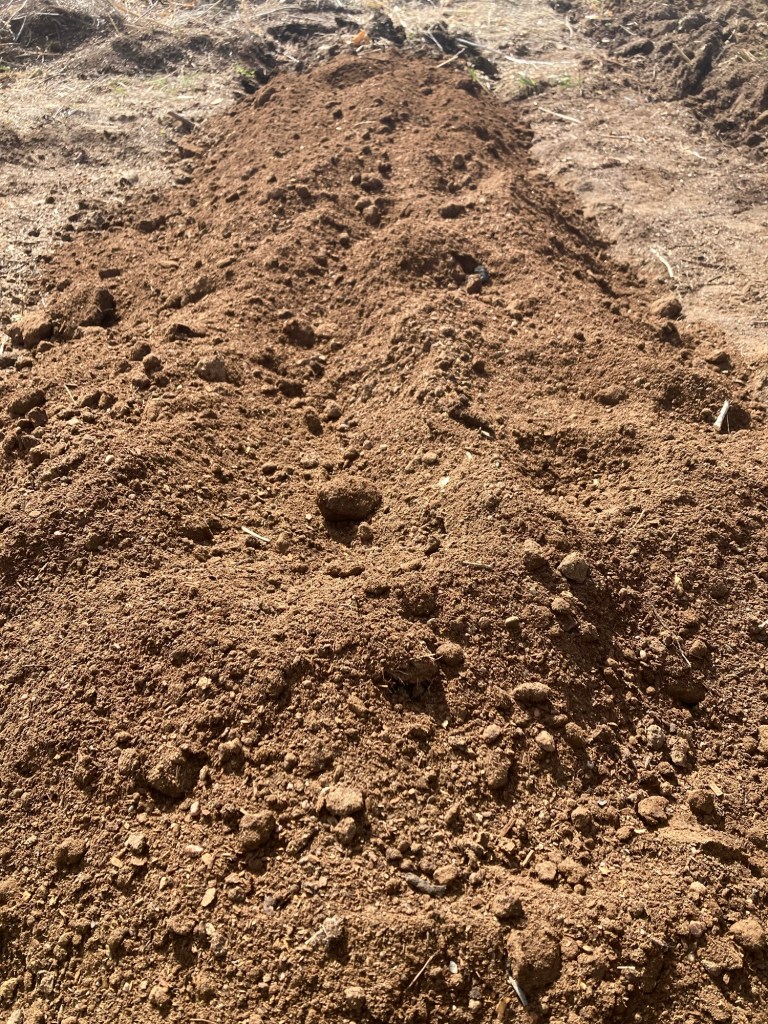
Poop is king. This may make me sound insane but once you get involved in farming and gardening, you really learn to love poop. Big ol’ piles of manure are like gold to me now. I fancy myself a collector of poop, a veritable poop connoisseur, if you will. Right now, I am actively collecting chicken poop as well as worm poop for amending the soil in our garden. Recently, I traded three dozen eggs for a trailer full of composted horse manure.
Gardeners and farmers are not really in the business of growing plants or animals but in growing soil. From the soil comes all the abundance we are looking for so we must look to growing the highest quality soil we can if we are to accomplish our aims. Poop is the way.
Okay, I’ll stop saying poop so much. Let’s call it “waste.” But what is waste, and how do we classify it as such when looking at the inputs and outputs of a system? Other than manure, what other types of “waste” can be made use of? Is the waste really waste if we can find some value in it?
Let’s take a look at common waste streams as an example. In the U.S., it is estimated that 120-130 billion pounds of food goes to waste per year. From consumer and retail sources, this waste goes directly into landfills. There are a number of reasons for this food to be considered waste – it sits around too long and falls outside of its ‘best consumed by’ lifespan, it is post-consumption material that people would not consider worth saving, or it is deemed unacceptable for consumption by producers, wholesalers, and retailers and must be disposed of. No matter the reason, the core principle of this waste stream is: it falls outside of the circle of value to people. It is not considered as having value to people so it is not considered as having value, period.
The typical laying hen may eat approximately 1 to 2 pounds of scraps per week. Mine may eat much more than that, they are like little pigs with wings! Composting worms may eat approximately half their weight in scraps per day. Black soldier flies, another popular feeder insect, can eat about twice their body weight per day as larvae. And what are these critters eating? Food “waste” that humans have considered inedible.
All three of the above-mentioned critters can eat fruit peels and cores, rotten and spoiled vegetables and post-process vegetable scraps. The chickens can typically pick through the leftovers of an old meal for the tasty morsels they really love, leaving the things they don’t like for the compost heap. Worms can eat coffee grounds and composted manure, as well. Black soldier flies eat ANYTHING you throw at them other than carbonaceous material (paper, cardboard, wood bedding, etc.)
This means our flock of forty chickens can eat between two and four thousand pounds of food scraps per year. Our worm bins can process about the same amount of food scraps per year, depending on how their numbers fluctuate throughout the warm and cold seasons. The black soldier fly system is in its infancy but as it begins to rival the scale of our worm bins, it will consume roughly the same amount as the chickens and compost worms. That means about six thousand pounds of food scraps – material that nobody wants, material that people are paying to take to a hole in the ground – are turned into valuable resources. Feeder insects and farm-fresh eggs. This is the closest I’ve ever come to getting “something for nothing.”

And then we return to poop. I know, I have to say poop a bunch more. We got rid of the food scraps by putting it through these livestock and insect systems but what do we do now with all this s**t ?! Remember how I mentioned the farmer and gardener being a grower of soil? The worm poop, the soldier fly poop, and the chicken poop all make fantastic composted manure material that we can use for growing the soil. Anything they can’t eat is processed in a compost pile by billions of microbes. It’s almost as if this system was developed over millennia as a means of managing a multitude of waste materials created by diverse groups of flora and fauna.
In nature, there is no such thing as waste. Every output created by one system is picked up by another system and used as fuel. Flocks of birds follow behind roving herds of ungulates, picking through their manure for fly larvae. The worms eat whatever is left over of the grass nobody munched on and the droppings they left behind. The soil keeps growing thicker and more fertile year after year. It is a closed system.
It is only when we consider the human system in isolation to other systems that we get waste streams we don’t know what to do with. If we consider something without value, then it must have no value. But many people in various fields, driven by the desire to take advantage of these unappreciated and underappreciated materials, have brought them back into the fold of the human system. The more we do this, mimicking nature’s methods of “zero-waste”, the more value we can derive from human systems without creating resource mismanagement and untenable waste streams. What would a zero-waste world look like? What systems could create this, and what incentives would drive us to create the necessary processes? How would it reform the systems we have come to take for granted, and how would the institutions and systems of humanity be changed in order to achieve this level of organization?
Many might think of business and waste as going hand-in-hand. Businesses create waste. Perhaps businesses are thought of as wasteful, in general. Here is where my experience in “lean manufacturing” comes into play. In the world of manufacturing, the old ways are being seen as ineffectual, unsafe, and downright inefficient. Made manifest in the principles put down by The Toyota Way, the philosophy behind manufacturing has changed in order to both respect the individual person and to continuously improve systems to lower the levels of waste present. Why? Because respected individuals are much more productive and lower waste means higher profitability.
I would highly recommend looking into this philosophy and the systems associated with it. I may write more on these topics later, as well, as I feel they align with several principles inherent in the tenets of goodwork.
Whenever I have need of visiting a landfill, I am somewhat overwhelmed and disheartened. They are feats of engineering and problem-solving, to be sure, but the implications of the systems that must produce these as a necessary tool are staggering. The amount of trash creates an image of post-apocalyptic wastelands. How nice it would be if we developed systems to render these pockets of sequestered garbage unnecessary. I am also not so naïve as to think that this will happen anytime soon. But we focus on what we can control and we make continuous improvement. If each family owned half a dozen chickens and a worm bin, that would be a great start! If neighborhood compost heaps became the norm alongside their community garden counterparts, even better. One step towards a happier, healthier world.
Coming down from my soapbox daydreaming, I return to our daily work that we must do — our goodwork. I can talk about getting rid of XYZ waste stream and having ourselves a local food and gardening frenzy all day but what really matters is how this relates to the work we are doing now, today. Is there a waste stream in your work that you find inconvenient, unsightly, or high cost? Is there a waste stream in your personal life that may be draining valuable time, energy, or money? We take advantage of our food waste in order to feed our chickens, insects, and gardens, but maybe you take advantage of yours to cut down on expenses, save some time that you could spend with your loved ones, or give you more energy throughout the day to tackle the tasks of daily life.
Whatever you find in your journey towards a more efficient, fulfilling life, I hope you keep going, keep getting better, and keep doing your goodwork.
 Goodwork Almanac