Tag: spring

  • Friends of the Garden

    Bees

    In beginning a ‘Friends of the Garden’ series of posts, I would like to shed light on various plants and animals that bring tremendous benefit to not only our gardens but to nature in general. These posts will include a small portrait of this friend of the garden, as well as ways to encourage this friend and make a niche for them to thrive. I enjoy watching out for all these different forms of life and how they might come to appear in the garden; it is like collecting, without disturbing anything or catching anything. At the end of the season, I get to look back at all the different forms of life I had invited into my world. Some of these friends are having a hard time, so creating corners of the world that are friendly to them is likewise important and I hope to inspire some of that with these short posts. First, the bees.
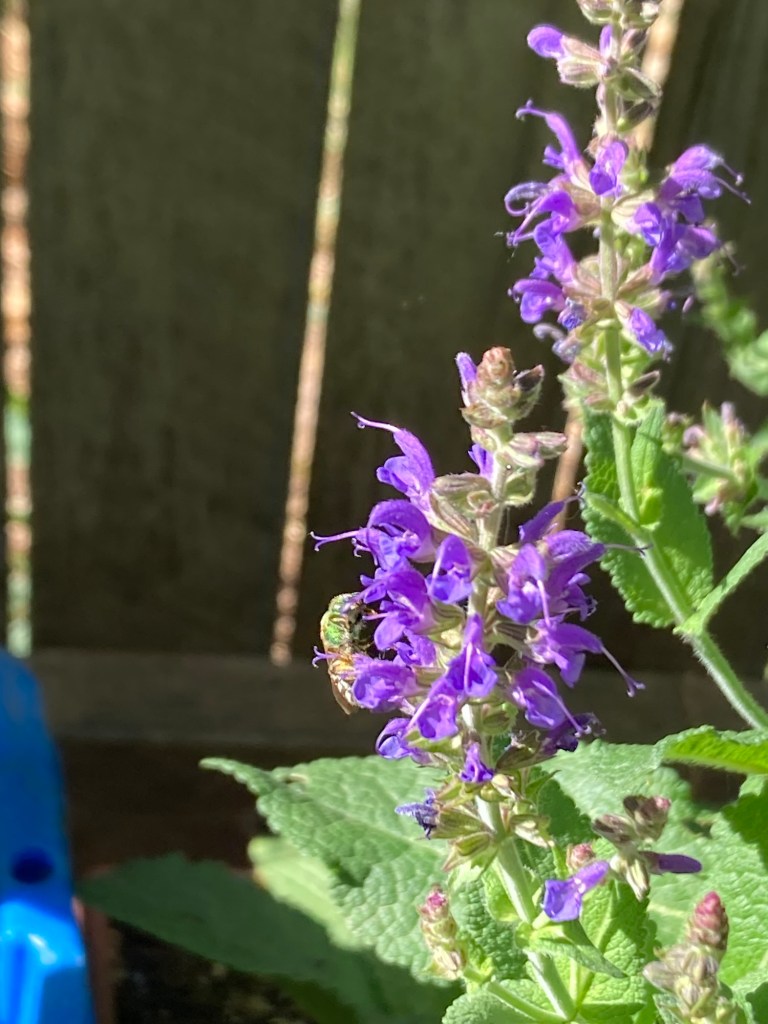
    Solitary bees

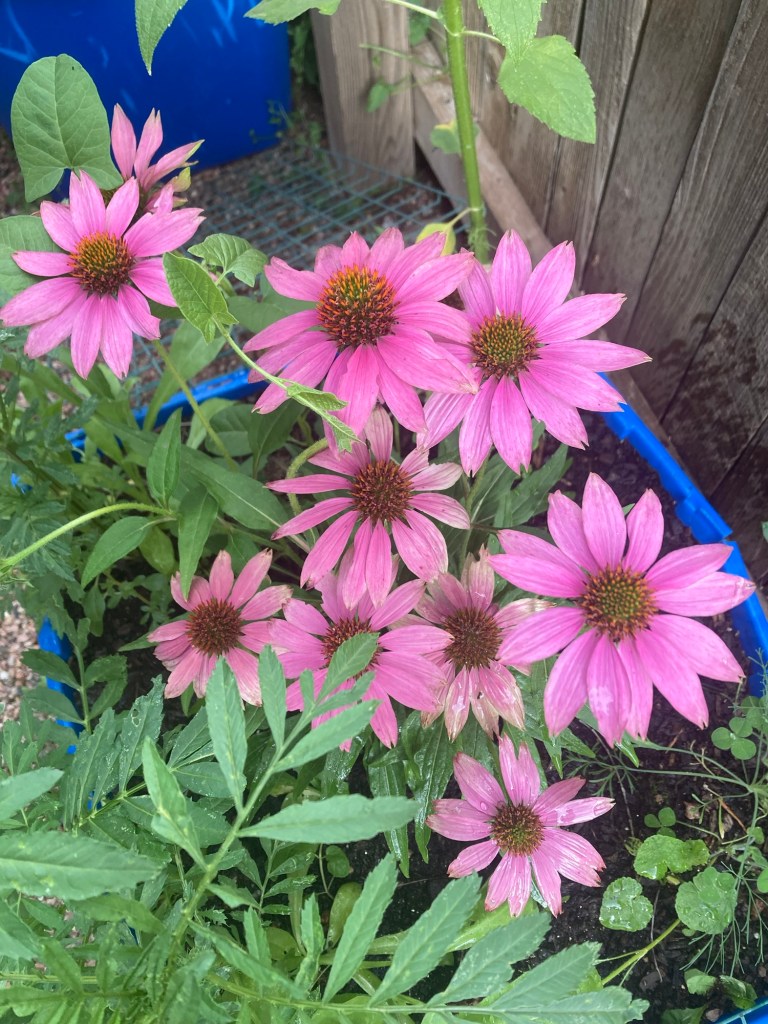
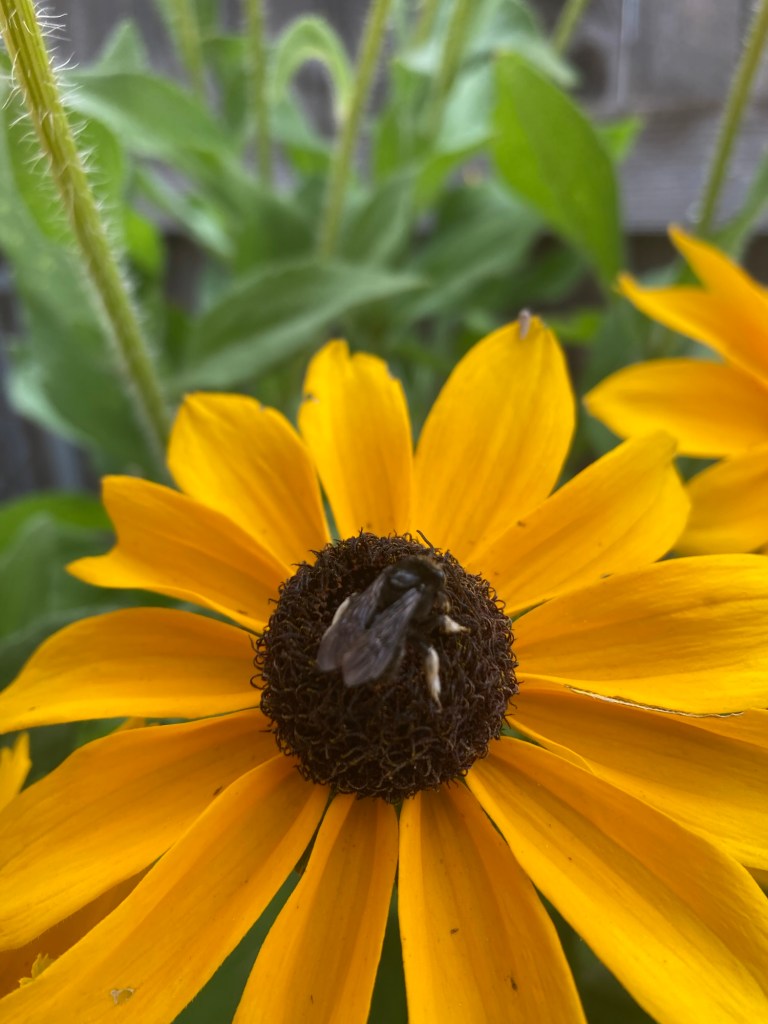
    Not all bees are social in nature, such as the honeybees who form intricate hives and live in colonies. Some bees, known as solitary bees, make their nests in the cracks and crevices of logs, in sand or soil burrows, or even among cavities of hollow reeds. They are still excellent pollinators and should be encouraged by a bee-friendly garden of flowering native perennials. Coneflowers are an excellent choice for these gardens as they provide both food and shelter. Examples of solitary bees include: the mason bee, the leafcutter bee, the metallic bee, miner bees, and squash bees.
    Bumblers

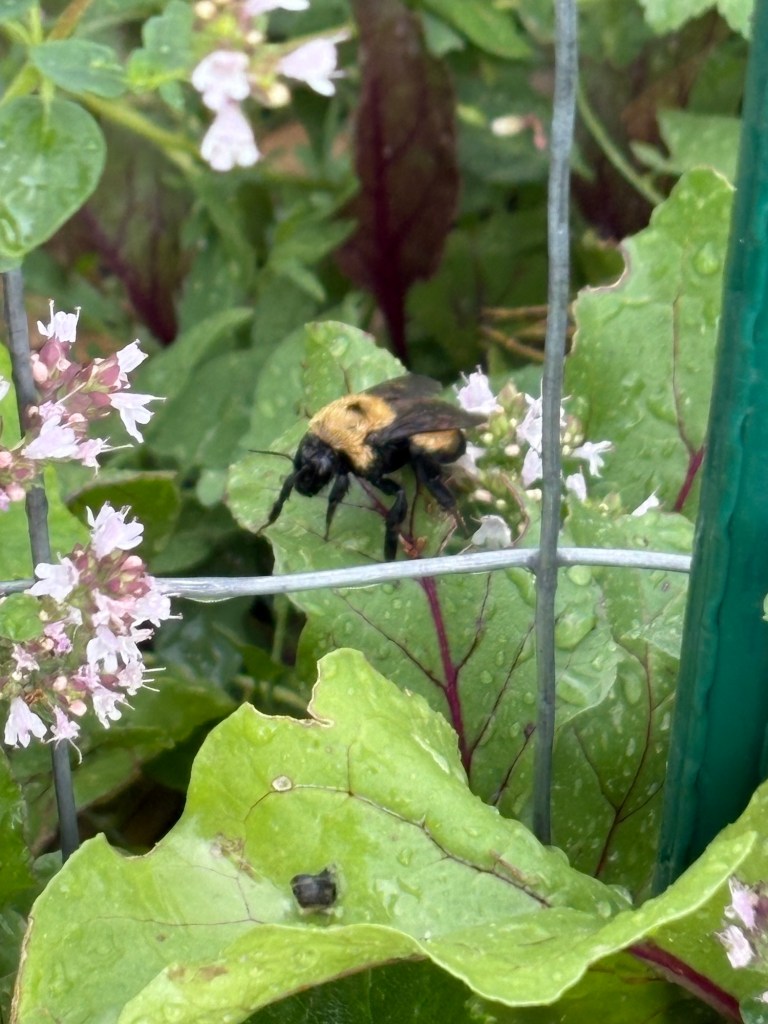
    Bumblebees come in many varieties and I am always glad to see them hanging around our garden. Something about their graceful clumsiness, the way they bend the whole stem down when landing on a flower brings me immense joy. Bumblebee types include: the American bumblebee, the red-belted bumblebee, and the yellow-banded bumblebee. There are several varieties of bumblebee that were once prolific in the U.S. but which are now in trouble due to pesticide use and habitat disruption. Bumblebees do have a queen and a colony, though they are sometimes located in the ground rather than up in the trees, as a honeybee hive typically is.
    Honeybees

    The honeybee is a great bee for both pollination and the economically attractive habit of making honey. Beekeeping is a wonderful hobby, perhaps even a wonderful enterprise if you are so inclined, and can teach you more about the wonders of nature. But this post is not really about the honeybee or honey production, it is more about encouraging a huge range of native bee populations just for the fun of it! We may return to the traditional honeybee work in another post.
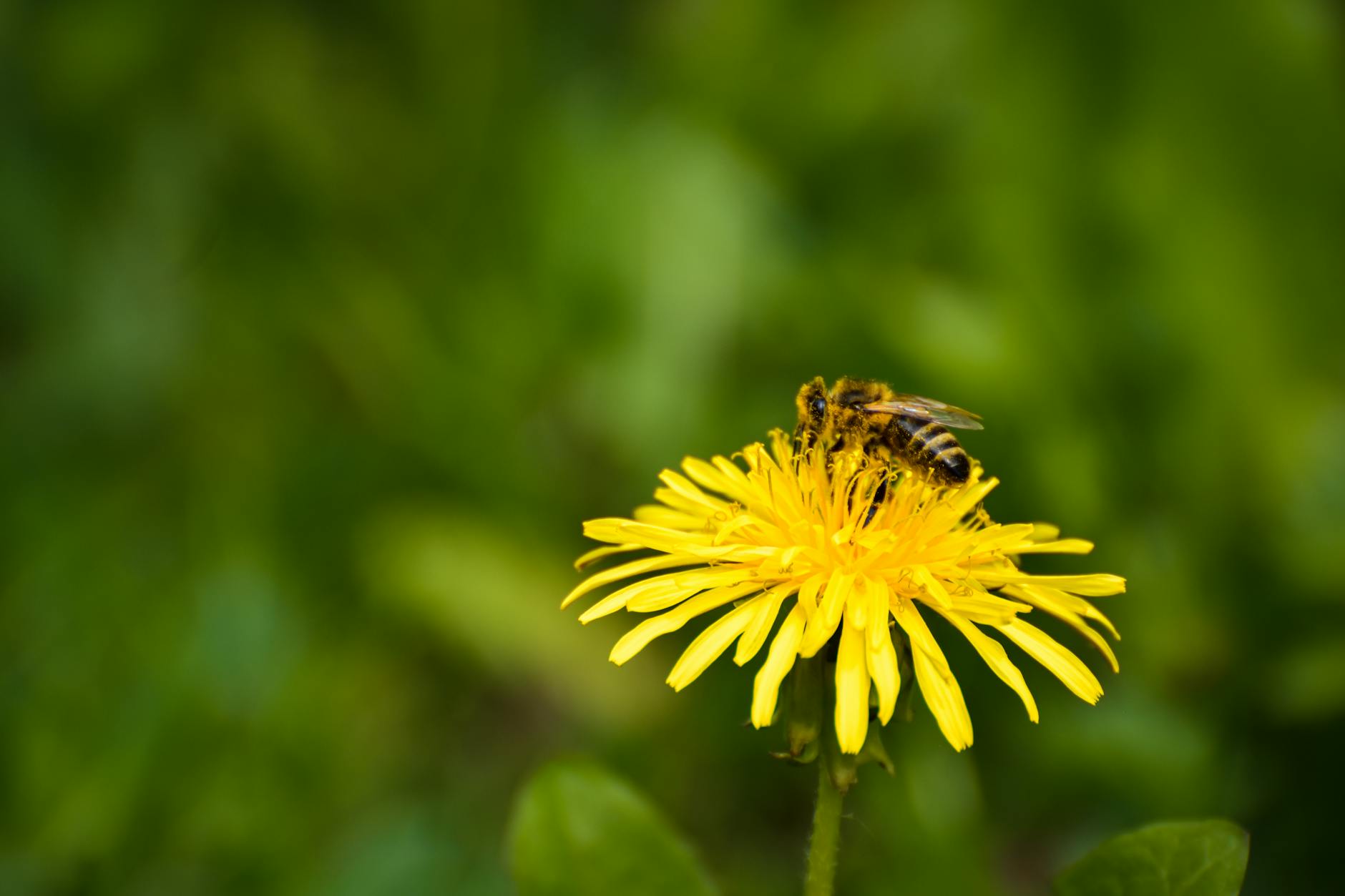
    Photo by Alexas Fotos on Pexels.com

    How to Create their Niche

    Let’s start low and go from there. Since many solitary bees and bumblebees make their home in or on the ground, it would be wise to provide these bees ample room to set up shop. Providing sandy soils, muddy areas, or hollow reeds will give the bees a place to make their home right in your garden. Allow your garden to ‘rest’ by leaving accumulated leafy material and twigs on the ground. This provides a refuge for all sorts of pollinating, beneficial insects to overwinter. Setting out shallow trays of water, with pebbles in the water for the bees to land on, will also encourage them.
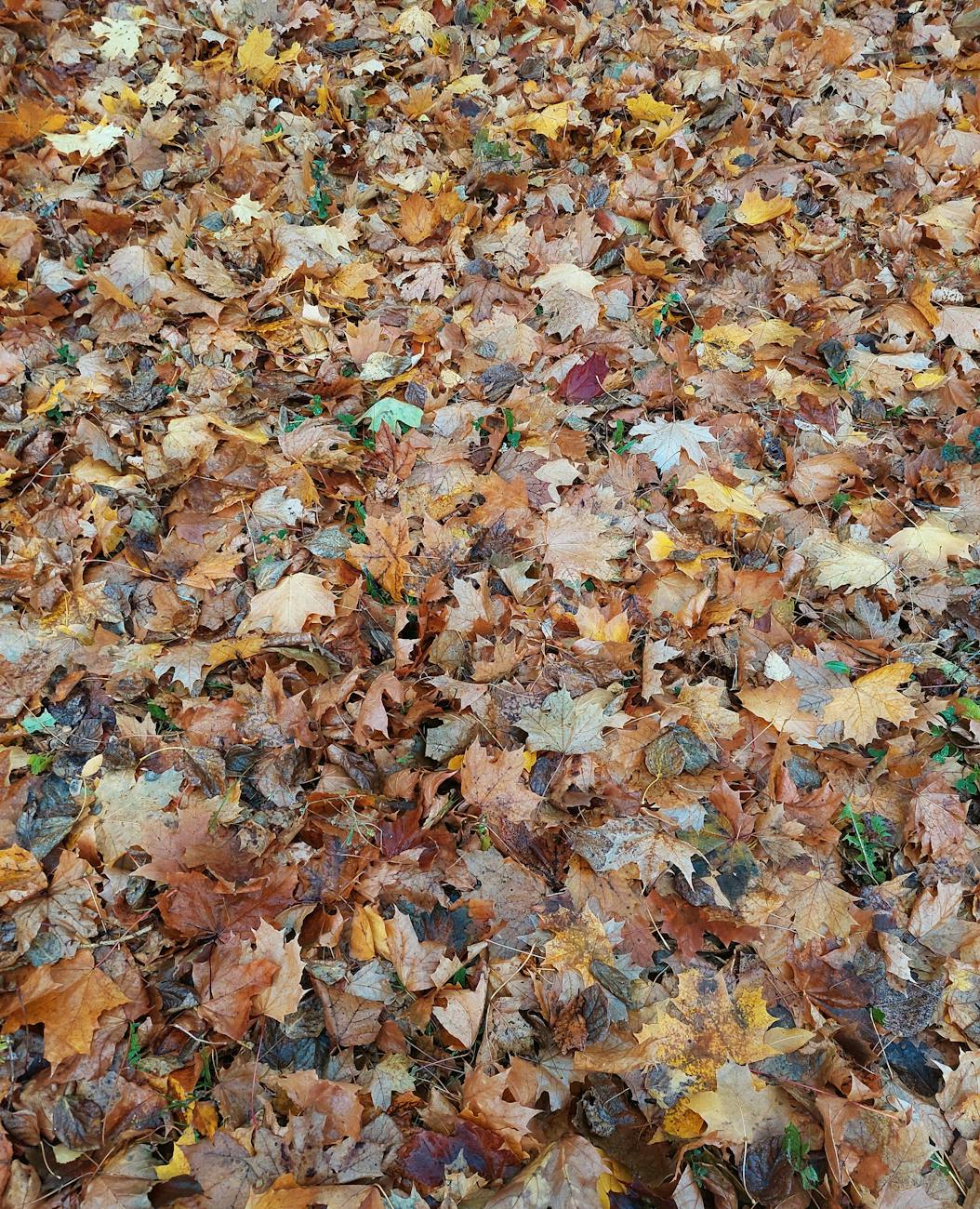
    Photo by Guzel Sadykova on Pexels.com

    Avoid using pesticides or chemical fertilizers in your garden. You may think the pesticides only ‘target’ the insects you do not want but these chemicals can have negative impacts on beneficial insects as well. And since their homes are made in or near the soil, treating the soil with strong chemical fertilizers may also disrupt their life cycles and make for a poor habitat. As always, do your due diligence before applying chemical anything to your garden so you can be aware of possible negative side effects, or just to make sure you are applying it correctly. Improper application of even a mild chemical can create issues.

    Next, what to grow in your garden to attract the bees. I am a proponent of any flowering native perennial. If it is native, there is a chance it will provide a home for some type of native insect, even if it is not a honeybee. Since it is perennial, you won’t have to plant it every year and each year will bring a stronger growth. And because it flowers, it will provide food for birds and insects as well as beauty for your garden. It does not have to be only native plants, either.
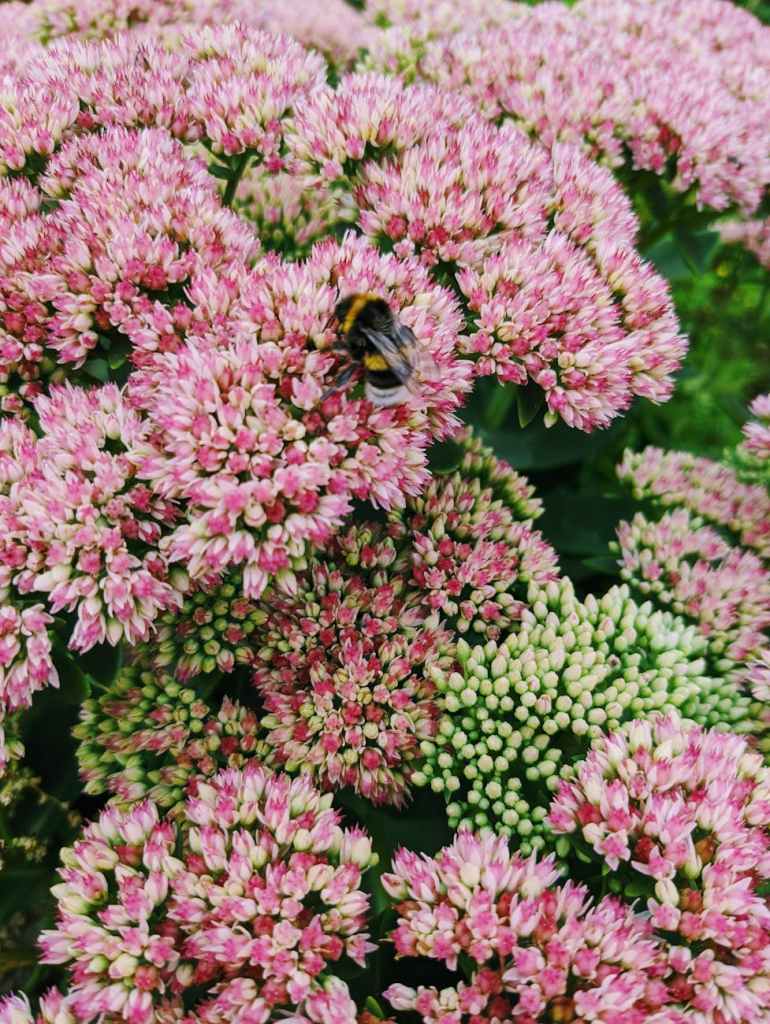
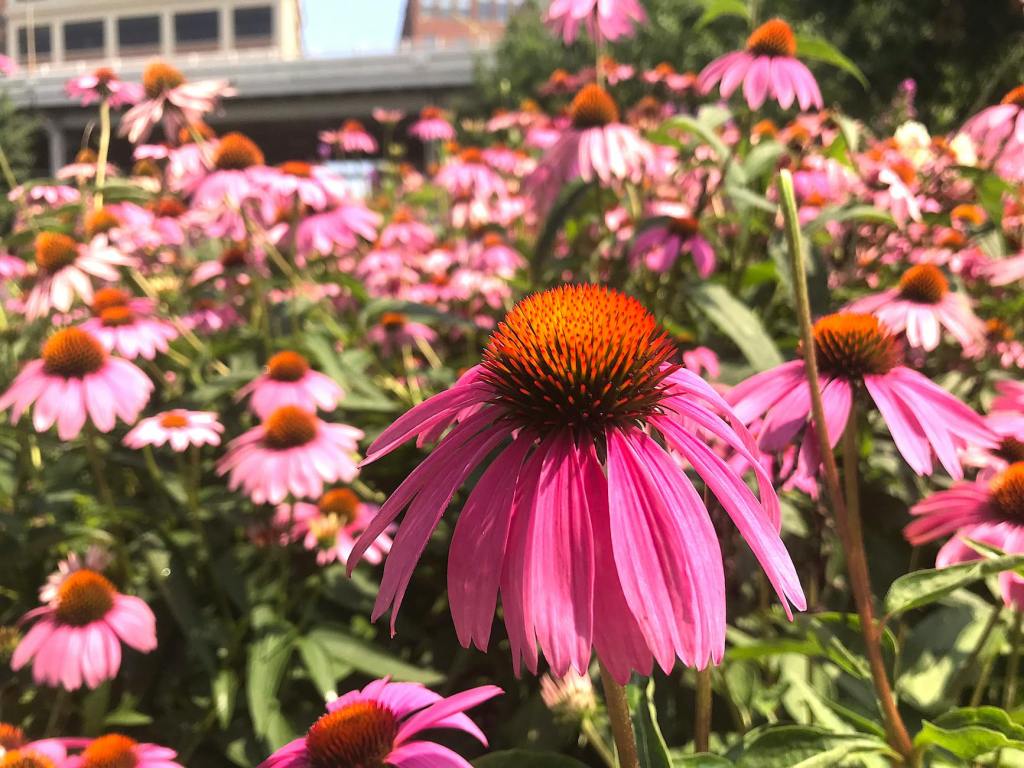
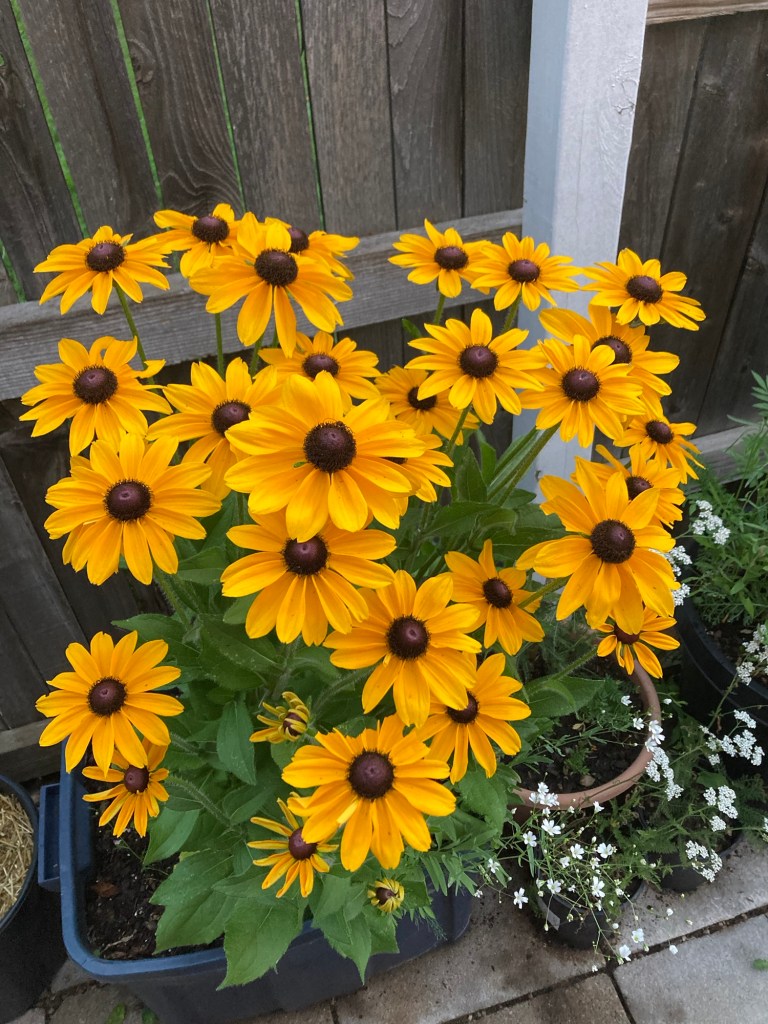
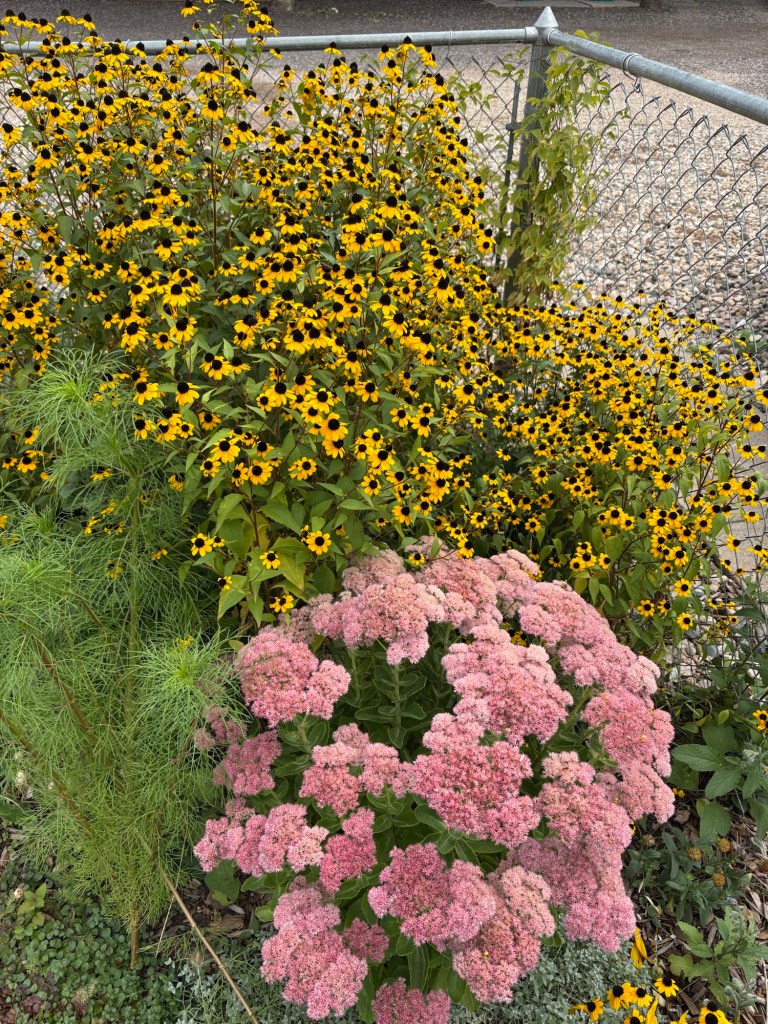
    Most websites on bee information recommend asters, echinacea (coneflower), and daisies. Black-eyed Susans and sunflowers are beautiful and also provide food and shelter for bees. We have planted prairie sunflower in our garden in the past few years as it is resilient and prolific. I have personally had good luck with sedum ‘Autumn Joy’ which does wonderfully in our local climate, as it is drought and cold tolerant, though not a native plant. The bees really seem to love it. The image above is a bumblebee sitting on blooming sedum I believe.
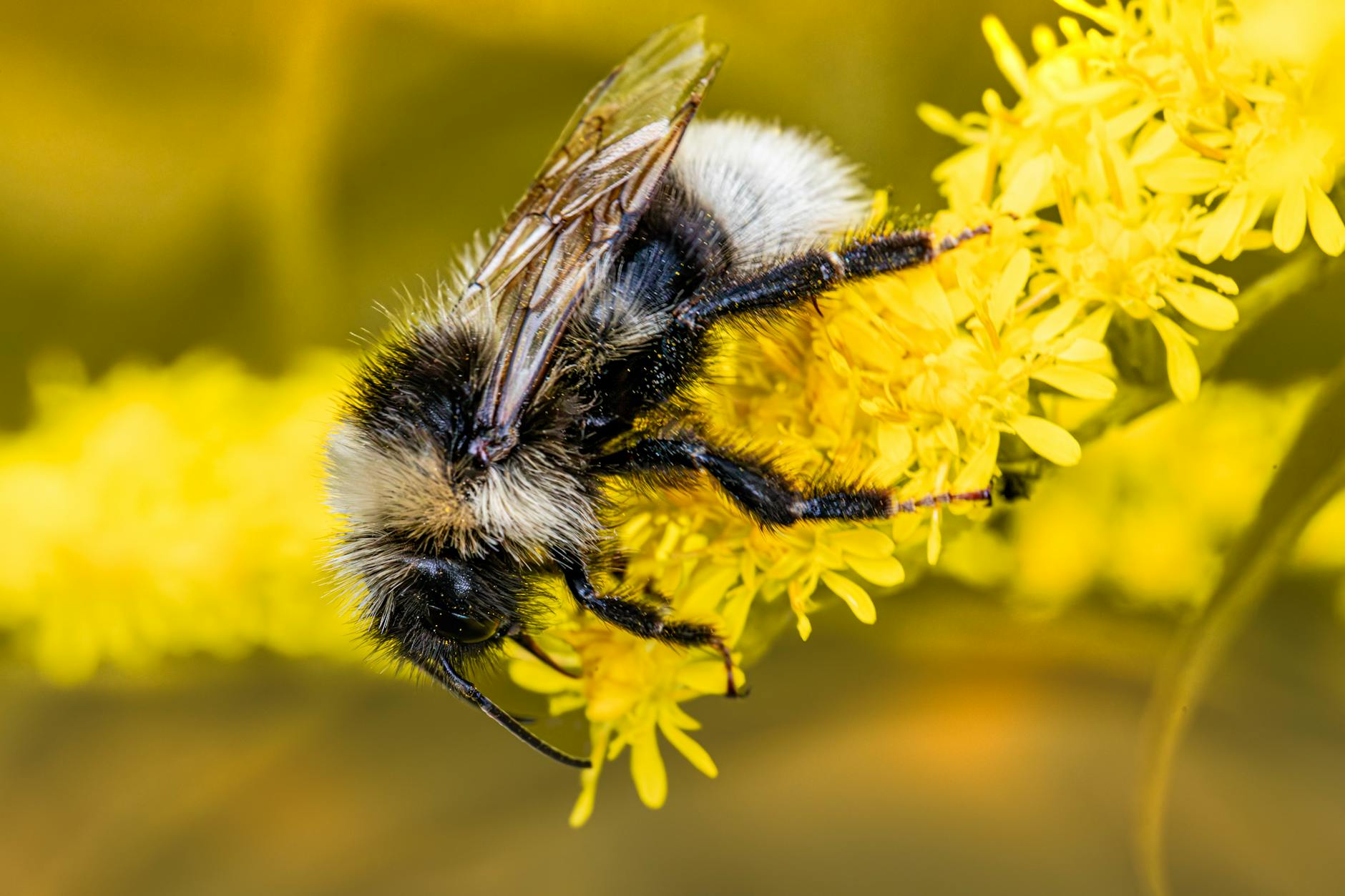
    Photo by Erik Karits on Pexels.com

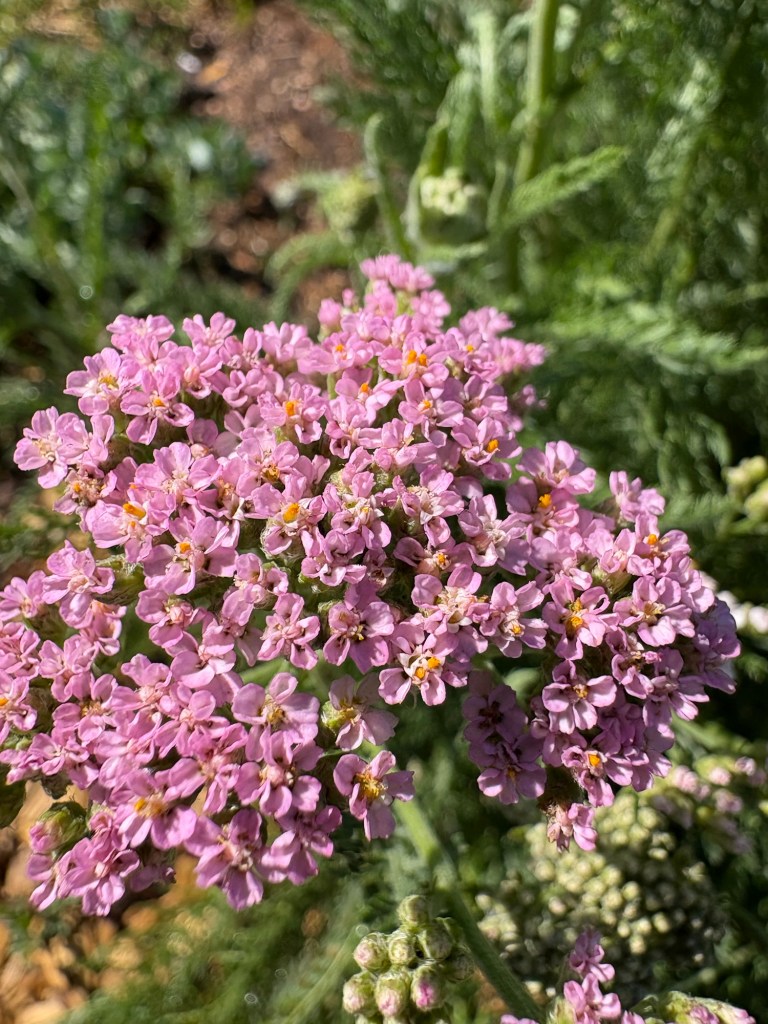
    I would also personally recommend Anise Hyssop. It smells like warm spices and attracts so many insects to your garden, you won’t know what to do with them all. Other websites also recommend bee balm, borage, goldenrod, clover, salvia, and yarrow. We have had great experiences with borage, salvia, and yarrow as they are all incredibly hardy and return year after year – the borage is an annual but it self-seeds so aggressively that even many community gardens do not allow it to be planted. For our purposes, this is great news, as we want our pollinator-friendly garden to spread throughout the neighborhood!
    Lastly, there are a few things you can create which may encourage these friends of the garden. Drilling holes in logs, providing bundles of reeds and sticks, even simple leaf and stick piles can come to serve the purpose of shelter for a native bee. There are many examples of bee structures you can DIY, plans for these projects litter the internet by the hundreds, and it would be a fun addition to your garden décor. I did not know until recently that bumblebees will use a bee-house (similar to a birdhouse) and that they are relatively simple to make. If you are not so handy to build your own, you can surely order some type of structure or have your crafty neighbor help you make one.

    It may seem ridiculous to drill holes in a log or collect a bundle of sticks together but you must remember how sterile and barren the world has become. The habitable corners of the world for a native bee may be few and far between when it comes to living among us. It may be several miles of paved over road and parking lots, sterilized yards of chemically-treated turf grass, or barren xeriscape rock before they come to a spot where they can set themselves up. Drilling a silly hole in a silly little log could make the difference between them finding absolutely nothing and finding at least a little silly log.

    Whenever you are creating a niche for something in your garden, just think about the main things they would need: water, food, and shelter. Then consider stopping anything which might deter your garden friends, such as chemical fertilizers or herbicides, pesticides, and fungicides. Soon enough your garden will be bursting with life and your garden friends will decide to come pay a visit, maybe even setting up a permanent home in your little corner of the world!

    Conclusion

    This post serves as a superficial primer on bees, a short look into these friends of ours and how to recognize them and bring them around. It is not the definitive source on bees and I would encourage anyone reading to look through a guide that is more thorough in its information. Below are links to several sites I visited while writing this post and which include a wealth of information on bees, their habitat, and encouraging their health. You can even order some bees over the internet if you are so inclined! Happy beekeeping!
    https://kindbeefarms.com/shop

  • Sowing Seeds

    Sowing Seeds

    New Beginnings

    While many celebrate a new year in January, the later part of winter is still marked with inactivity and darkness. The seeds are still sleeping in the frozen soil, the days are short and the nights still long and demanding rest. January does not always feel like the beginning of something new but the continuation of a season of pause, rest, and waiting.

    Personally, the year feels new when things grow again in spring. We seek to begin – relationships, work, eras of our personal lives. We celebrate freshness and renewal. The themes of spring’s natural movement are youth, clarity, expectation. And we reconcile ourselves to those natural elements with our own behavior.

    It is in this time of beginnings that I want to begin this project. I call it the Goodwork Almanac because it will follow the cycles of the year. It may also become a commonplace book to sort odds and ends, a journal to record the most noteworthy events, a scrapbook to document memories as time passes. I do not rightly know what it will grow into, for now I am just sowing seeds.

    There is no definitive separation between the end of one season and the beginning of another. They blend around their edges. Perhaps there is a day in March when the sun comes out, or when the dirt at the edge of the yard is exposed from the creeping edges of the snow that melts back. And you say to yourself, “Oh, it felt like spring just then.” We take walks into the garden to see what is returning – the hardy perennials peek out of the frost and snow.

    Think of the “seeds” which you will plant in your life in this part of the year, the season of new beginnings. What thoughts will you allow to take root? What habits will you cultivate and what habits will you eradicate? The proverb says you will reap what you sow – the question asked of you by the very nature of spring is: what will you sow?

    If you plant complacency, you will harvest mediocrity. If you plant focus and commitment, you will harvest many successes. This is not only the time to plant tomatoes, peppers, and herbs for the coming months but also the time to begin new practices, new habits, and fresh plans for the future.

    What is the work that demands your attention? Are you meant for beekeeping, raising sheep, writing books? Are you here to help others through their darkness, create things out of wood and metal, or cook nourishing meals for a restaurant full of hungry people? Maybe you were meant to raise ducks, make cheese, draw cartoons, or push a broom. Only you can know, and only you can find your way to that path.

    “You owe it to all of us to get on with what you’re good at.” – W.H. Auden

    These posts will be a different kind of seed to spread. I want to discuss ideas, plans, techniques, and strategies to navigate this journey that we are on. I claim no professional status. I am a true amateur in all realms. By definition, an amateur is someone who does something for the love of it.

    At the end of the day, I cannot say there is a best strategy or a single answer. All I can do, as a gardener, is spread seed and see what comes up. A certain seed may not sprout here, at this moment, because the conditions aren’t right. Another may view it as the perfect moment to leap forward.

    We sometimes get caught in the mistake of thinking that life is something which happens, a mere event. But it is much more like a medium or a substance which we can explore, interact with, and develop. It is the raw material which we can use to create ourselves. The neglected field will grow just as much as the acre of carefully tended farmland – the difference is the effort and care exerted, the creation of a logical and measurable plan, the indulgence of a dream.

    The perfect strategy is the one that works. The perfect moment is the one we have now. The perfect context for beginning is the one in which we are forced to start.

    Most of all, these ideas I spread are ready for discussion and interaction. I think of the Goodwork Almanac as a forum for spreading beneficial ideas, useful thoughts, constructive discussion, and helpful stories that may inspire others to grow and move forward.

    Planning and Patience

    The early signs of spring are like a densely coiled seed which will eventually explode onto the scene with its usual clarity. First, it must be as small and undetectable as the first white roots in the soil, or the little ripple of light that moves out of the darkest months. The stirrings of life must begin somewhere, and they begin here.

    These things do not happen all at once. The day you plant the seed is not the day you will harvest, but one must begin in order to get to that harvest day.

    It is about humility. Accepting that beginnings are often ridiculous and inauspicious. “This little seedling is going to give me pounds and pounds of tomatoes?! Unlikely!” But it is true. Just as with other things: do not discount the ability of consistent growth and patient progress. (I view this as good advice in general but also a reminder to myself).

    The key is to remember. Constantly remember that this is your life just as it is the seedling’s life, and it is passing by with gradual change and miniscule degrees. It is spring again. How much progress have you made since last spring? How much growth would you like to happen before the next spring? Do not commit the mistake of turning your attention away from this growth, just as you should not turn your attention from the care of your seedlings.

    “The reward for our work is not what we get, but what we become.” – Paulo Coelho

    There will be many distractions. It seems that daily life is riddled with things that demand our attention and drain us of the energy we would like to give to more important things. A few minutes here and there spent in a state of distraction and resignation will add up. It gains momentum as a habit of ‘tuning out’, of forgetting, and eventually it may steal days, weeks, or months per year of your life that could otherwise have gone toward fulfillment, beginnings, organization, connection.

    These posts will also be about remembering the path we want to be on. I am not prescribing paths or espousing answers but merely saying “Hey, wake up, remember you have a path to take, a journey that is your own.”

    I have been lost and would not wish that on others. I have wanted guidance and encouragement and have found only work to do. That is how we start. There are already too many voices that proclaim that life is meaningless, that there is no point, and that we should give up. Even if no one were saying this out loud, the annoying voices in our heads would still repeat this false idea. Part of the drive of this blog is to repeat the message that your life is yours to create, that it can be filled with meaningful action and work, that despair and hopelessness are not the answer, that we can still build a wonderful and powerful life together.

    Practices and Meditations

    Plant ten seeds in little pots of good soil. If you cannot do ten, do five. If not five, then one. If you do not want to keep them, sell them or give them to friends and family as gifts. But it is important to see them and to know them as they grow in this part of the season. Plant the other “seeds” of your life as well! Start a savings plan, start going on walks every day, start smiling and using people’s names when you greet them. Little things matter, they grow into big things.

    Look for the first spark of color in the dirt, the first green tendrils resisting the cold, the first honeybee making its rounds. This is about paying attention. Time moves by quickly when we aren’t paying attention. If we cannot enjoy the little things in our lives, we most likely won’t enjoy the bigger moments either.

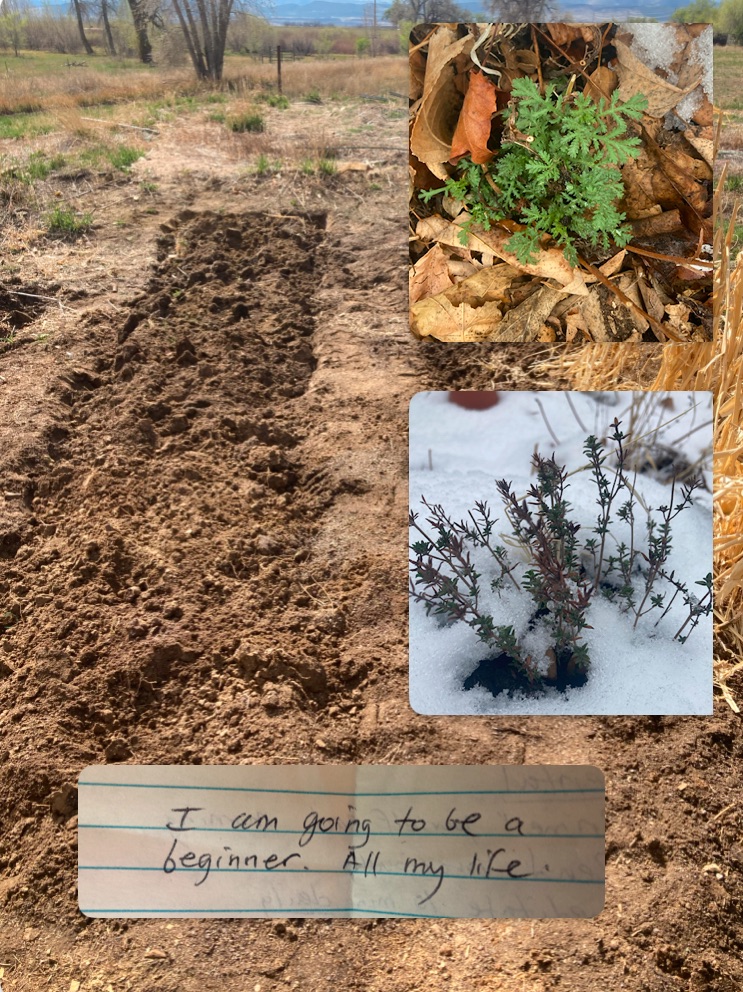
    The garden is just dirt at the beginning. It is somewhat unremarkable. We have to be content with being unremarkable when we begin, so we may give ourselves room to grow. Delayed gratification is a muscle we must exercise, a skill to learn, not a natural trait. If you keep your attention on doing the work, you will look up one day and everything will be flourishing just as you intended.