
Finding and pursuing your goodwork
Many people will begin the journey of their life’s work doing something entirely irrelevant to their nature, their goals, and perhaps even their character. I started work at seventeen at my local movie theater, working the concessions counter part-time on evenings and weekends. From what I can recall, I was paid a low wage to get berated by the general public because they made the mistake of ordering movie theater nachos and hotdogs. This was my first encounter with work. And it was not great. It was also where I grew my appreciation for employees in the service industry, a place where brave hearts fear to tread.
Throughout my twenties, I worked a handful of odd jobs. I traveled both Europe and the U.S. working on small farms in exchange for room and board. I worked in a bookstore, as a house painter, as a plumber. I worked one shift as an overnight shelf stocker at my local grocery store before deciding it wasn’t for me. In each job, I felt keenly that I did not belong. Each time I tried something that did not work out, I felt a lot like I was being rejected by the world, like I would never belong anywhere. There was always going to be this friction or resistance when I wanted to pursue some aim.
What’s worse, I looked around and some people were actually passionate about their work. They didn’t drag themselves to their jobs, they didn’t complain about the ins and outs of their profession. They liked to work. And it wasn’t an isolated incident! You could see people working in restaurants, gyms, bookstores, offices, landscaping companies, and they actually wanted to be there. You could see it right off, it was something in their eyes.
I wanted to have what they had, I wanted to do something that I felt connected to, that I could be engaged in. I wanted to make something that had utility, that provided value. I wanted to make something that could provide joy, guidance, and beauty.
In my mid-twenties, I got a job in assembly manufacturing, gluing one part to another part and screwing wires into circuit boards. It wasn’t what I wanted but it was something. It was in this period of my life that I started to change how things were going to be. I had changed my attitude toward my path. I wasn’t going to quit at the first chance and I wasn’t going to let the negative aspects dissuade me from continuing on.
As I was soldering circuits at work one day, I had my first mental glimpse into the future that I wanted to create. Since then, I have realized the various pitfalls common to this process and I have discovered some practices in mental outlook that have helped along the way.
This, by no means, is to suggest I have attained success and prestige in the field of my goodwork but merely that I have found the path and have begun to understand the process. I hope the same for others. When travelers meet, they may talk about the places they have been and the experiences they have had there. They say things like, “Did you ever make it to Edinburgh? Me too, there was a little pub there I always liked.” And then maybe, “Oh yes, we went in late summer and the weather was nice but I returned some years later in March and it was much colder than I would have liked. But all the lines were short and the castles empty for us to enjoy alone.” That’s something along the lines of what I aim for here. Travelers meeting and exchanging notes.
EFFICIENCY v. EFFECTIVENESS
One of the first lessons you learn in any pursuit is that things do not go smoothly in the beginning. The beginning of any endeavor has us accruing endless costs and expenses and the few wins here and there can spur us on but certainly do not begin to cover costs, let alone provide for growth.
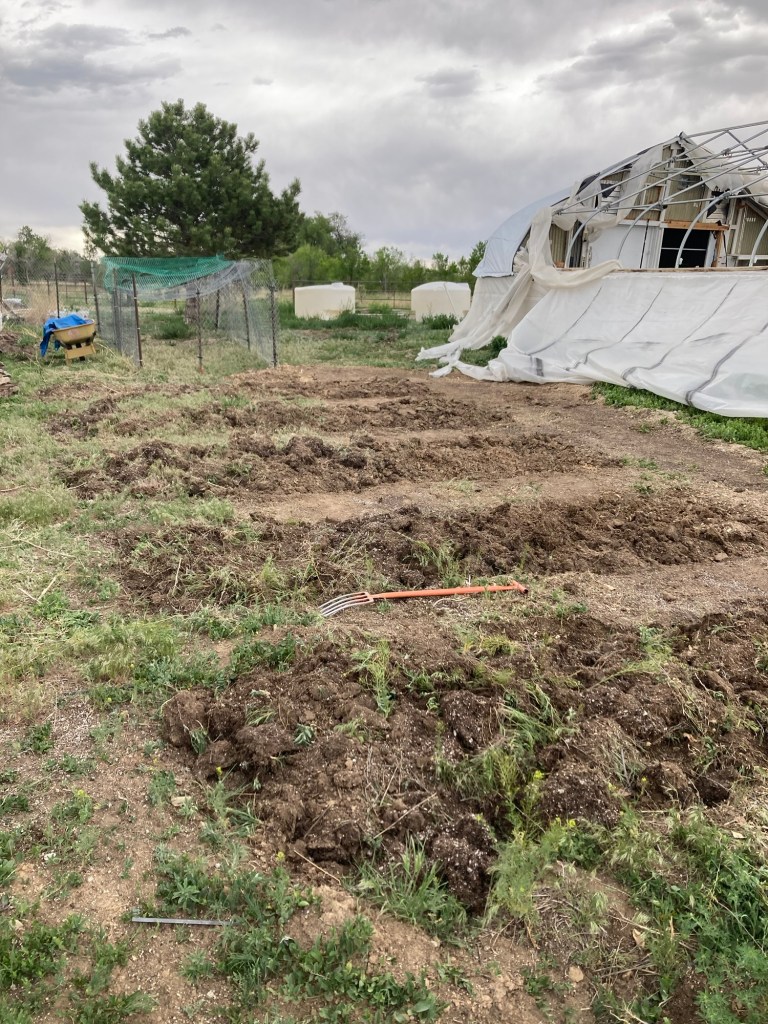
When I began my various gardening projects, I wanted things to go smoothly and efficiently. Digging garden beds in the sun feels anything but smooth or efficient. But I would remember that the point of digging the beds was not to be efficient, as it only had to happen that one time. The point of these large time and labor costs was to be effective. To get it done and get the plants in the ground. So, it took several more afternoons than I had planned to get the soil prepared, and it took more than one trip to the hardware store for different tools and materials. The costs kept mounting and it destroyed my expectations of a smooth and inexpensive project. It didn’t matter. When the project was done, the garden was ready for the planting and I would never have to dig the beds out again.
The same is true for other pursuits. School, for example, is not an efficient process but an effective one. It is more time consuming and more expensive than you plan on but the point is not to get to the end as quickly and efficiently as possible but to put the time and study in that is required for you to get your degree. Going through the effort to set up the assembly line takes the majority of the time and energy and then when it is running smoothly you can put your mind toward efficiency and productivity. You will not make a ton of money on your first few clients, or on your first transactions with a new client, because creating the new relationship is about effectiveness, not efficiency.
Advice for this phase of your goodwork involves mostly mental rewiring. Because this phase does not involve the gratification of rewards but the collection of costs, it can be discouraging and frustrating. Try to adopt an attitude towards these challenges that reinforces your path – they are like milemarkers showing you the way. They may test your commitment, make you question your abilities, but they tell you that you are on the right path toward achievement.
Try to separate your activities into projects and production. Projects are your high cost endeavors with no return in the short run. Production is highly rewarding and more efficient. If you make the mistake of thinking your project will be as efficient as your production, you may become unnecessarily discouraged and frustrated. Instead, take it for what it is. Keep the faith that this project will eventually lead to an increased capacity for whatever your goodwork is, and do the work with that in mind. High expectations and delusions of grandeur will burden your mind and your project and may turn into procrastination, overwhelm, and maybe even quitting.
LOGORRHEA, THE ROLE OF PLANNING and ORDER
Logorrhea is defined as the excessive use of words. The way I use it here, I am also including other logical forms like plans, dreams, expression, calculations, thoughts, and discourse. It is quite common that people will get trapped in a state of logorrhea when they go about beginning a project or task. They talk about doing it, they fantasize about it or the rewards they will get from it, they will read about it and watch videos about it, they will write out detailed plans and to-do lists about it, they will crunch the numbers about it. Going even further, they will chastise themselves for not doing it sooner or not doing it as good as someone else. They will hate the obstacles and focus their energy on them rather than their aim. They will look for recognition and accolades, they will search for reasons, answers, and reassurance. They will imagine the perfect circumstances, look for them, wait for them. But all of these things have one thing in common: none of them will replace actually doing the thing.
To avoid this pitfall, try to keep your planning, accounting, and advertising in balance with actually doing the work, making the product, and pursuing action that brings substance. These planning activities should be limited to a small percentage of your time and the rest of your time should be used in working the plan and bringing it to fruition. There is always going to be a need for thorough plans and accurate accounting but the key is not to be carried away by the allure of purely abstract thought. You think, “Maybe if I change this around a little bit, I can make a few extra dollars per unit and then if I increase my sales by about ten percent a year it will compound to this amount after ten years and if I just capture one percent more of the business in the market I can make this much more money…” And soon enough you’ve done nothing but crunch numbers about goods and services that do not exist. You can’t eat a garden plan, so be sure to plant those tomatoes!
Do not complain, do not explain. It is my impression that people engaged in work waste precious time and energy in two key areas – complaining about the work and explaining themselves. There is a time and place for the expression of these two things. If something is bringing about far too many complaints, maybe it is time to sit back and consider if there is a better approach. And explaining yourself to others will always be necessary in this world of navigating other people, until we become telepathic. But watch carefully that you do not give in to endless complaining that has no ideas for betterment – this is whining. And make sure you are not spending excessive time and energy explaining yourself to others, as this may build the habit of seeking validation from others rather than satisfaction in the results of your work.
MAKING THE TRANSITION
“Do what you can, with what you have, where you are.” – Theodore Roosevelt
This cannot really be called advice but is actually an immutable law of nature. We have to focus on what we can do since the alternative is what we cannot do. We have to use what we have since it is impossible to use what we do not have. And while we may end up in different places and conditions throughout our journeys, we must recognize in each moment where we are in reality in order to make real progress. The grass is greener where you water it.
People start their journeys toward their most meaningful work from all different backgrounds and positions. Some find a way to make it happen with relatively little education or support, these are entrepreneurs and business owners. Other lines of work like medicine or teaching require more educational inputs and involve a long process of improvement that is not as open to ‘overnight success’. I certainly don’t want to get surgery from someone who did not go to medical school and is just hustling for love of the game.
Whether the journey to your work is long or short, it is common to start from a place that is far divorced from the path you’d like to be on. Personally, I have been working in assembly for several years now and am actively engaged in changing that path. I am not sure what that will look like over the next few years but I know I will continue to work to get closer to doing something I care about, which helps others, and in which I can become a true master.
Patience is a difficult concept to grasp at times. The moment you think you have achieved patience, you start looking around for your reward… oops! That’s the point of patience! Keep going. There will never be a moment when you outgrow the need for patience. There is no one-size-fits-all answer to how long your journey will last but let’s just say, for the sake of ease, that it will last you the rest of your life. While you are on the way, make sure you are becoming the type of person you would like to be, someone you can be proud of. The daily work does a little work on us, too, reforming us like clay over months and years.
Begin your journey where you are, have the humility to recognize and respect your starting point. It is easy to get used to the movie montage transformation, the zero-to-hero training sequence, the overhaul makeover, and the end credits rolling at the perfectly written conclusion. Our lives are not like that. They are littered with beginnings and endings of many different phases, interests, and personalities. This could be said to be the reality of goodwork. There is no end to goodwork because there is no moment in your life in which you would ever be content to live without connection, value, or creativity.
CONTINUOUS IMPROVEMENT
The silver lining to the fact that you must start where you are is that you can also improve much faster than you think you can. As long as you are continuing to be honest with yourself about your limits, your resources, and your starting point, you can begin to make small gains in skills and resources that will compound over time.
A pitfall to avoid: assuming that your progress will always look the same as it does now, when you are beginning your pursuit. If it takes someone six months to save one thousand dollars, they despair that it will take them decades to get to where they want to be. But they do not account for the process of continuous improvement that they will undergo as they keep to their journey. In this example, they may begin to earn more as a result of a job change, they may find unnecessary expenses to cut from their budget, and the money they have saved begins to earn interest. They thought it would take them several decades to get to their goal but it ends up happening at an accelerated rate.
The prerequisite for continuous improvement is to commit to life and engage with the work. If you are constantly looking outside of yourself for happiness and fulfillment, you forfeit the ability to create your own. You will not be able to improve on something you refuse to work with, so you must be dedicated to this practice.
It may be discouraging to begin with little gains here and there. Certainly, these first improvements will seem unremarkable or insignificant. You may even feel embarrassed that things are going so slow, or that you are not making the leaps and bounds you envisioned for yourself. Consistency above all else will win you continuous improvement.
Conclusion
So, you start where you are. It is anything but perfect. The goals you wish to attain are specks in the distance. The point is to begin. Not to begin perfectly, not to fulfill your potential all at once, but just to get started. This is one of those pesky lessons you have to keep learning all your life. To be honest, I am not good at it. I have always wanted to be the prodigy, the natural, the chosen one. I want to pick things up quickly and without effort. That is a habit we have to work on, to learn that effort and work are glorious things to undertake and not an inconvenience from which we should escape.
Thank you for reading!










 Goodwork Almanac