Spotlight on Goodwork
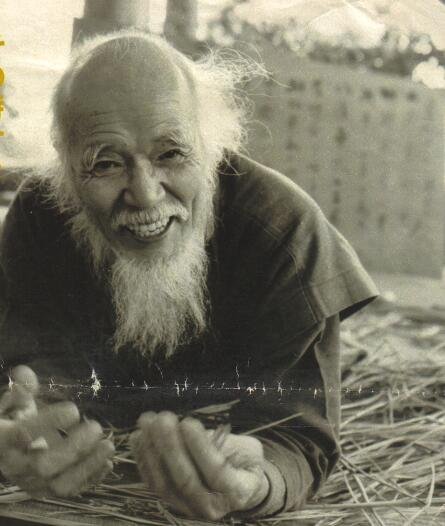
One of the giants of the “Natural Farming” movement, as well as a proponent of a multitude of valuable nature-based ideas and philosophies, Masanobu Fukuoka embodies several elements which are common to the goodwork archetype.
His dedication to his craft had him traveling the world, helping others implement his ideas, putting his philosophy down in writing, and working on his own farm until the ripe old age of 95. His ideas went so far beyond farming as to be considered a holistic view of the world – one in which humans would be developed in their capacity just as the natural systems Masanobu worked with, and not seen as inherently destructive or irrevocably flawed. Masanobu’s contributions are celebrated worldwide and I would like to shed a light on them today, as part of the continuing series of examples of goodwork.
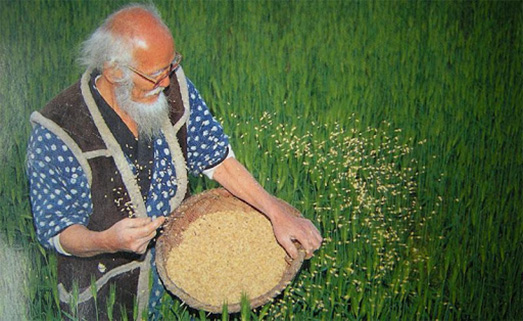
Born in Japan in 1913, Masanobu Fukuoka became educated in agricultural sciences, working in research in plant pathology. After a disillusionment with modern agricultural practices, he returned to his family farm to practice and experiment with new techniques in natural farming. His farm included citrus orchards as well as rice and barley. Unlike other farms in the area, the fields were not flooded for rice production. This was unusual at the time but Masanobu maintained that his no-till methods, paired with crop rotation and native biodiversity prevented the need for tilling, herbicide and pesticide usage, or even flooding the rice fields.
In 1975, he published his most widely known book, “The One-Straw Revolution” – a book I would recommend to anyone interested in the ideas of natural farming or nature conservation efforts. It is a mixture of how-to guides, spiritual meditation, and philosophical musing over the relationship between human effort and natural ecosystems. There is a tone of hopeful endurance as well as a melancholic exasperation with the state of the world, and even the human spirit. This book provides much fodder for thinking on the continued integration of human and natural systems.
After his book became popular, around 1979, Fukuoka travelled to assist in the work of returning productive as well as natural areas to equilibrium. This work included planting efforts as well as a series of lectures given on the benefits of his methods. He travelled to the U.S., Europe, Somalia, Ethiopia, Thailand, Tanzania, the Philippines, Greece, and China to mention only a few areas he touched.
I find a lot of valuable ideas and inspiration in Masanobu’s work and efforts and I continually return to him as a person of intrigue and emulation. I like to imagine carrying the spirit of his work forward, and to embody his philosophy of nature in all aspects of my own life and work. I would love to work in a purposeful manner up to the age of 95, spreading seeds and inspiring people to return to balance. Included in this article are just a few meditations on the ideas Masanobu frequently discussed.
The Integration of Humans and Nature
“The ultimate goal of farming is not the growing of crops but the cultivation and perfection of human beings.”
This is an idea that has intrigued me for several years. It seems that every animal in nature finds a home, a niche, and a way of being that is intertwined with all the systems of their surroundings. Yet we have so many degrees of separation from natural systems in our modern age. Our homes, our technology, our way of life is at odds with other organisms, ecosystems, and processes that we often find it necessary to completely separate the two ideas. There is ‘our world’ and then, when we find it necessary or interesting, we ‘return’ to nature.
Masanobu Fukuoka’s philosophy entailed people becoming “natural people” again. That is to say, aligning their desires and behavior with natural ways of life. Natural farming, and the cultivation of nature, would not be possible unless people became natural people. As long as people viewed themselves as separate from nature, their behavior would lead them down the path of opposition and conflict with nature.
This separation becomes strikingly apparent when observed through the lens of modern agriculture. In this system, we are dealing in the cultivation of natural organisms – crops, livestock – but we have also gone to great lengths to separate the organism from everything else.
In a natural landscape, each organism is interconnected with every other organism in their ecosystem. Their inputs are someone else’s outputs; their outputs are someone else’s inputs. But in modern agricultural practices, a pig is not even a pig, it is a unit of output, and it is subsequently separated from any other organism through a system of constraints – fences, concrete, confinement houses.
Repeat this for cows, chickens, even crops. No other organism is welcome in the field of a monoculture, and I doubt they’d be met with anything other than hostility if they popped up. To the monoculture, any other plant is considered a weed.
This philosophy leads me to wonder what it would look like if humans were completely integrated into their natural setting like other animals. We would make our homes in our niche, part of nature and contributing to nature. We would find or cultivate our food as part of nature and contributing to nature.
What advantages and disadvantages would this bring? Would it even be possible? Is this an all-or-nothing approach or could we still have technological intervention for disease and injury, some semblance of comfort? Is natural living necessarily hard scrabble living? Is there something in us that makes us act at odds with natural systems, and what type of spiritual evolution would have to take place to reconcile ourselves to the natural world? These are the questions that Masanobu’s work helps to explore; not always to answer, but to explore.
The Do-Nothing Philosophy
“There is no one so great as the one who does not try to accomplish anything.”
Fukuoka’s philosophy was called shizen nōhō. Occasionally, it is translated as ‘Do-Nothing’ farming but this is partially a misnomer, in my opinion. More accurately, it could be called ‘Do Nothing Unnecessary’ farming, as there is still plenty to do in this philosophy.
Fukuoka observed that in modern agricultural practices, people intervened in natural processes when they felt they noticed some inefficiency or disorder. This initial intervention then caused other things to take effect, which required another intervention. Each intervention caused another side effect which was not planned and which required more work, technology, and intervention to correct it. The process seemingly had no end.
When Fukuoka began to practice his natural farming methods, he would often respond to issues by asking himself where he could stop doing something. By cutting back on interventions in natural processes, he found he could make less unnecessary work for himself and let nature accomplish the same ends using its own processes, its own effort. The question of what not to do would, in theory, lead to a final practice where nothing unnecessary is done and the farmer has become a ‘natural person’ whose existence is in harmony with nature’s process.
Let’s take modern agriculture as an example once again. The soil is treated like any other part of this ongoing project – sterilized, standardized, stripped of its life and structure through pesticides, herbicides, and tilling. Then it is desperately tended to via systems of watering and fertilizing. This is a strange setup which seems to contradict its own ends and which makes more work than is necessary. First, the natural processes are minimized, interrupted, or halted entirely because they appear to be inconvenient or counterproductive, then they are mimicked by great interventions of machinery and technology.
I think Fukuoka would ask, “Wouldn’t it be better not to intervene in the first place, and save yourself the work of all these later measures?” Instead of plowing and tilling, robbing the soil of its structure and ability to retain water, and then going back later to irrigate and manage watering systems, why not forego the plowing and the tilling in the first place?
Biodiversity and Balance
“The only sensible approach to disease and insect control, I think, is to grow sturdy crops in a healthy environment.”
The way to begin handing these tasks back to nature was, according to Fukuoka, through biodiversity and finding balance. Nature regulates itself through biodiversity, with different populations of organisms growing and shrinking in relation to hundreds and thousands of others. It is not about ‘achieving’ a state of perfect balance but about allowing processes to work themselves out to find their own stasis. Water will find its own level through the process of waves, movement; nature’s movement is the same.
One of Fukuoka’s initial efforts to return his farm to natural balance was to sow different varieties of seeds and to begin growing many different varieties of crops. When there is a single crop, all in one location, the pests that use this plant as a host find themselves in heaven. But if you begin to separate these plants with other plants, suddenly that same pest does not have the same chance to spread. This is what is meant when we say that nature regulates itself through biodiversity. The greater the mixture of plants and animals, the less likely it will be that explosions of pests and disease will occur.
Economics – Advantages and Disadvantages
The main criticism that is put at the feet of natural farming is that it may not be as economically viable as modern agriculture. It either does not have the same potential for output or it is not cost effective. When we look at it through the eyes of mechanized systems and economies of scale, this is correct. A confinement chicken house is economically successful because all its chickens are grown to be more or less identical – all the better for standardized machinery to process them. And each operation limits itself to one product, as having multiple products increases the cost of processing, requiring different types of machinery and technology for different outputs. You cannot pick strawberries with the same mechanisms with which you pick corn, for example.
But the smallholding does not work in the same way that the large operation works, economically speaking. Its advantages are different than the advantages of a large operation. This is normal. As long as the smallholding does not try to act like a large operation, it can still be successful. By being exactly what it is and capitalizing on its unique advantages, it can still be economically viable.
In this example, the smallholding may not produce as much as the large operation but it also does not have the same machinery costs and overhead costs typical of a large operation. Also, if the smallholding focuses on custom work or retail level sales direct-to-customer, they can increase the amount they get for their products. If they would attempt to achieve the same economies of scale as the large producer, they would take on far too many costs to make their product worthwhile. But keeping costs low and fostering relationships directly with their buyers, they can move in an economically viable way.
I think this method applies to work of other types as well, especially craftwork. Those who do not match pure output still have much quality and value to offer. Often, that is their advantage: they still offer something human, and of high quality, that the large producers cannot mimic in their quest for standardization.
Joel Salatin’s book, “You Can Farm” is also helpful in expounding on this idea. He recommends having a main enterprise and cultivating several side enterprises that are complementary in nature. (This also is in line with the biodiversity idea, applying it even to income streams.)
Meaningful Work and Connection
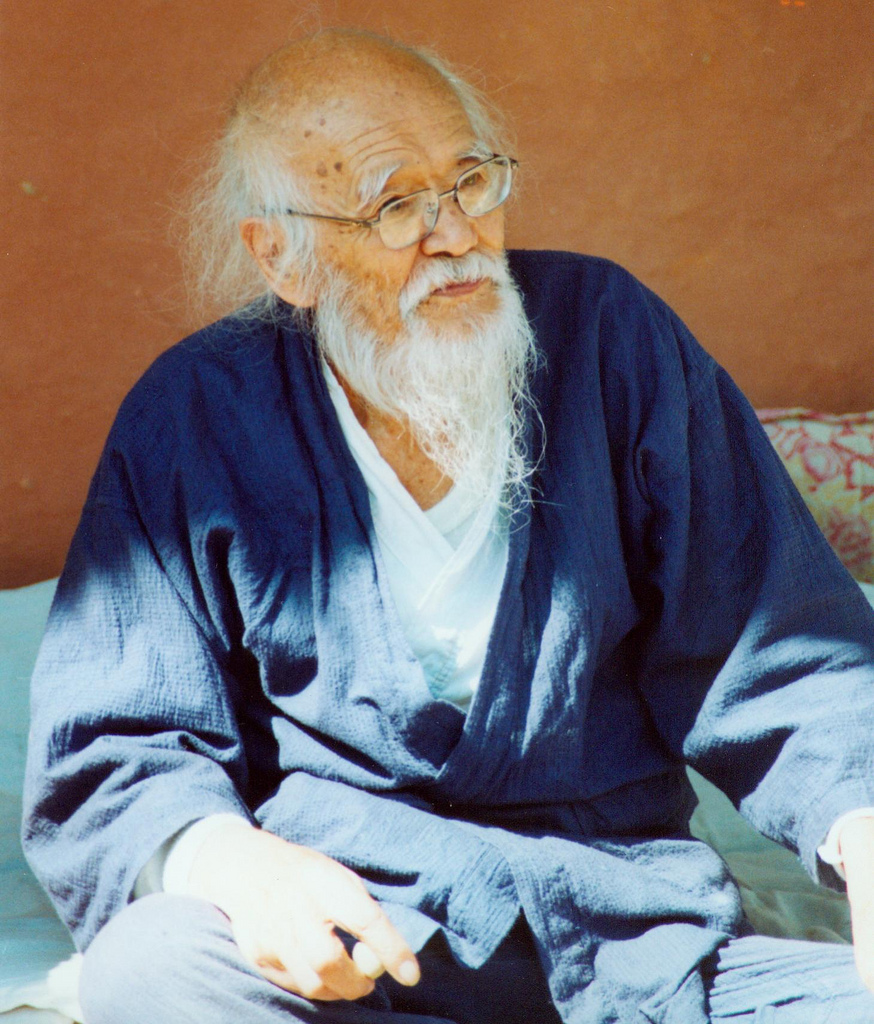
This brings me to the last lesson, one of connection and humanity. All too often, people decry their work as something that takes them away from life, away from meaningful experience, and provides only an uncomfortable alienation from themselves and from others. In reading about Masanobu Fukuoka’s life and contributions to his field (pun intended), you get the idea that genuine connection and meaningful work are massive forces that still live in us, just under the surface. This man travelled the world because people wanted to meet with him, learn his ways, and connect with him on a personal level over their shared interest and passion.
There will be more posts in the future about the relationship between economics and ecology, as well as work in general, because I find it an interesting path full of questions. But at the very least, we should be able to recognize that we do not have to choose between a good income or meaningful work. We can have both. There is still opportunity to engage in meaningful work in such a way that we can provide massive value to others and receive value through income in our own lives.
If Fukuoka’s example has taught us anything, it is that perhaps we have to do a lot less than we think we do in order to attain this goal. Whether your work is with plants or people, crafts or commodities, we can always take a closer look to understand how our decisions and behaviors can better align with nature. Through our work, we can transform ourselves and our situations so that we can become better, more thoughtful, more productive, less harmful. We can become natural people.
For anyone interested in learning more about Masanobu Fukuoka and his natural farming outlook, I would highly recommend reading “The One-Straw Revolution” or watching interviews and videos available about Fukuoka and his longtime student, Larry Korn. Listening to them and reading their work inspires and educates.
Meditations and Musings
Is there some part of your work you could stop doing? Are there systems or interventions in place that you could get rid of to get to a more efficient and natural work? What do you do that could be considered unnecessary?
What could you do to become a more ‘natural’ person? What role does your work play in developing yourself as a person, physically, spiritually, or mentally? What would your life look like if you made this natural work a part of your daily practice?
Where could you cultivate diversity in your life to make yourself or your income more resilient, more productive, or more natural? What could you incorporate into your life that would complement your main goals, and help you in your effort?

