Spotlight on Goodwork
You must dedicate your life to mastering your skill.
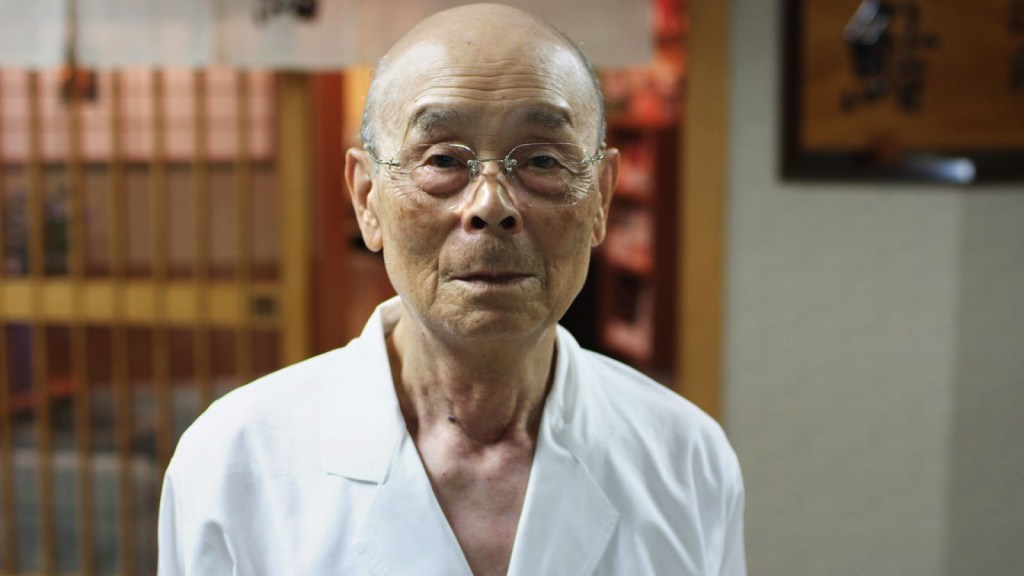
These words are enunciated by Jiro Ono, world-renowned sushi chef, in the documentary film Jiro Dreams of Sushi. The documentary follows Jiro, his two sons, his team of apprentice sushi chefs, as well as several vendors of seafood who are as dedicated to their work as Jiro is.
In the documentary, we are welcomed into this world of supreme focus and dedication, one that is at times equal parts creativity and discipline, rigid austerity and delightful enjoyment. It seems there is nothing that Jiro takes so seriously as his work. There is also a smile brimming up in him almost all the time and suggests that there is also no greater joy than what he has chosen to dedicate his life to.
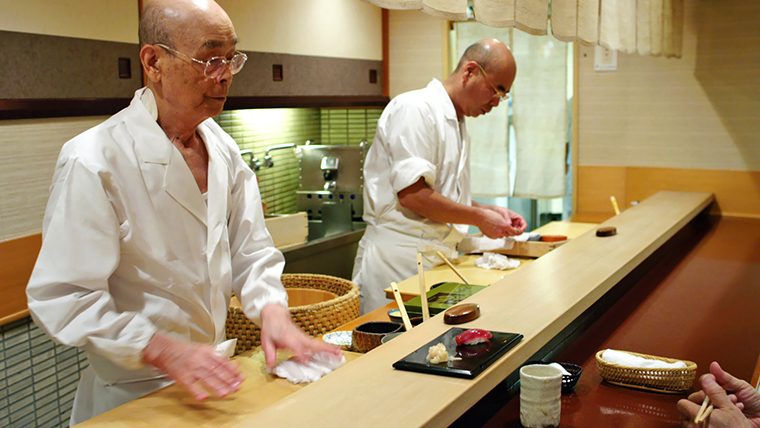
The documentary, which came out in 2011, was filmed when Jiro was 85. Last year, he turned 100. Even to be working at the same pace at 85 was impressive and into his 90s he remained committed to his work, though it is said he does not get into the restaurant as often anymore, serving only regular clients he knows well.
One gets the impression that his longevity was intentional, manufactured straight from the discipline he has tempered over the years, and that the same focus and attention had connected his life to his work and had allowed him to persevere year after year in his pursuit of the perfection of his craft. Even Jiro has said numerous times that his work is his secret, that it has been his relentless dedication that has made him live so long.
Jiro embodies the ideal of the ‘shokunin’, a term mentioned in the documentary and alluded to as a highly committed form of artisan or craftsman. He joyfully admits that all he wants to do is make better sushi, that he does the same thing over and over to improve his process continually. He claims to be ecstatic, doing what he loves every day, and that this is the true spirit of the shokunin. Jiro is also prominently mentioned in the book Ikigai, in the chapter concerning the flow state and how to develop it.
What amazes me about the documentary is not only Jiro’s longtime commitment to his work but also the fact that he has managed to surround himself with similar personalities. They interact with vendors of tuna, rice, and shrimp who are all masters at what they do. Jiro’s kitchen trains the next generation of shokunin. One apprentice tells us how long he tried to cook an egg dish, tamagoyaki, to Jiro’s usual standard. He was frustrated for a long time but persevered in his attempts. Finally, he made one to Jiro’s approval and was overcome with pride and joy. Where most people would have quit against such rigorous standards, this apprentice was moved to throw himself further into his pursuit.
Of course, with a philosophy like this Jiro has become an inspiration to me and my own pursuit of goodwork, as I have called it. Whether we call it goodwork or ikigai or being a shokunin or following a calling, it amounts to the same practice of precision and discipline in all we do. One can learn a lot about themselves and their work from watching Jiro and his team of apprentices and vendors.
One lesson is in attention to detail. Jiro watches his visitors closely, watches how they eat and even the speed with which they enjoy their sushi. His attention has been given to even the smallest details of the process of his sushi. He has perfected each part. He knows precisely how much pressure to put on his rice while cooking, he knows how long to massage the octopus so that it achieves the proper tenderness, he shapes the sushi according to size, gender, and the speed of eating so that the meal has the correct tempo, and he places it on the side of your dominant hand.
When exploring our work, we must remember the principles of continuous improvement. Each detail can be honored and paid its proper amount of attention to improve the process. This is what has allowed Jiro to attain the level of mastery he has, his sensitivity to the details.
I have made notes to myself to ‘water my garden as a shokunin, write my articles as a shokunin, be an artisan in all my efforts.’ I feel that this practice opens me up to the kind of engagement in my efforts that I most enjoy, forgetting about the extrinsic motivations of each task and throwing myself fully into the joy of its action. If I didn’t water my garden with an old watering can, if instead I installed an automatic watering system, it might go quickly and efficiently but I would not be interacting with my garden and seeing each new bud, each spectacular insect living its life and doing its work, I would not be present to see the majesty of each season of the garden.
Another lesson Jiro has offered through his philosophy as well as through his example: pursuing mastery is a lifelong practice, not a goal to be achieved. Jiro maintains that he continues to pursue the top but that nobody knows where the top is. He is adamant that he will never retire for, in his own words, why would he want to give up the work he had hoped so long for?
Being comfortable with the endless nature of our work is part of the goodwork philosophy. We may be frustrated by daily challenges, but when we remember that this is simply part of our practice and that we will be doing this kind of work, in one form or another, all our lives, we may more gracefully accept the frustration. In my own mantra, I tell myself to ‘Never stop earning and never stop learning.’
Finally, Jiro teaches us what the pursuit of mastery can do in terms of providing a place for others to express their own skill, talent, and individuality. His apprentices come to him to develop in their skill and also leave with an outlook of positive effort and persistence in their lives. He provides an opportunity for dedicated artisans in their specialized fields to exercise their mastery.
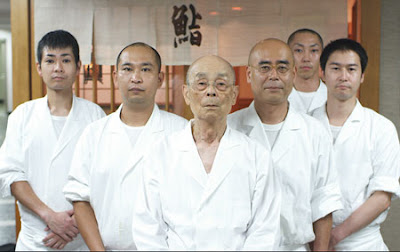
By creating this space, his elegantly simple sushi restaurant with just ten seats, Jiro provides so much more space for others to flourish than it would first appear. Yes, there are just ten seats but he fosters the growth of many dozens of people and skills and this is all built on his rigid adherence to the standard of his work and its creativity.
Jiro says, “Once you decide on your occupation, you must immerse yourself in your work. You have to fall in love with your work. Never complain about your job. You must dedicate your life to mastering your skill.”
I hope I can have many opportunities to emulate Jiro Ono in my own pursuits. I hope I can emulate his commitment and through this achieve his longevity as well! According to Wikipedia, Jiro just turned 101 last week. I encourage anyone reading this article to watch the documentary film Jiro Dreams of Sushi, to read Ikigai, and to contemplate their own life’s work in the light of this man’s example. I thank you for reading!
Legendary Sushi Chef Jiro Ono Turns 100: ‘I Have No Regrets’ – The Japan News

