
Tag: habits

  • Three lessons from Poor Richard’s Almanack

    As a younger man just getting my start in the world of work, I found myself wanting more structure and consistency than I was used to having. I had just finished a modified trade school experience amid the covid lockdowns and there was still a lot of uncertainty – there would be a lingering sense of it for quite some time. Not knowing what to do with my undeveloped welding skills, I got the first decent job I could find in manufacturing.

    At the time, I was living in the basement room of a house I shared with two roommates. I desperately wanted better but was happy to have my basic needs met. Each day, I went into work to spool cables and solder connector pins.  It was not glamorous, but it wasn’t the horrific stress and strain I thought manufacturing would be, either. There were many nice people and even some friends to be had there. But I couldn’t shake the feeling that I was wasting my time. I was impatient for a better life in which I had the resources I needed to enjoy myself, to pursue meaningful goals, to create projects and art, to travel and meet people, to provide opportunities for others and to help them when I could. But I felt stuck, dragging myself into work each morning to continue the same drudgery as the day before. It never let up and it never meant anything more. I wondered how to get out.

    I started to listen to the sayings and proverbs of Poor Richard’s Almanac, written by Ben Franklin, while I worked on my cables. Maybe it was the sayings themselves or the soothing voice reading them but for whatever reason, they brought me great comfort. They would talk about work, money, time, or virtue and I was slowly convinced that these messages represented the way forward. I wanted structure and consistency and here were these proverbs preaching just that. I wanted a plan to move forward, to get out, and these one-or-two-line sayings helped me take the first steps. Below are some of the lessons I learned from the sayings of Ben Franklin, collected from Poor Richard’s Almanac.

    Lesson One: Don’t Waste Your Time.

    Photo by Ono Kosuki on Pexels.com

    Do you love life? then don’t squander time, for that is the stuff life is made of.

    Poor Richard’s sayings about time are geared toward encouraging productive activity. It is painfully true that we only have a limited time allotted to each of us. He encourages us, “To be up and be doing and doing to the purpose.” The idea is to find your purpose and to use your time as efficiently and as wisely as you can. I wanted that daily trip into work to mean something, I wanted those forty hours of work to work for me. I realized that how I spent my time would deeply affect the trajectory of my life. The paycheck I got every two weeks represented eighty hours of my life that I had exchanged and I wasn’t going to let it be for nothing.

    This may be more relevant than ever with the tools we have at our disposal to waste our time in ever more ingenious ways. With our wasted time, could we learn an instrument, a second language? Could we write a book, play a sport, connect with community? There is always a minute here or there that will be wasted or lost to distractions, but the point is to find your focus again and to take up the responsibility of using your time productively –whatever that means for you and your specific purpose.

    It is at this point we must understand a kind of paradox. We want to live today because tomorrow is not promised to us, but we must act as if tomorrow is promised if we are to make the best decisions today.

    Every day I went into that dead-end job, I felt I was wasting my time. I wanted to live now. What if all the time I had left was wasted going to work, doing these pointless things? But I also realized that in order to build a life that included all the wonderful things I wanted – travel, connection, creativity – I had to believe in the future first and begin to build a life that looked nothing like my dream in order to eventually attain it. In short, I began to believe in effort, patience, and productivity. Though I still struggle with these things, I have made them a practice of my daily work.

    Lesson Two: Work can be a wonderful – and helpful – part of your life.
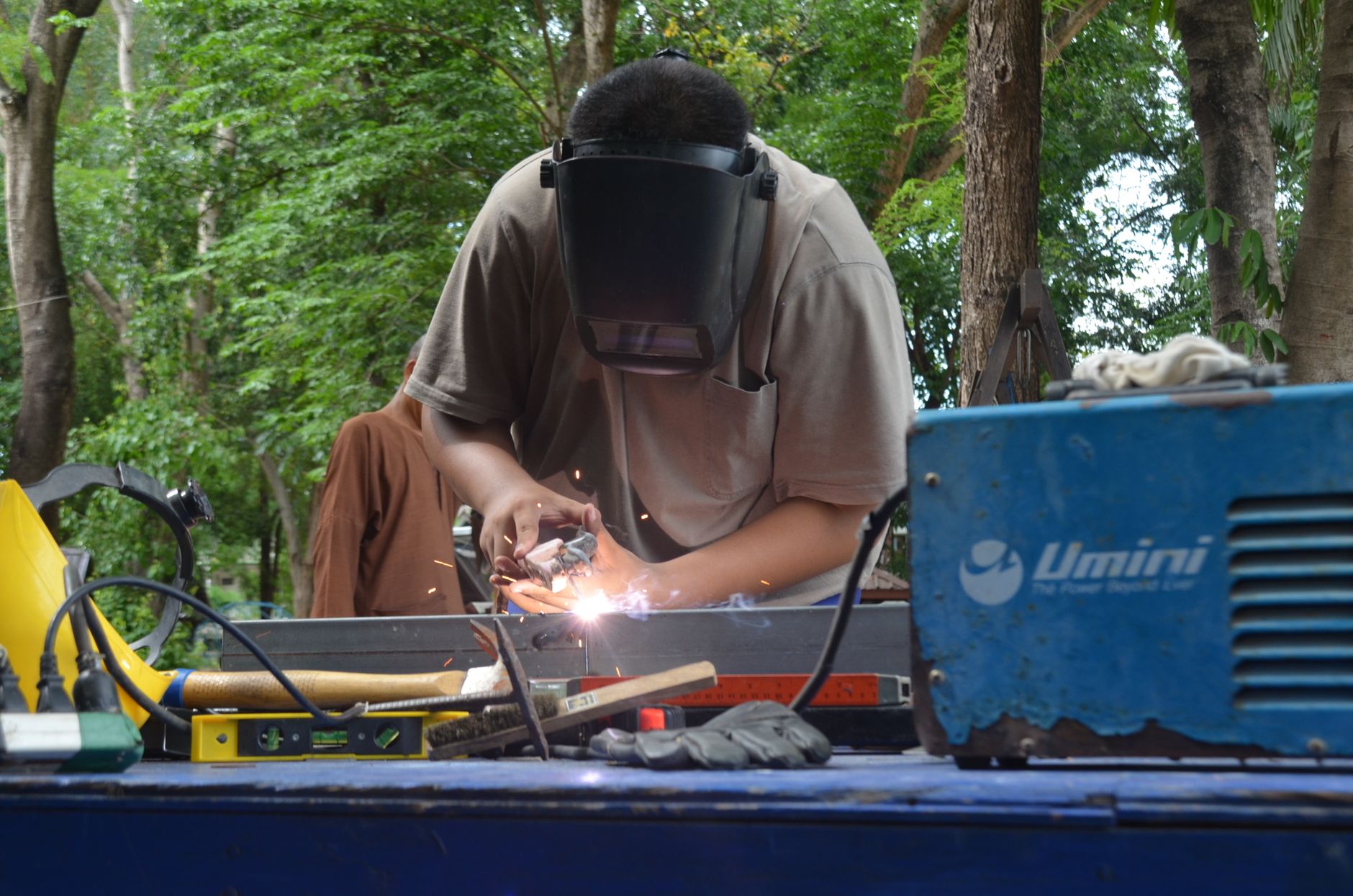
    Photo by Meaw Zara on Pexels.com

    Industry need not wish.

    Poor Richard’s admonitions usually include some mention of industry or hard work. He constantly reassures us of the ability of our work to sustain our lives — “Keep thy shop and thy shop will keep thee.”

    Our relationship to work can become somewhat murky and impersonal. Work can also be an integral part of life, meaning it is integrated into your life, rather than kept at arm’s length. In the past, a craft was so deeply personal that someone’s surname was their profession, and they taught their children and their children’s children their craft, weaving it into the identity of generations.

    It is more common nowadays to have an ambivalent or even negative relationship towards one’s work. For many now, work is just some place they go to in order to pay the bills. Resentment can build toward work when you have no intentional relationship with it.

    I would say it is a rare case that someone will find their most meaningful work right off the bat. For many of us, we will have to wade through several years of dead-end or pointless jobs to make ends meet before we find a mission or calling that inspires us to pursue something greater. I started working in a movie theater at sixteen. I have been a painter, a plumber, a grocery clerk, a nomad farmer. I have worked in manufacturing for several years. It has all continued to develop the skills I need to do the work I really want to do. The moment where everything clicks still eludes me, but I work toward that every day.

    Even after this click occurs, it can be quite some time before you feel effective and competent enough in your work for it to be truly rewarding. But the point is to seek this out. I have known many who wallow in their pointless jobs until they retire. They make sure to remind you that they are not where they want to be. But they also don’t do anything to work toward a more purposeful calling. Their association with work is that it is terrible, something to avoid, and they never pursue a work that can help them fulfill their potential while also providing meaning and order for others. “The trade must be worked at and the calling well-followed,” Poor Richard says.

    As I mentioned, I wanted work to mean something and that means coming away from it having gained more than I’ve lost. I had lost time and energy that I would have rather put towards other things but that meant I wasn’t going to let my gain be for nothing. At times, I denied the things I wanted briefly in order to work towards the things I wanted the most. I followed Poor Richard’s wisdom, “It is easier to suppress the first desire than to satisfy all that follow it.” No small contribution to my eventual success was going to be scoffed at, or, as Poor Richard says, “Many a little makes a nickel.”

    The path is not straightforward or easy but with consistency, we can begin to make our moves.

    Lesson Three: Consistency will take you where heroic effort can’t.

    Photo by Thanh Long Bu00f9i on Pexels.com

    Little strokes fell great oaks.

    Huge undertakings and overnight successes can be enticing concepts to those who have much ambition and not enough patience. You want to work eighty hour weeks, make a massive return on a penny stock, win the lottery, strike it rich. The consistency and patience of daily work can hardly be made to be romantic compared with the richness and aesthetic of the overnight success. But the possibilities of consistency are always far greater than the short-lived win. They are certainly greater than waiting for luck to come save us.

    Once again, Poor Richard’s world involved plain, regular people making a life for themselves and for others. Many of his sayings preach patience, contentment, and consistency as the means to attain the good life.

    It is part of the Goodwork philosophy that we must find work that appeals to our nature and our purpose in order to live a fulfilled life. In this philosophy, work is not merely a means to an end, it is not something you use just to get enough money in order to do what you really want. Work should be a purposeful and meaningful act which allows you to express something deeply personal about yourself and your relationship to the world. And when that is not available, we should be steadily working to get to that point.

    I knew if I quit that awful job, I would find myself in another one not long after. As long as I refused to engage with the inconvenience of work I did not like, I would never have the resources or skills to find the work that was meant for me. I looked to the summit of the mountain, but I had no respect for the first steps, so I never moved. I wanted to fall into my ideal rather than work up to it. Having found respect for the process, one can begin to move within its channels. But we must be content to be beginners, humbled by new experiences every day, in order to attain to the level of masters.

    I am a huge fan of any philosophy that includes some element of continual improvement. Why? Because goals, aspirations, and ambition that swell beyond actionable steps can actually demotivate you and cause you to disengage from the work that could be accomplished now. This initial work is inevitably linked to the end goal, a goal which may be massive, and they are connected by a thread called continual improvement. We have to learn to be okay with being beginners. We have to believe that any progress is good progress. We have to believe that we have a hand in our future, that we have the power to continually improve our circumstances so that we may do the most meaningful work we can. For ourselves as well as for others, we make the slow trudge of consistent effort. Or, as Poor Richard says, “Vessels large may venture more but little boats should stick near shore.”

    Poor Richard sends a message throughout his collection of wisdom to be steady, settled, and careful in your daily business. This involves attention to detail and diligence in attending matters that we sometimes have impatience or disdain for. For it is true, “a small leak will sink a great ship.”

    Work hard, don’t spend more than you make, and use your time wisely. As you can see, these lessons are the same basic lessons we have always known and the same lessons we have always had to relearn as time goes on. While today we may have several schemes or hacks for going about these goals, Ben Franklin through his pseudonym Poor Richard, preached virtues like diligence, frugality, and industry as intentional, daily practices that would do more for people than their short-lived schemes. While I was certainly impatient when I was younger, I realize now that the best accomplishments come from the long game, the committed endurance of an entire life.

    Thanks for reading!

  • Lessons from My Chickens

    Focus on what you can control

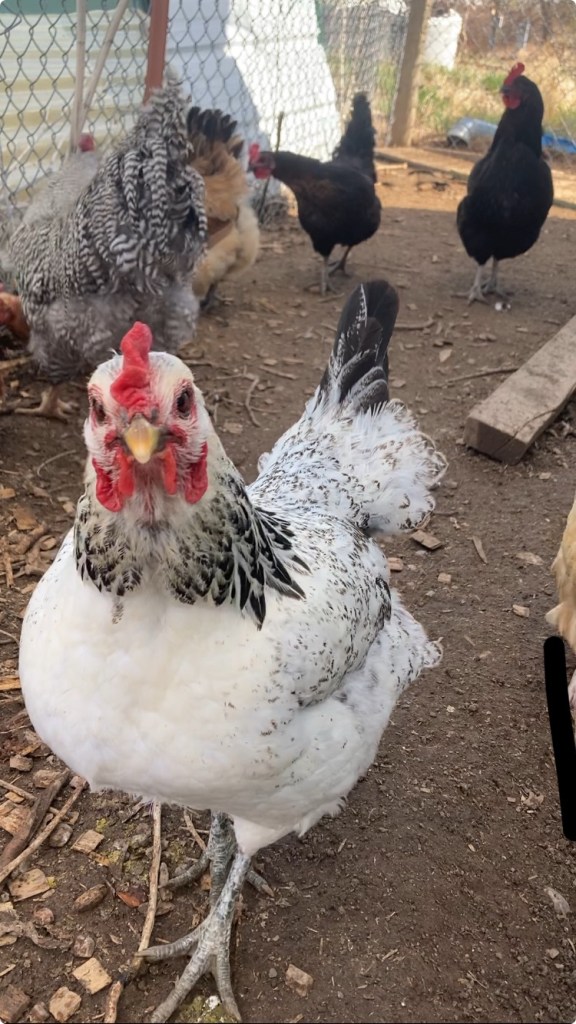
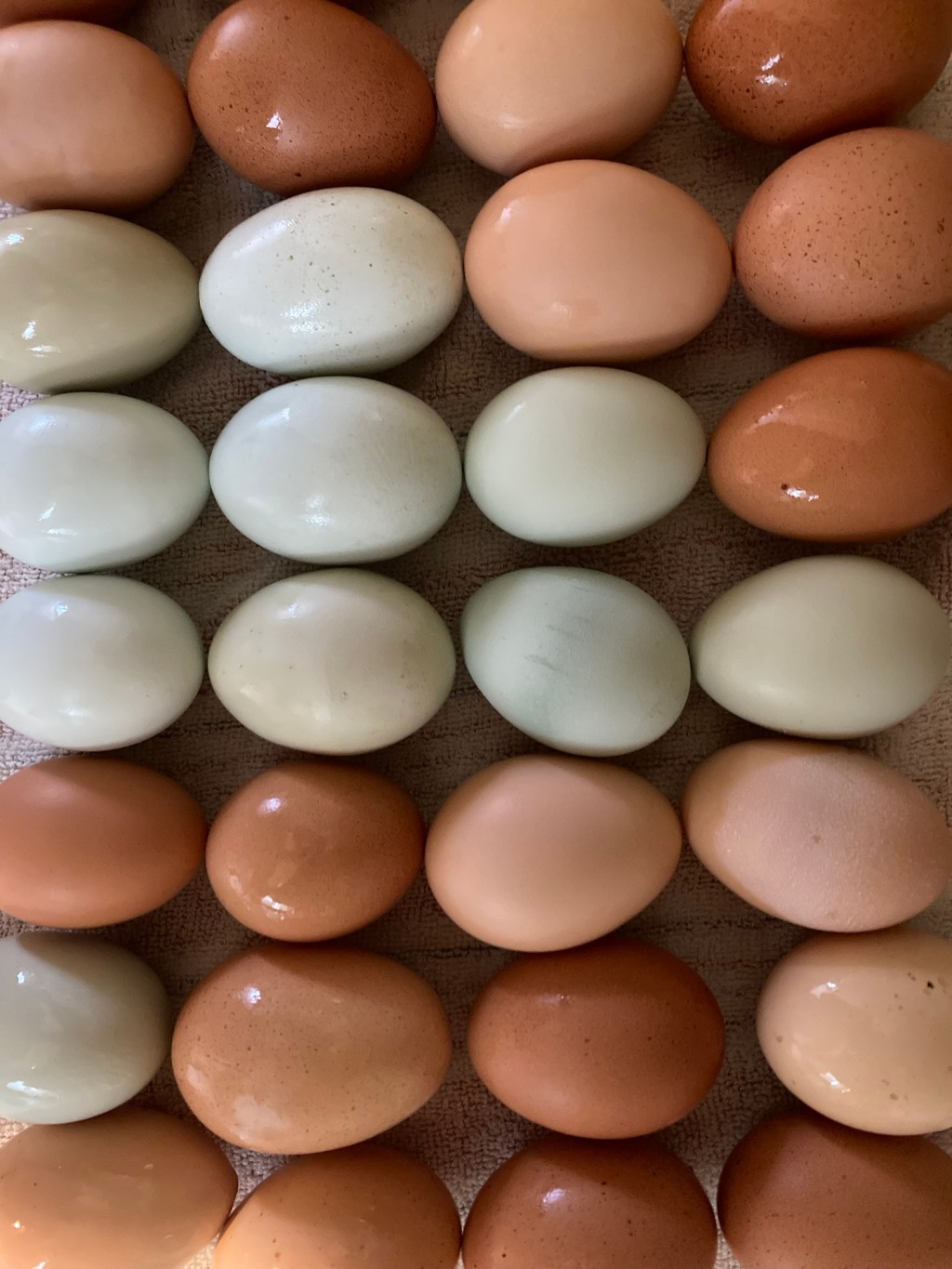
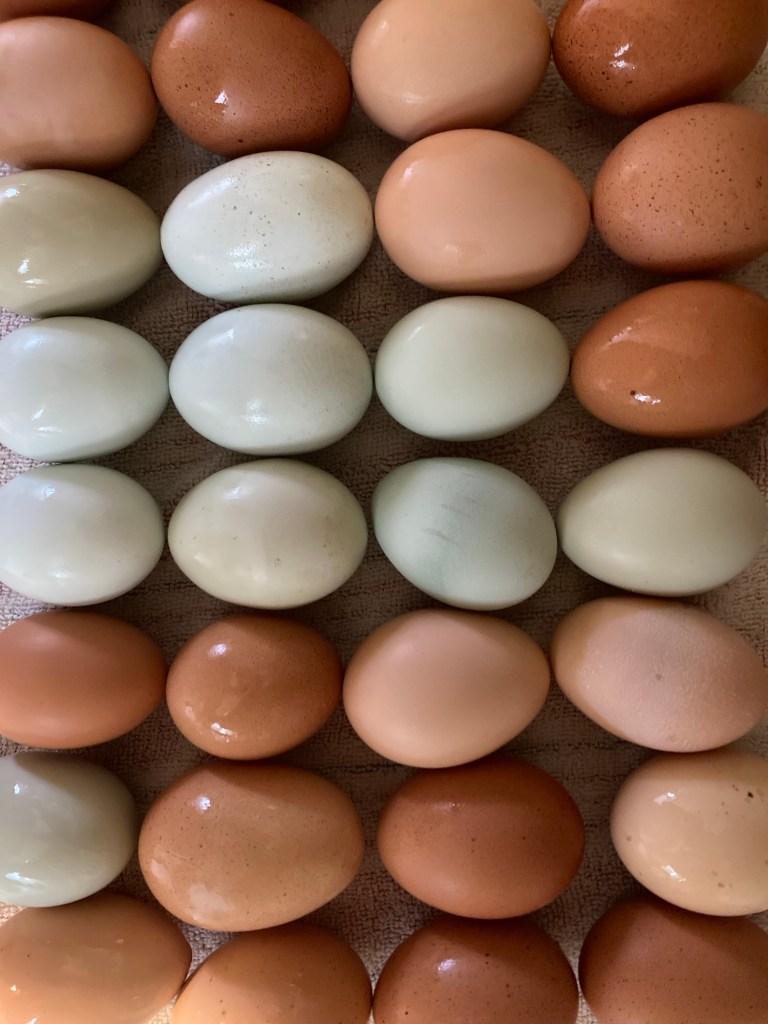
    The lessons of life wait to be unraveled from the plainest of circumstances. Collect the chicken eggs and the mind wanders. Work in the quiet and you will learn many lessons. This one is straightforward, though difficult to put into practice.

    When we first started raising our chickens, they were two or three days old. Little, fuzzy chicks are just about the cutest animals there are. As you are watching them in those first days, you want to control everything about their environment to protect them.

    We obsessed over giving them the correct feed and cleaning their water. They love to sit atop the waterer and poop directly down into the tray. Cleaning it became a chore multiple times per day. Chicks are also prone to something called ‘pasty butt’ which is basically a mean case of constipation that their delicate systems can’t handle. We would pick up each chick to check their butts and would perform the procedure of removing their pasty butt as if we were performing surgery. In those first days, we paid them almost constant attention.

    We rent the land that our flock is currently living on, and it is a fifteen minute drive from our house. This fact alone prevents us from controlling a lot of factors that we might otherwise have obsessed over in the beginning. Whether we were turning the heat lamp on and off or checking to make sure all of the chickens got in before their automatic door shut, those early days were filled with a lot of unnecessary trips to the coop.

    It wasn’t until a few months into this that we learned a key lesson. Even if we wanted to, we could not control all of the variables we were worrying about. If a fox got into the coop, we wouldn’t even know about it until the next day, let alone be able to do anything to stop it. You simply cannot live your life listing all of the things that could go wrong – you wouldn’t have time for anything else!

    Though we realized the importance of this lesson, it is not something that people naturally do. Like I said before, it is difficult to put this idea into practice. I told myself I could not control X, Y, or Z variable but the thought of it still consumed me. It wasn’t until later that I would be able to remind myself of this lack of control, as a daily practice, and then go the next step to put those thoughts out of my mind. For me, it was all about repetition. Eventually, it becomes habitual to recognize what you can and cannot control and then to put all irrelevant things out of your mind for the time being.

    Whether it is other people’s emotions or behavior, the state of the world at large, or the basic and inconvenient facts of life, we are constantly reminded of things we cannot control and we must take responsibility to shift our focus to those things we can control. We control our behaviors, our responses to situations, our efforts and how we use our time. We can control what we say, what we focus on, and what we can work toward.

    Everywhere you turn, you will find people who are fixated on listing the things of this world that they have zero control over. They remind you of the various ills befalling people, such as disease, economic hardship, and governmental abuses at home and abroad. Maybe they list some of the atrocities and disasters of history, both recent and remote. What begins in compassion or concern ends in powerlessness. In seeking control, one finds themselves controlled by others.

    Let me be the one to remind you today: it is not your responsibility to care for the world at large. It is your responsibility to put together your corner of the universe. You are not evil, cowardly, or ignorant for opting out of the hysteria in order to be more productive and efficient in your own life.

    I would go so far as to say that the inverse is true. Those people who make a habit of focusing on the things they cannot control are also the people who have little or no control over their own behavior, habits, or paths in life. They make demands of others which they cannot satisfy in themselves.

    This is not to say they are bad people – it is easy to fall into this pattern. Focusing on what one cannot control is easier than working on what we can control. We should remind ourselves daily that we control only a certain number of things, and it is not a shortcoming or a character flaw to focus only on those things we can influence. What would the alternative be? To lose sight of the things we can control so that we may pay attention to the things we don’t? That is the perfect way to lose everything.

    “I do what is mine to do, the rest does not disturb me.” – Marcus Aurelius

    Why does focusing on what we control not sound like enough? Because it is not glamorous. Watering and weeding the crop can be mundane. Focusing on our work has no monuments, no parades. It has no flags or banners. It is simple. Often filled with dirt and toil.

    Agitating under the weight of daily life and its monotony, we begin to look for a crown or a halo, some altar to worship at, some savior to rise from the crowd. Something to save us from the inconvenient task of putting our lives together one day at a time.

    I am not trying to sound aloof. More often than not, the routine of daily life is burdensome. Though I make gratitude a part of my daily practice, there are some days when that little voice in my head chirps up again: “What is the point? What is the point to any of this?” This is not an easy question to answer. Often, one can only answer it with the sum of the effort of their lives.

    I collect my eggs in the morning, plant my carrots in the garden beds. I hope there can be a new universe on the other side of my daily tasks. But we cannot always be looking elsewhere for a life to live.

    We cannot control where we begin but we can control the direction in which we journey. We cannot control the future but we can control the work we do today in the here and now.

    We should not look for things outside of ourselves but cultivate it mindfully in our own daily practices. If you desperately seek love in the external, you will not find it. But act with love in your own daily life and you will have all you want. You can seek money or you can create value. You can shout and beg for peace or you can foster connection and collaboration. You can give yourself over to desiring the results or you can learn to love the process. What world would you like to inhabit? Start building it with the bricks of your own habits.

    Focusing on what we control is part of the essential daily practice of accepting reality as it is. I always thought that accepting reality meant limiting my potential or that it meant others would have control over me. Once again, the opposite seems to be true. The more I focus on the work at hand, the quicker I can begin actually fulfilling my potential. The more I focus on observing and managing my own behavior, emotions, and thoughts, the less control other people have over me.

    There are many different behaviors and emotions which stem from losing sight of our circle of control. These can include comparisons, envy, jealousy, and impatience. We may become convinced that there is nothing within our control and this may lead to much anxiety and depression. Thankfully this is not true. The things we are capable of have always been enough to build a genuine and purposeful life. Don’t let the vague and desperate moans of others convince you that there is “no point” in trying.

    Practices and Meditations

    Learn to use your words. Communicating our thoughts and experiences can be a valuable tool in navigating the world outside our direct control. Just because you cannot control others does not mean you cannot communicate with them in a clear and concise manner. Ask for things you need, set proper boundaries, give a compliment, seek advice on things you are unsure about. Don’t assume others will know what you are experiencing if you remain silent. Don’t assume they will understand you as soon as you say something. This process lasts forever.

    Never disparage the act of trying. With yourself and with others – it is an unforgivable act to take the enthusiasm from someone’s honest efforts.

    Mind your business. Benjamin Franklin recommended the motto on our currency be “Mind Your Business”. I find this as relevant today as it was in 1776, since people seem to struggle with this tenet more than ever. It has two interpretations: the first would be to focus on your work, to be disciplined in commerce. The second would be to keep your nose out of other people’s business. They also seem to go hand in hand, for the more you are focused on your work, the less attention you are able to give to gossiping about your neighbor or passing judgments and regulations on the behavior of other people. Focusing on what you can control, on the work you are capable of doing and which sits in front of you waiting to be done, is the surest way toward peace and prosperity.

  • Sowing Seeds

    Sowing Seeds

    New Beginnings

    While many celebrate a new year in January, the later part of winter is still marked with inactivity and darkness. The seeds are still sleeping in the frozen soil, the days are short and the nights still long and demanding rest. January does not always feel like the beginning of something new but the continuation of a season of pause, rest, and waiting.

    Personally, the year feels new when things grow again in spring. We seek to begin – relationships, work, eras of our personal lives. We celebrate freshness and renewal. The themes of spring’s natural movement are youth, clarity, expectation. And we reconcile ourselves to those natural elements with our own behavior.

    It is in this time of beginnings that I want to begin this project. I call it the Goodwork Almanac because it will follow the cycles of the year. It may also become a commonplace book to sort odds and ends, a journal to record the most noteworthy events, a scrapbook to document memories as time passes. I do not rightly know what it will grow into, for now I am just sowing seeds.

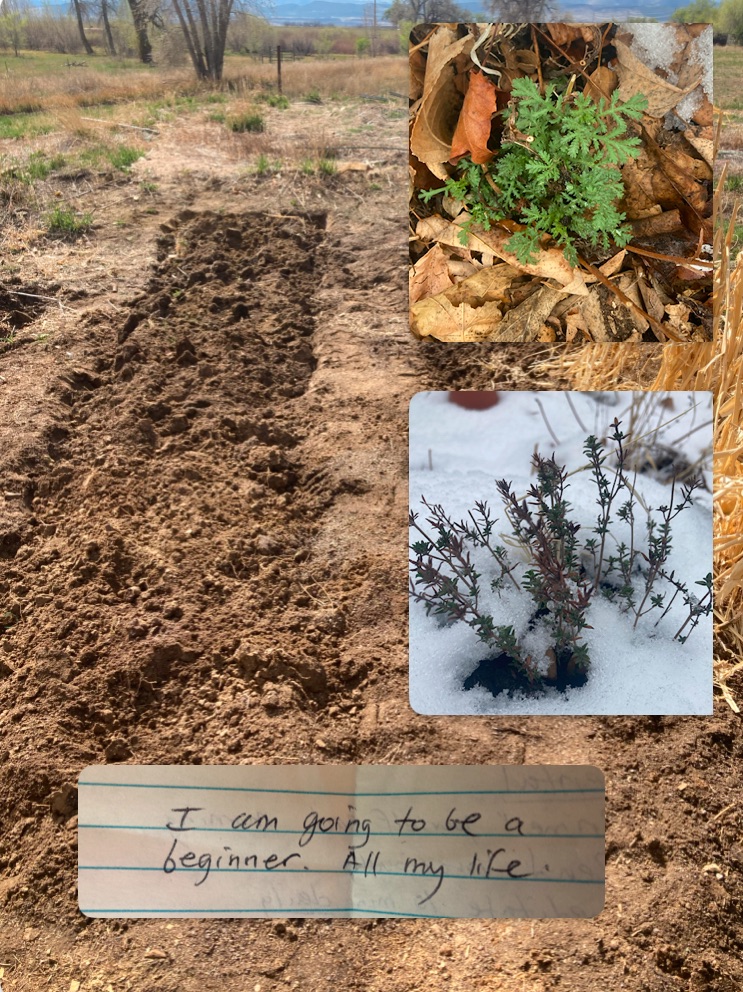
    There is no definitive separation between the end of one season and the beginning of another. They blend around their edges. Perhaps there is a day in March when the sun comes out, or when the dirt at the edge of the yard is exposed from the creeping edges of the snow that melts back. And you say to yourself, “Oh, it felt like spring just then.” We take walks into the garden to see what is returning – the hardy perennials peek out of the frost and snow.

    Think of the “seeds” which you will plant in your life in this part of the year, the season of new beginnings. What thoughts will you allow to take root? What habits will you cultivate and what habits will you eradicate? The proverb says you will reap what you sow – the question asked of you by the very nature of spring is: what will you sow?

    If you plant complacency, you will harvest mediocrity. If you plant focus and commitment, you will harvest many successes. This is not only the time to plant tomatoes, peppers, and herbs for the coming months but also the time to begin new practices, new habits, and fresh plans for the future.

    What is the work that demands your attention? Are you meant for beekeeping, raising sheep, writing books? Are you here to help others through their darkness, create things out of wood and metal, or cook nourishing meals for a restaurant full of hungry people? Maybe you were meant to raise ducks, make cheese, draw cartoons, or push a broom. Only you can know, and only you can find your way to that path.

    “You owe it to all of us to get on with what you’re good at.” – W.H. Auden

    These posts will be a different kind of seed to spread. I want to discuss ideas, plans, techniques, and strategies to navigate this journey that we are on. I claim no professional status. I am a true amateur in all realms. By definition, an amateur is someone who does something for the love of it.

    At the end of the day, I cannot say there is a best strategy or a single answer. All I can do, as a gardener, is spread seed and see what comes up. A certain seed may not sprout here, at this moment, because the conditions aren’t right. Another may view it as the perfect moment to leap forward.

    We sometimes get caught in the mistake of thinking that life is something which happens, a mere event. But it is much more like a medium or a substance which we can explore, interact with, and develop. It is the raw material which we can use to create ourselves. The neglected field will grow just as much as the acre of carefully tended farmland – the difference is the effort and care exerted, the creation of a logical and measurable plan, the indulgence of a dream.

    The perfect strategy is the one that works. The perfect moment is the one we have now. The perfect context for beginning is the one in which we are forced to start.

    Most of all, these ideas I spread are ready for discussion and interaction. I think of the Goodwork Almanac as a forum for spreading beneficial ideas, useful thoughts, constructive discussion, and helpful stories that may inspire others to grow and move forward.

    Planning and Patience

    The early signs of spring are like a densely coiled seed which will eventually explode onto the scene with its usual clarity. First, it must be as small and undetectable as the first white roots in the soil, or the little ripple of light that moves out of the darkest months. The stirrings of life must begin somewhere, and they begin here.

    These things do not happen all at once. The day you plant the seed is not the day you will harvest, but one must begin in order to get to that harvest day.

    It is about humility. Accepting that beginnings are often ridiculous and inauspicious. “This little seedling is going to give me pounds and pounds of tomatoes?! Unlikely!” But it is true. Just as with other things: do not discount the ability of consistent growth and patient progress. (I view this as good advice in general but also a reminder to myself).

    The key is to remember. Constantly remember that this is your life just as it is the seedling’s life, and it is passing by with gradual change and miniscule degrees. It is spring again. How much progress have you made since last spring? How much growth would you like to happen before the next spring? Do not commit the mistake of turning your attention away from this growth, just as you should not turn your attention from the care of your seedlings.

    “The reward for our work is not what we get, but what we become.” – Paulo Coelho

    There will be many distractions. It seems that daily life is riddled with things that demand our attention and drain us of the energy we would like to give to more important things. A few minutes here and there spent in a state of distraction and resignation will add up. It gains momentum as a habit of ‘tuning out’, of forgetting, and eventually it may steal days, weeks, or months per year of your life that could otherwise have gone toward fulfillment, beginnings, organization, connection.

    These posts will also be about remembering the path we want to be on. I am not prescribing paths or espousing answers but merely saying “Hey, wake up, remember you have a path to take, a journey that is your own.”

    I have been lost and would not wish that on others. I have wanted guidance and encouragement and have found only work to do. That is how we start. There are already too many voices that proclaim that life is meaningless, that there is no point, and that we should give up. Even if no one were saying this out loud, the annoying voices in our heads would still repeat this false idea. Part of the drive of this blog is to repeat the message that your life is yours to create, that it can be filled with meaningful action and work, that despair and hopelessness are not the answer, that we can still build a wonderful and powerful life together.

    Practices and Meditations

    Plant ten seeds in little pots of good soil. If you cannot do ten, do five. If not five, then one. If you do not want to keep them, sell them or give them to friends and family as gifts. But it is important to see them and to know them as they grow in this part of the season. Plant the other “seeds” of your life as well! Start a savings plan, start going on walks every day, start smiling and using people’s names when you greet them. Little things matter, they grow into big things.

    Look for the first spark of color in the dirt, the first green tendrils resisting the cold, the first honeybee making its rounds. This is about paying attention. Time moves by quickly when we aren’t paying attention. If we cannot enjoy the little things in our lives, we most likely won’t enjoy the bigger moments either.

    The garden is just dirt at the beginning. It is somewhat unremarkable. We have to be content with being unremarkable when we begin, so we may give ourselves room to grow. Delayed gratification is a muscle we must exercise, a skill to learn, not a natural trait. If you keep your attention on doing the work, you will look up one day and everything will be flourishing just as you intended.