Driving by the irrigation ditches in the countryside, you see them pop up out of the grass, open their otherworldly flowers, and sag in late summer with their seed pods. Milkweed grows in the most unassuming and difficult spots. And I would see them mowed down or pulled out of the edges of people’s landscaping and it felt like a kind of insult. Something so weird and spectacular and thriving in the most difficult circumstances, cut down without a second thought. The world must go on but we don’t have to be anything like the world. I love milkweed and I want to cultivate it as widely as I can. I want to sow its seeds in the soil of the mind.
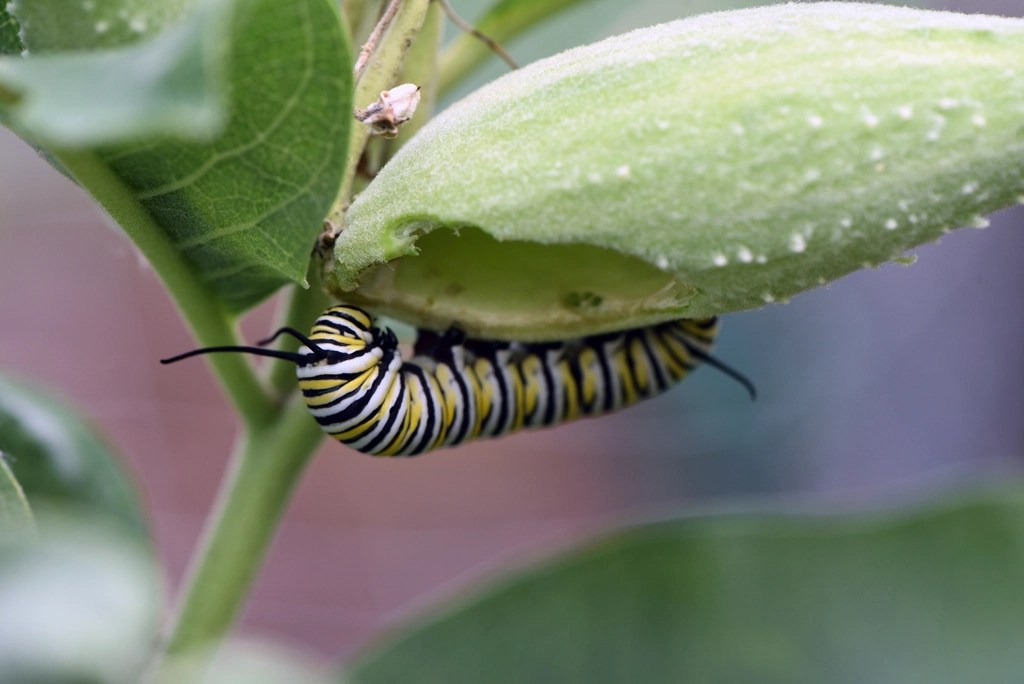
Milkweed is the primary source of food for the Monarch butterfly in their caterpillar stage. The black, yellow, and white striped caterpillars are beautiful to behold and seem made for milkweed as a natural pair of alien creatures. The Monarch’s numbers dwindle and struggle with continued loss of habitat and its main host plant, the lovely milkweed.
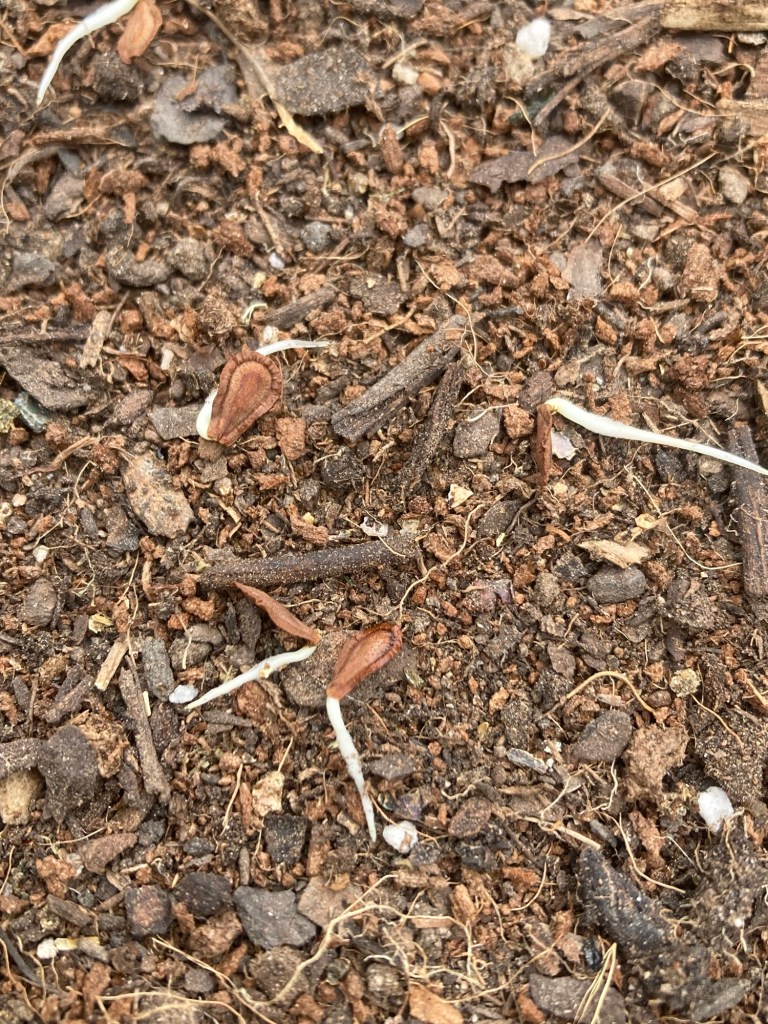
This is where we may enter, if we wish. A long time ago, I noticed a tenacious milkweed plant setting its strange-looking seed pods at the edge of a field butting up against my vegetable garden. In the beginning of winter, I took a seed pod and opened it to collect the seeds. I spread them in the field and in the garden. I took some home to winterize them, a practice called ‘cold-stratifying’. In the spring, I planted the seeds and hoped they would flourish.
If you decide to undertake this project with me, be careful when handling any part of the milkweed plant. They exude chemicals which can really irritate your skin and eyes. I knew this in theory but still learned the hard way when handling the seeds. Don’t repeat my mistake!
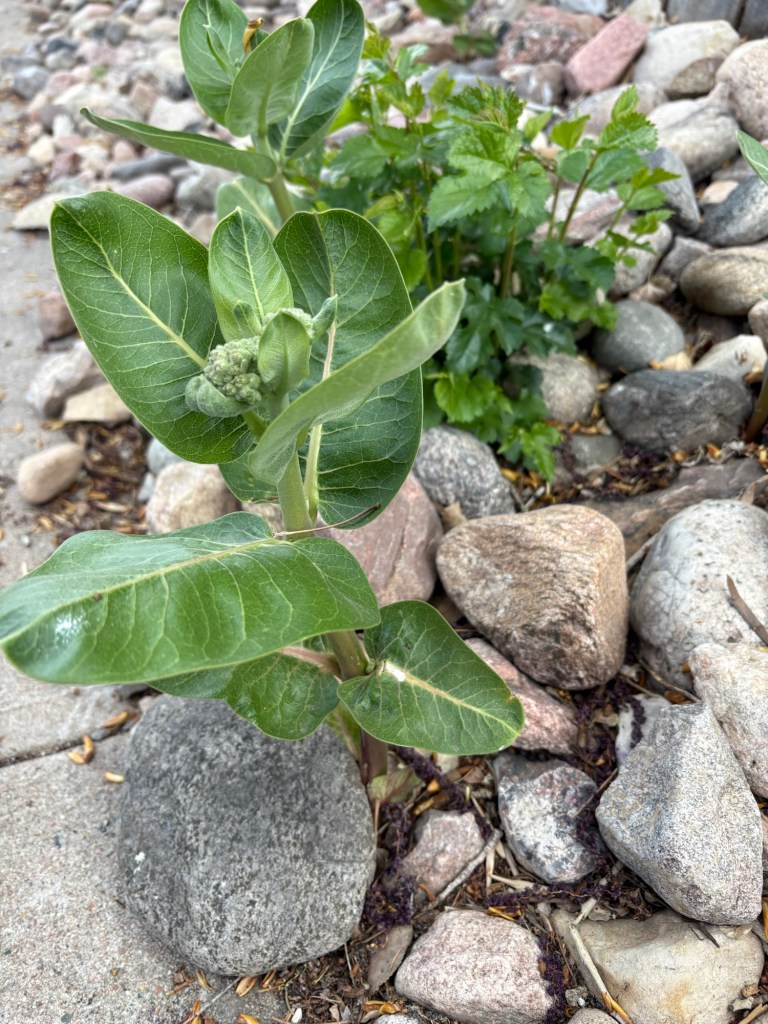
The plants sprouted and rose to about five or six inches tall. I was elated. Then the heat of late summer hit, they didn’t grow much more, and the first frosts of fall came with no promises for next season. When the following spring came (this spring, 2026), I waited for the first signs of milkweed coming up. I was pleasantly surprised to see a handful had survived the dry winter.
We did not get as many as we would have liked but it was a blessing even to get a few in our garden. As stated in previous posts, I would be ecstatic if we got a Monarch to visit our garden and would be surprised if they selected our garden to lay their eggs but we still keep hope alive.
Monarch butterflies will overwinter in Mexico and then migrate North during the summer months, searching for milkweed on which to lay eggs. I have not personally seen them use any milkweed plants in our area but that is also because the plants are few and far between.
The goal of this project is to spread the milkweed plant in order to cultivate more breeding grounds for the Monarch. It is a project I hold dear and which is in its initial stages, to be frank. I have about three clumps of milkweed in my garden and cannot do much more, as I rent my current living space. I figure every little bit helps for now but I dream of one day being able to plant whole fields of milkweed and to witness the Monarch migration and to be part of it in some humble way. I also wanted to spread awareness and invite others to be part of the project as well.
There are many resources online to assist in this aim. You can order milkweed seeds online or get them from local vendors. There are several types of milkweed to select from. Showy Milkweed and Common Milkweed are the most frequently recommended for growers in North America, though do your research as to the types which are native to your area or would thrive the best in your climate.
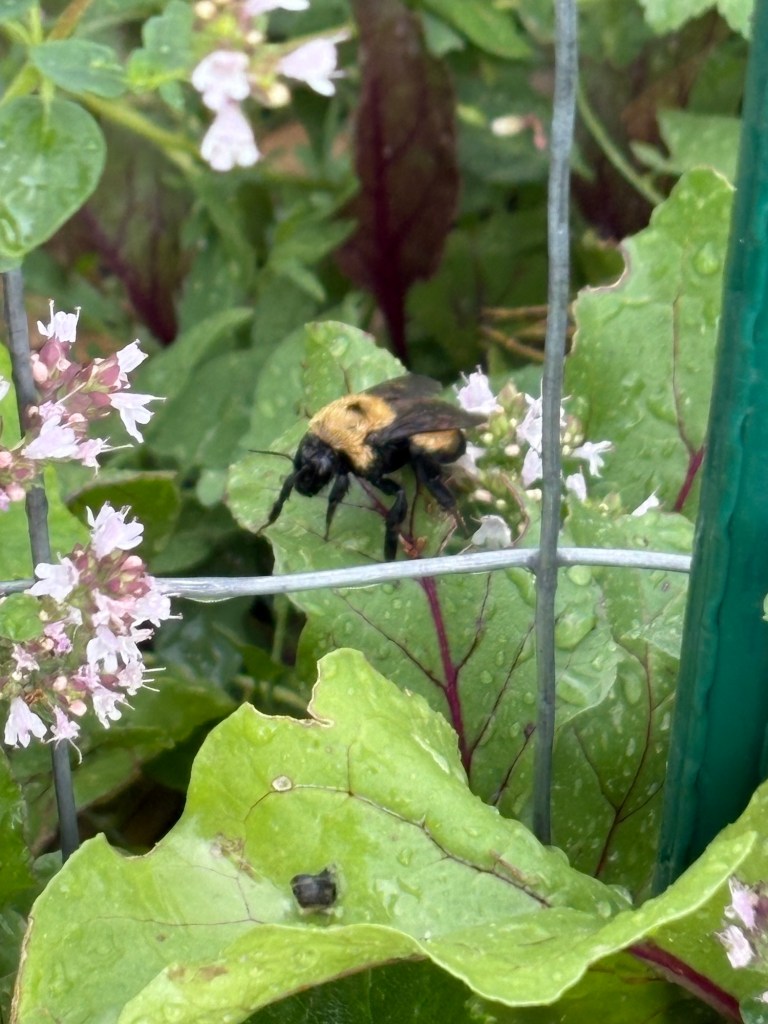
Adult monarchs also need nectar, meaning other plants can be valuable in their lifecycle as well. Blanketflower, aster, and many types of Goldenrod can provide nectar for the adult butterflies, while your milkweed provides a home and food for the larvae. Avoid using insecticides and other chemicals that may damage the lifecycle of insects in your garden.
One may also spread milkweed seeds in marginal spaces or wild areas. I take pleasure in my evening walks when I pass by a few milkweed plants that thrive in the stone borders of a neighbor’s yard, just outside their fence. No one seems to mind their presence and they are typically allowed to grow to maturity throughout the season.
I always keep my eye out for any Monarchs that may use these as a home for their larvae. And I hope nobody cuts them down, taking them for a nuisance weed. We focus on what we can control. Adding a few clumps of milkweed to our gardens may not seem like much but if many people did this, there would be many potential sites for a Monarch to choose from. Every little bit helps.
I will continue to document the efforts of Project Milkweed in future posts and will, of course, provide updates if a Monarch chooses our garden as a home. This is one of those long term projects that takes place over the course of a lifetime. Each year I hope to do a little more and to bear witness to the growth of it.
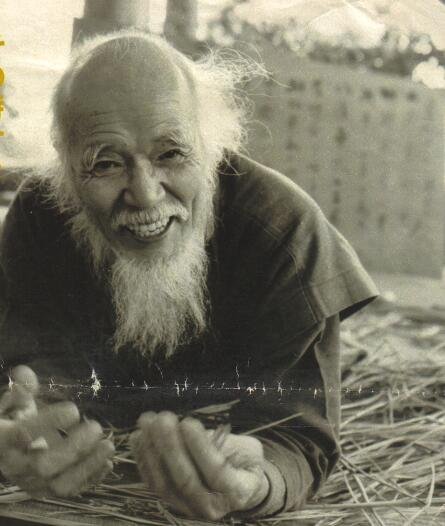
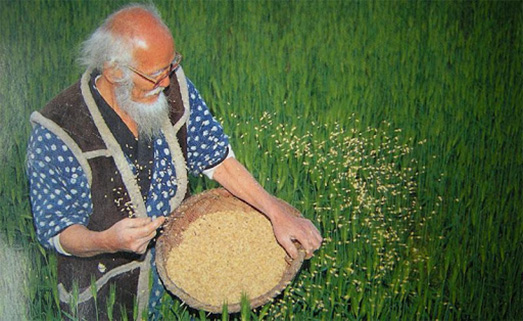
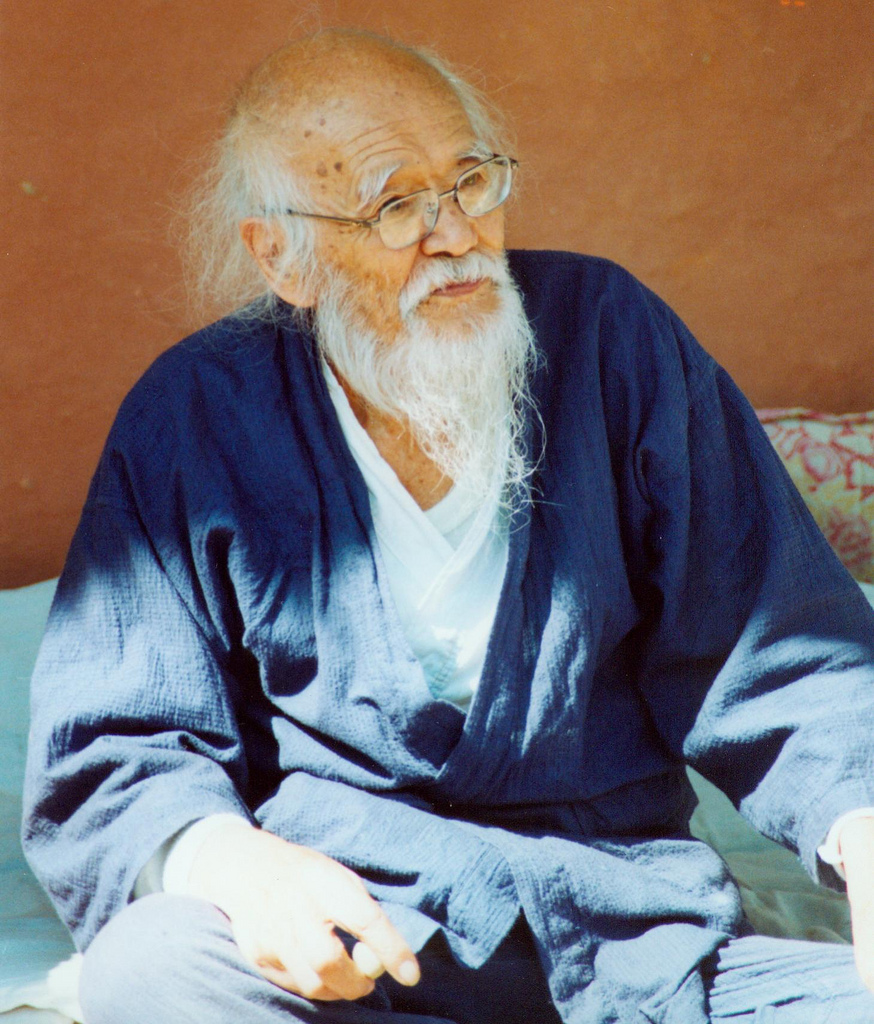
One of the giants of the “Natural Farming” movement, as well as a proponent of a multitude of valuable nature-based ideas and philosophies, Masanobu Fukuoka embodies several elements which are common to the goodwork archetype.
His dedication to his craft had him traveling the world, helping others implement his ideas, putting his philosophy down in writing, and working on his own farm until the ripe old age of 95. His ideas went so far beyond farming as to be considered a holistic view of the world – one in which humans would be developed in their capacity just as the natural systems Masanobu worked with, and not seen as inherently destructive or irrevocably flawed. Masanobu’s contributions are celebrated worldwide and I would like to shed a light on them today, as part of the continuing series of examples of goodwork.
Born in Japan in 1913, Masanobu Fukuoka became educated in agricultural sciences, working in research in plant pathology. After a disillusionment with modern agricultural practices, he returned to his family farm to practice and experiment with new techniques in natural farming. His farm included citrus orchards as well as rice and barley. Unlike other farms in the area, the fields were not flooded for rice production. This was unusual at the time but Masanobu maintained that his no-till methods, paired with crop rotation and native biodiversity prevented the need for tilling, herbicide and pesticide usage, or even flooding the rice fields.
In 1975, he published his most widely known book, “The One-Straw Revolution” – a book I would recommend to anyone interested in the ideas of natural farming or nature conservation efforts. It is a mixture of how-to guides, spiritual meditation, and philosophical musing over the relationship between human effort and natural ecosystems. There is a tone of hopeful endurance as well as a melancholic exasperation with the state of the world, and even the human spirit. This book provides much fodder for thinking on the continued integration of human and natural systems.
After his book became popular, around 1979, Fukuoka travelled to assist in the work of returning productive as well as natural areas to equilibrium. This work included planting efforts as well as a series of lectures given on the benefits of his methods. He travelled to the U.S., Europe, Somalia, Ethiopia, Thailand, Tanzania, the Philippines, Greece, and China to mention only a few areas he touched.
I find a lot of valuable ideas and inspiration in Masanobu’s work and efforts and I continually return to him as a person of intrigue and emulation. I like to imagine carrying the spirit of his work forward, and to embody his philosophy of nature in all aspects of my own life and work. I would love to work in a purposeful manner up to the age of 95, spreading seeds and inspiring people to return to balance. Included in this article are just a few meditations on the ideas Masanobu frequently discussed.
The Integration of Humans and Nature
“The ultimate goal of farming is not the growing of crops but the cultivation and perfection of human beings.”
This is an idea that has intrigued me for several years. It seems that every animal in nature finds a home, a niche, and a way of being that is intertwined with all the systems of their surroundings. Yet we have so many degrees of separation from natural systems in our modern age. Our homes, our technology, our way of life is at odds with other organisms, ecosystems, and processes that we often find it necessary to completely separate the two ideas. There is ‘our world’ and then, when we find it necessary or interesting, we ‘return’ to nature.
Masanobu Fukuoka’s philosophy entailed people becoming “natural people” again. That is to say, aligning their desires and behavior with natural ways of life. Natural farming, and the cultivation of nature, would not be possible unless people became natural people. As long as people viewed themselves as separate from nature, their behavior would lead them down the path of opposition and conflict with nature.
This separation becomes strikingly apparent when observed through the lens of modern agriculture. In this system, we are dealing in the cultivation of natural organisms – crops, livestock – but we have also gone to great lengths to separate the organism from everything else.
In a natural landscape, each organism is interconnected with every other organism in their ecosystem. Their inputs are someone else’s outputs; their outputs are someone else’s inputs. But in modern agricultural practices, a pig is not even a pig, it is a unit of output, and it is subsequently separated from any other organism through a system of constraints – fences, concrete, confinement houses.
Repeat this for cows, chickens, even crops. No other organism is welcome in the field of a monoculture, and I doubt they’d be met with anything other than hostility if they popped up. To the monoculture, any other plant is considered a weed.
This philosophy leads me to wonder what it would look like if humans were completely integrated into their natural setting like other animals. We would make our homes in our niche, part of nature and contributing to nature. We would find or cultivate our food as part of nature and contributing to nature.
What advantages and disadvantages would this bring? Would it even be possible? Is this an all-or-nothing approach or could we still have technological intervention for disease and injury, some semblance of comfort? Is natural living necessarily hard scrabble living? Is there something in us that makes us act at odds with natural systems, and what type of spiritual evolution would have to take place to reconcile ourselves to the natural world? These are the questions that Masanobu’s work helps to explore; not always to answer, but to explore.
The Do-Nothing Philosophy
“There is no one so great as the one who does not try to accomplish anything.”
Fukuoka’s philosophy was called shizen nōhō. Occasionally, it is translated as ‘Do-Nothing’ farming but this is partially a misnomer, in my opinion. More accurately, it could be called ‘Do Nothing Unnecessary’ farming, as there is still plenty to do in this philosophy.
Fukuoka observed that in modern agricultural practices, people intervened in natural processes when they felt they noticed some inefficiency or disorder. This initial intervention then caused other things to take effect, which required another intervention. Each intervention caused another side effect which was not planned and which required more work, technology, and intervention to correct it. The process seemingly had no end.
When Fukuoka began to practice his natural farming methods, he would often respond to issues by asking himself where he could stop doing something. By cutting back on interventions in natural processes, he found he could make less unnecessary work for himself and let nature accomplish the same ends using its own processes, its own effort. The question of what not to do would, in theory, lead to a final practice where nothing unnecessary is done and the farmer has become a ‘natural person’ whose existence is in harmony with nature’s process.
Let’s take modern agriculture as an example once again. The soil is treated like any other part of this ongoing project – sterilized, standardized, stripped of its life and structure through pesticides, herbicides, and tilling. Then it is desperately tended to via systems of watering and fertilizing. This is a strange setup which seems to contradict its own ends and which makes more work than is necessary. First, the natural processes are minimized, interrupted, or halted entirely because they appear to be inconvenient or counterproductive, then they are mimicked by great interventions of machinery and technology.
I think Fukuoka would ask, “Wouldn’t it be better not to intervene in the first place, and save yourself the work of all these later measures?” Instead of plowing and tilling, robbing the soil of its structure and ability to retain water, and then going back later to irrigate and manage watering systems, why not forego the plowing and the tilling in the first place?
Biodiversity and Balance
“The only sensible approach to disease and insect control, I think, is to grow sturdy crops in a healthy environment.”
The way to begin handing these tasks back to nature was, according to Fukuoka, through biodiversity and finding balance. Nature regulates itself through biodiversity, with different populations of organisms growing and shrinking in relation to hundreds and thousands of others. It is not about ‘achieving’ a state of perfect balance but about allowing processes to work themselves out to find their own stasis. Water will find its own level through the process of waves, movement; nature’s movement is the same.
One of Fukuoka’s initial efforts to return his farm to natural balance was to sow different varieties of seeds and to begin growing many different varieties of crops. When there is a single crop, all in one location, the pests that use this plant as a host find themselves in heaven. But if you begin to separate these plants with other plants, suddenly that same pest does not have the same chance to spread. This is what is meant when we say that nature regulates itself through biodiversity. The greater the mixture of plants and animals, the less likely it will be that explosions of pests and disease will occur.
Economics – Advantages and Disadvantages
The main criticism that is put at the feet of natural farming is that it may not be as economically viable as modern agriculture. It either does not have the same potential for output or it is not cost effective. When we look at it through the eyes of mechanized systems and economies of scale, this is correct. A confinement chicken house is economically successful because all its chickens are grown to be more or less identical – all the better for standardized machinery to process them. And each operation limits itself to one product, as having multiple products increases the cost of processing, requiring different types of machinery and technology for different outputs. You cannot pick strawberries with the same mechanisms with which you pick corn, for example.
But the smallholding does not work in the same way that the large operation works, economically speaking. Its advantages are different than the advantages of a large operation. This is normal. As long as the smallholding does not try to act like a large operation, it can still be successful. By being exactly what it is and capitalizing on its unique advantages, it can still be economically viable.
In this example, the smallholding may not produce as much as the large operation but it also does not have the same machinery costs and overhead costs typical of a large operation. Also, if the smallholding focuses on custom work or retail level sales direct-to-customer, they can increase the amount they get for their products. If they would attempt to achieve the same economies of scale as the large producer, they would take on far too many costs to make their product worthwhile. But keeping costs low and fostering relationships directly with their buyers, they can move in an economically viable way.
I think this method applies to work of other types as well, especially craftwork. Those who do not match pure output still have much quality and value to offer. Often, that is their advantage: they still offer something human, and of high quality, that the large producers cannot mimic in their quest for standardization.
Joel Salatin’s book, “You Can Farm” is also helpful in expounding on this idea. He recommends having a main enterprise and cultivating several side enterprises that are complementary in nature. (This also is in line with the biodiversity idea, applying it even to income streams.)
Meaningful Work and Connection
This brings me to the last lesson, one of connection and humanity. All too often, people decry their work as something that takes them away from life, away from meaningful experience, and provides only an uncomfortable alienation from themselves and from others. In reading about Masanobu Fukuoka’s life and contributions to his field (pun intended), you get the idea that genuine connection and meaningful work are massive forces that still live in us, just under the surface. This man travelled the world because people wanted to meet with him, learn his ways, and connect with him on a personal level over their shared interest and passion.
There will be more posts in the future about the relationship between economics and ecology, as well as work in general, because I find it an interesting path full of questions. But at the very least, we should be able to recognize that we do not have to choose between a good income or meaningful work. We can have both. There is still opportunity to engage in meaningful work in such a way that we can provide massive value to others and receive value through income in our own lives.
If Fukuoka’s example has taught us anything, it is that perhaps we have to do a lot less than we think we do in order to attain this goal. Whether your work is with plants or people, crafts or commodities, we can always take a closer look to understand how our decisions and behaviors can better align with nature. Through our work, we can transform ourselves and our situations so that we can become better, more thoughtful, more productive, less harmful. We can become natural people.
For anyone interested in learning more about Masanobu Fukuoka and his natural farming outlook, I would highly recommend reading “The One-Straw Revolution” or watching interviews and videos available about Fukuoka and his longtime student, Larry Korn. Listening to them and reading their work inspires and educates.
Meditations and Musings
Is there some part of your work you could stop doing? Are there systems or interventions in place that you could get rid of to get to a more efficient and natural work? What do you do that could be considered unnecessary?
What could you do to become a more ‘natural’ person? What role does your work play in developing yourself as a person, physically, spiritually, or mentally? What would your life look like if you made this natural work a part of your daily practice?
Where could you cultivate diversity in your life to make yourself or your income more resilient, more productive, or more natural? What could you incorporate into your life that would complement your main goals, and help you in your effort?
If we conjure up the image of a plain, manicured lawn, chances are there is no room for anything else. There are typically no other bugs, animals, or plants that can coexist within a perfectly manicured lawn. Only that one type of grass, that one length of each blade, perhaps even a sign that says to ‘keep off’. In fact, there are concerted efforts to rid the lawn of anything that may inconvenience it or compete with it. Millions of dollars are spent each year on chemicals the average user is entirely ignorant of, being poured out on lawns, driveways, and sidewalks to spare us the sight of the rogue dandelion, to kill the insects, to preserve that uniform mat of green lawn.
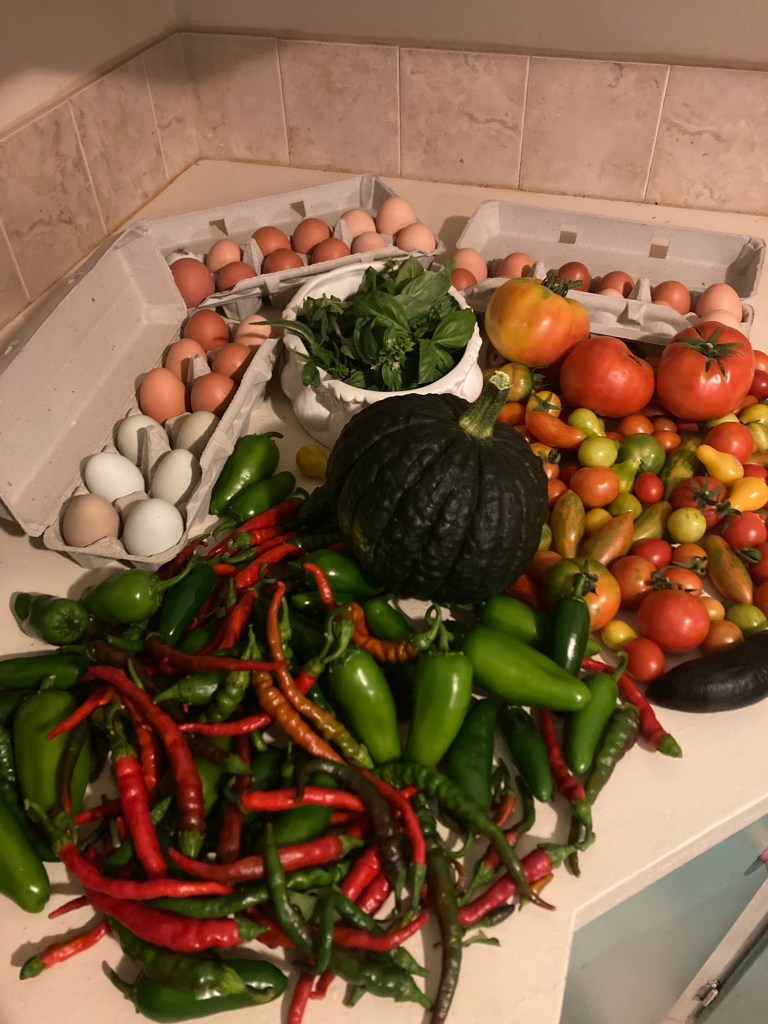
Now, if we conjure up an image of a healthy and abundant garden, we reckon with an entirely different world. In order for it to be abundant and productive, we imagine there to be many different plants, many different insects, and a general happening of all with all, everything mingling together in some complex system we can scarcely understand. The beginner gardener starts out by learning that there are beneficial and harmful insects and they are careful not to be so enthusiastic about killing the one that the other is destroyed in the process. The intermediate gardener learns that there are even certain plants one can cultivate in order to attract the beneficial insects or repel the harmful insects. The advanced gardener knows that if they do their job well in organizing and arranging the garden for its health, then each will care for each and a certain balance will be attained that does not require their constant oversight or intervention.
The two images I have just described are examples of the difference in creating niches or encouraging ‘vectors’ of abundance. This is similar to the idea of placemaking in designing public spaces. These ideas, arguably, are mainstays of the best practices of goodwork.
A niche is that crevice, nook, or cranny of the world in which something can find its natural position. In ecological terms, a niche is a condition or environment in which a plant or animal thrives, encouraged to express its true nature. A vector is a directional magnitude that implies transmission, communication, or aim. I think of a niche as a corner of the world and a vector as all the possibilities that can pour out of this little corner.
A niche is a foothold, from which something can launch into full expression. And placemaking, in this instance related to goodwork and to gardening, is about cultivating many places where a niche could support life and where life could then support vectors of abundance.
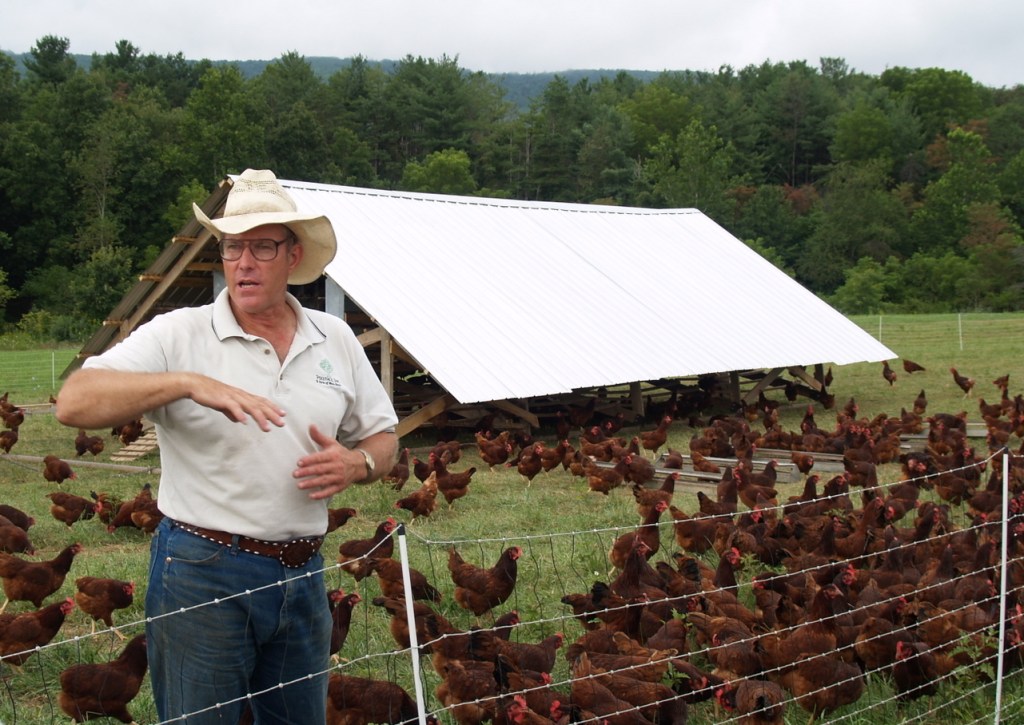
Joel Salatin, a renowned farmer using regenerative agricultural methods, would refer to this practice as “Honoring the pigness of the pig, the cowness of the cow, or the chickenness of the chicken.” Each plant or animal has a nature which it most easily expresses in its particular niche. To honor that plant or animal is to create a niche that allows it to express its true nature.
Joel Salatin in front of his flock at Polyface Farms.
The pig is a forager; it roots around with its snout in the dirt for morsels of food. The cow is a grazing ungulate, partial to herd mobbing on a diet of grasses and forbs. A chicken is an omnivorous scavenger, picking and pecking through seeds, grain, insects, and grasses. So, what happens when you constrain the pig, cow, or chicken to a tiny enclosure, with no access to soil or sunshine, feed it a diet far-removed from its natural inclinations, and otherwise expect it to produce abundantly? Well, you get two things, the image of the modern farming method and a slurry of disease, waste mismanagement, and low-quality food. One practice is about creating places, honoring a niche, and being a part of abundance. The other is about wanting abundance, mimicking abundance, but otherwise skipping the work necessary to be a part of its true nature.
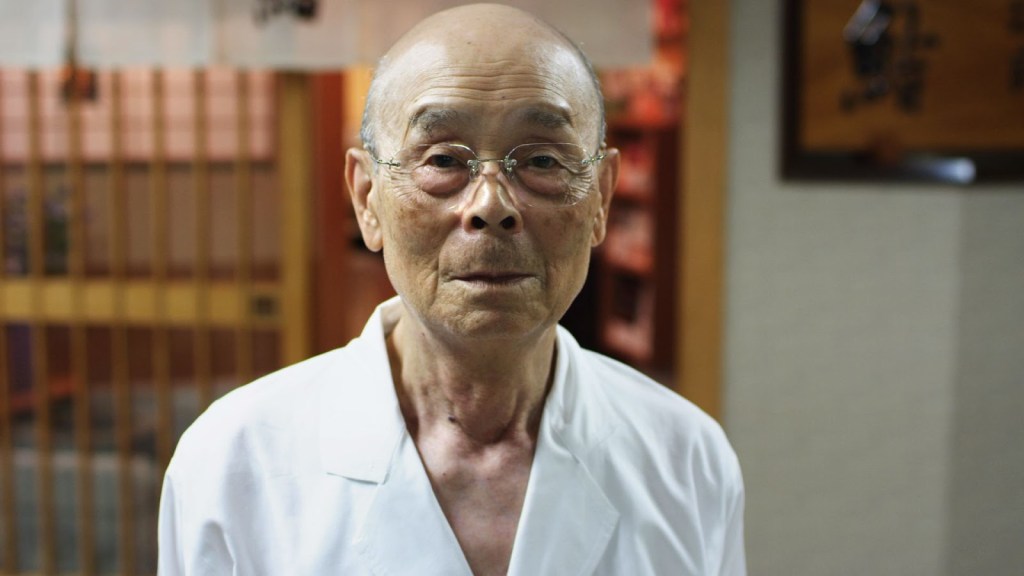
This practice does not concern only natural environments or the components of animals and plants. It also has a great deal to do with how people relate to each other through the physical space they inhabit. Master sushi chef, Jiro Ono, is a great example of a craftsman with an eye for cultivating a place. His restaurant is like a niche in this way, which caters to a specific aim and sensation that he wants to communicate to his guests. It is a small and humble-looking restaurant, with only ten seats at a long bar-top. The lights are warm and low. The sparse design does not feel minimal or bare but sleek, clean, and harmonious. With a smaller seating arrangement, Jiro is free to cater to the guests based on his observations; do they eat with their left or right hand, what size sushi will they eat in a given time in order to keep the pace of the meal. And while the elegant simplicity of his place is felt deeply as graceful and easy, it is in reality built on many hours of disciplined work, attention to detail, and an attitude of mastery that makes Jiro desire to continuously improve his process over the years, even as he continued to work into his 80s, 90s, and now, having turned 100.
Jiro Ono, in the film ‘Jiro Dreams of Sushi’
There are also countless ways to make a place or niche for people in one’s daily life. Your own home could be an example of a niche which you form yourself day after day with the habits you keep and the ideals you hold dear. Making a place for yourself can be an art, a practice. You can make it open and welcoming to others as well. Those who come to visit may marvel at some unspeakable quality your home has that feels inviting, warm, and encourages connection. It does not have to be filled to the brim with shiny knickknacks or gadgets, it does not have to be decked out with expensive furnishings and decorations. It merely has to have that perfected quality of a place that is made with intention and a mind for harmony.
Even something as plain as a conversation can be made into a place for stopping off, a place for resting, a place for an encouraging word or a supportive idea. How desperate people are in their daily lives for some sense of belonging or support that a conversation alone may be memorable enough to last them the year! Think of the last time you received a compliment, how long that impression has lasted. People can make places for each other in easy ways that make the process of routine actions more bearable and even beautiful. Letting someone go ahead of you in line, handing out compliments that come to mind, assisting someone in some dreaded chore. No task is so low that it cannot serve as a matter for our attention.
A farmer who raises cows does not actually raise the cow but tries to create an environment in which the cow cannot help but grow healthfully. A therapist does not give the patient right conduct, good thoughts, or healing but provides an environment of communication in which all of these things are allowed to develop of their own accord. Feed the birds, the worms, the bees and your garden will feed you with ease.
There is a subtle and indirect logic to this aspect of work, as opposed to the image of effort, skill, and discipline that is often conjured in the mind when thinking of achievement. There is a place for effort, skill, and discipline; these are indispensable things. But the indirect work of preparing a place may take you further, and with greater ease, than the repetitive and frustrated attempts to create something from willpower alone.
How to make a place, a niche.
Begin by organizing your corner of the world. This may sound bland or ineffectual. But you must remember that there are many people who seek to better the world by focusing on the weeds in other people’s gardens. This gets us nowhere. The people who succeed in making a place are those who do what they can, where they are. They plant a row of flowers, a native bush, they forego weed-killer or fertilizers. They help their neighbors rather than trying to save the city. That is oftentimes more heroic. This wisdom is handed down by Marcus Aurelius, a Roman emperor and practicing stoic. He noted how the insects put in order their little corners of the universe and kept the world going by doing the work that was natural to them. Our work may be drudgery sometimes; it may be joyful other times. But it is our work, and we continue to do it because we are helping to put together our corner of the universe.
Design it with a visitor in mind. When you set out to create a place for something or someone, you must keep them in mind in order to make it inviting. You wouldn’t try to make a place for a mouse the same as you would for a cat. Mice like little crumbs, dark corners, and quiet. Cats like cozy sunbeams, high perches. Cats like mice. We must take into consideration the nature of those we wish to see thrive and go about creating a place that is best for them. The cows like tall pastures of polyculture forage, not dry dirt fields covered in dung. Chickens like to scratch and peck, chase each other a little bit. You learn to fall back in love with observation. The situation you create will invite the most suitable visitors, not necessarily the visitors you want. So, you must become adept at observing what your most desired visitors want, dream of, cherish, are fearful of.
Be comfortable with silence. Silence in all its forms can create tension. Unanswered questions, untaken paths, an averted gaze. But constant noise and effort do not make the place, they simply make it uninhabitable. When you first make a niche, it may go unanswered for some time. You must keep the practice of cultivating this niche until your visitors find it. Practice silence and people will begin to tell you about themselves. The bees will come to the garden when the wind stops blowing. The water clears, the haze lifts, the situation becomes clear. Practice silence enough and you may even hear yourself again. Here’s a lesson from the worms: do your work in quiet obscurity and you will reform the earth.
Accept it, Expect more from it. It is okay that things are the way they are right now. It is also okay that you want to make them better. Both of these things can be negotiated in time and patience. If you do not accept how things are right now, you will never be able to function in your work. If a sculptor did not accept the hardness of the stone for what it was, they would never be able to work with it. Part of accepting something is accepting that it may be disappointing, or not all that it could be. It is a beautiful thing that someone can take a neglected or disordered thing and make it into a productive or useful thing. That is why we can accept something and also expect more from it.
Optimize the Unremarkable. We are drawn to herculean efforts, dramatic transformations, and fast turnaround times. When we do not get big returns, we are inclined to feel disappointed. This can also be called the lesson of compound interest. Small, incremental changes over time compound to create great change while short bursts of effort can leave us empty and fatigued. Kaizen, or continuous improvement, is a business term stemming from Japanese industries following World War Two, and it can be dissected as an entire philosophy unto itself. More on that later. But the point is to abandon the monumental task and focus on optimizing the unremarkable tasks. Of work, of life. How much better off would we be if we optimized our daily routine to get the best sleep we could? And the gardener who optimizes their soil health will find themselves far better off than those who optimize for straight rows.
Conclusion
There are many examples of places we can make for each other. The morning routine, the lunch date, the afternoon walk. The kitchen, the living room, the garden. The restaurant, the gym, the office. Each place should be regarded as something to be honored and treasured, as part of our goodwork and part of our daily lives. We can make it clean, make it easy to work in, make it pleasurable to share with each other. When you are finished exercising at the gym, you clean off the equipment and on some level you can say ‘thank you’ to that space for helping to make you stronger. When you are done with your dinner, you can thank your server and stack your plates neatly to be bussed. The clear delineations of ‘jobs’ don’t really matter here as much as the process of our goodwork, which belongs to the spaces we inhabit and not necessarily to specific people. Creating a place, cultivating a niche for yourself or for others, is about deciding what kind of world you want to live in. Would you like to live in a cleaner world, in a nicer world, in a more abundant world, in a more efficient world, in a pleasurable world? Good, me too. And we can do that by being clean, being nice, cultivating abundance, and bringing pleasure to people’s lives. In any manner of way, we can choose to do this each day.




 Goodwork Almanac