Tag: chickens

  • What is Goodwork?

    What is Goodwork?

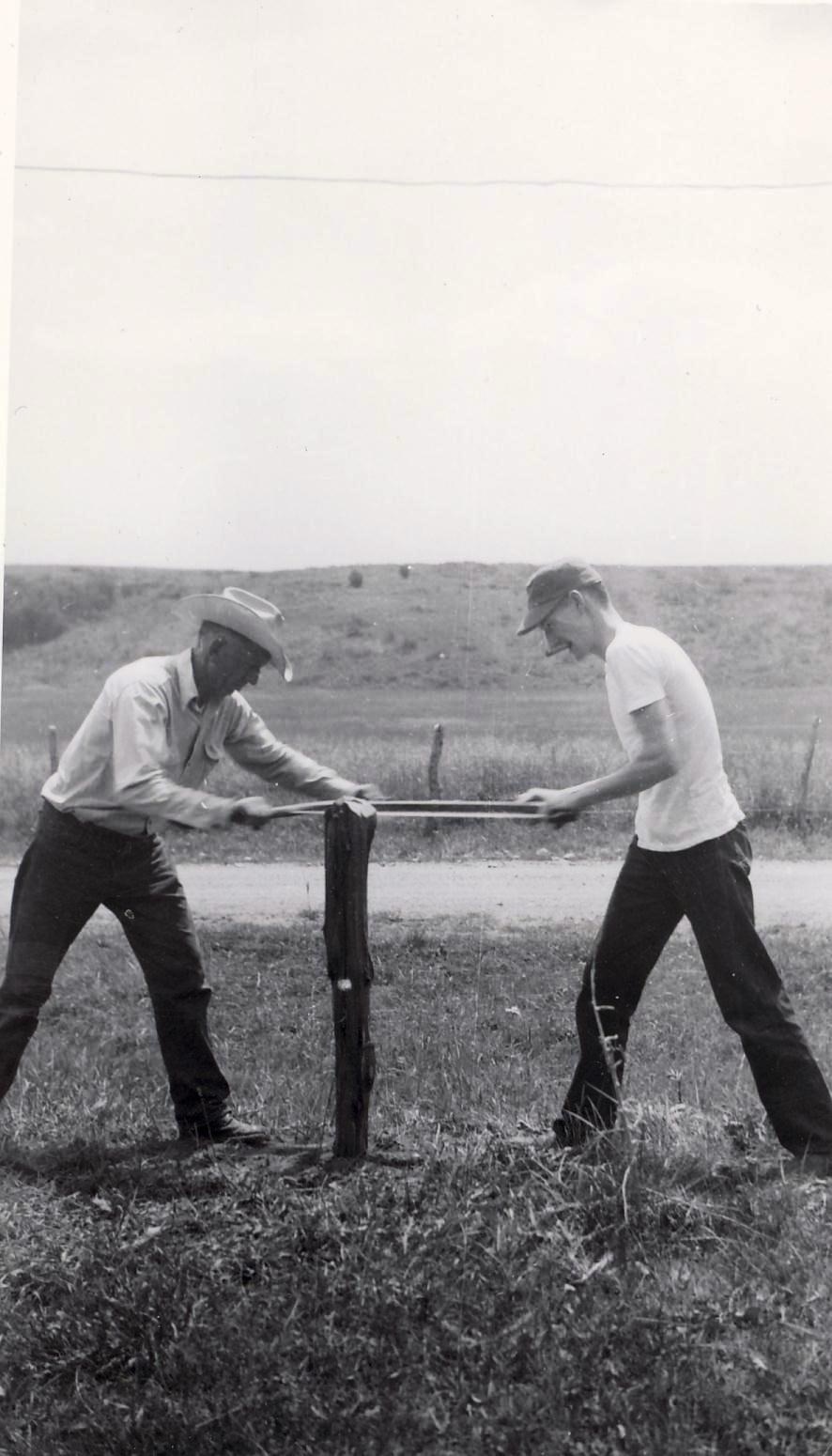
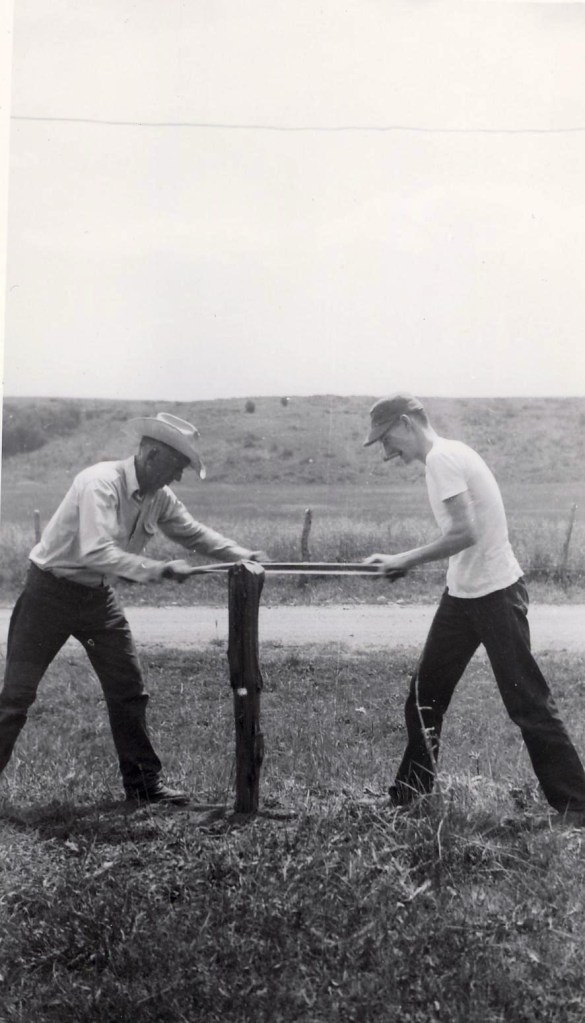
    My grandfather and great grandfather working on their family farm.

    Work is how we reconcile ourselves to our worlds, our surroundings, and to each other. Work is a natural process that unfolds in people as well as in other aspects of nature throughout all of time.

    As such, we should probably deem it worthy of some respect and attention, right? Yet a Gallup pole shows that, along with dissatisfaction, workers also report high rates of disengagement and unhappiness.

    60% of people reported being emotionally detached at work and 19% as being miserable.

    50% of workers reported feeling stressed at their jobs on a daily basis, 41% as being worried, 22% as sad, and 18% angry. 33% reported feeling engaged.

    Something is amiss if so many people report being unsatisfied with their work lives. People typically have working lives that span a period of forty years – age 25 to age 65, roughly. For those of us who started working in our teen years, that window of time is even longer. Would anyone want to spend that time feeling disengaged and unhappy rather than being engaged with meaningful work and productive behavior? So where is the disconnect, and what do we do to remedy these issues?

    Goodwork is Natural

    There is a misunderstanding about work, stemming from the definition we use to categorize work in the human sphere of activity. But if we look at the natural world for examples of work, we find it as common as the work we are inclined to do as people. The beaver goes about cutting logs and making dams. It is their home, and it is fundamental to their nature as beavers. In order to create it they must do good work.

    This is the same as with the bird’s nest, the dung beetle’s dung, the dens of any number of forest critters. In order to connect themselves to their world, they each must do their work. Even the worm, the greatest little workman the world has ever known, creates a layer of soil fertile enough for the rest of life to function in abundance, and they do this work unassumingly beneath our feet, content to churn through the dirt in obscurity. The worm’s work is part of his existence, it is woven into the fiber of his being, and it builds the world which we stand on.
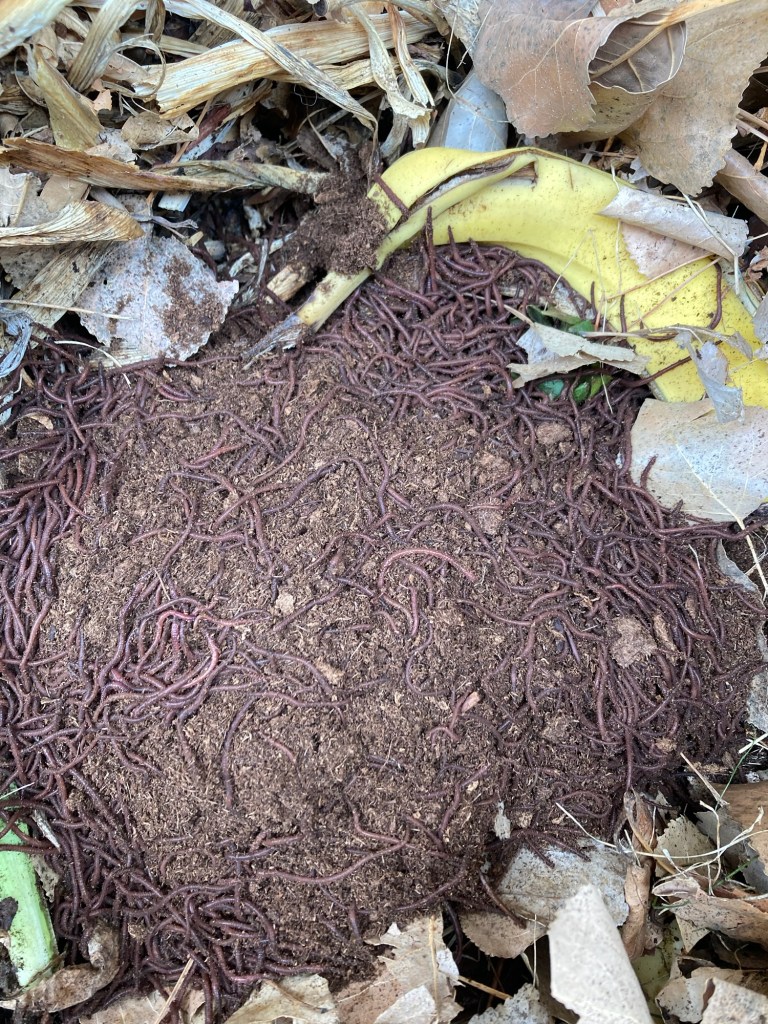
    Composting worms are introduced to their worm bin.

    “If a man is called to be a streetsweeper, he should sweep streets even as Michelangelo painted, as Beethoven composed music, as Shakespeare wrote poetry.” – Martin Luther King Jr.

    Frequently, I have heard the lament that “Humans are the only animals that have to work.” And while I understand the underlying sentiment and the frustration that goes along with it, I would say that all animals must work in order to live. It is only that the work of the animals is hardly recognizable to us as work because it is so engrained in their nature. When we see a bird collecting worms or making a nest, we do not say to ourselves, “Look at that robin, hard at work.”

    Our goodwork should resemble something like this. It should be so tightly woven into our nature that onlookers should be curious as to whether or not it is actually work at all. Our work should not be something we ‘go to’ but something that comes from us. I have never liked the term ‘work-life balance’ and would instead like to strive for ‘work-life integration’, in which my work and my life are harmoniously joined together rather than demanding portions of myself be doled out equally.

    Goodwork Involves the Whole Person

    Part of the frustration in the work that humans have come to do is that it has become highly specialized, fragmented, and noncreative. For example, I had a highly specialized job once packing medical materials. I stood on one spot by a conveyor belt and would place one alcohol swab in the plastic pack as it passed by my station. That is all I did for eight hours a day.

    By fragmented and noncreative, I simply mean that the work is separated from any satisfaction that could be earned from an end product. It does not satisfy our need for creativity because nothing ever comes to fruition under our watch in these deadend jobs, we only contribute our small part and then clock out.

    In an ideal goodwork, one would find a path toward personal growth and self development. This would be part of the process that Carl Jung called ‘individuation’, or becoming yourself. Our work reflects this pattern, and if we are allowed to be creative, and to follow our work to the satisfaction of its end result, we can more earnestly develop our unique purpose.

    Some specialization always takes place but it keeps in line with the development of skill, craft, and engagement rather than disengagement or fragmented roles. I was tempted to say ‘repetition’ as an aspect of highly specialized work but I find that goodwork can be equally repetitive, though this may occur in a way that is satisfying rather than demoralizing.

    Our jobs have also become much more sedentary as they have become more about information and processes that demand we be more cerebral. This has led to an unsurprising decline in health. Our bodies and minds are most healthy when they are deeply involved in movement and engagement.
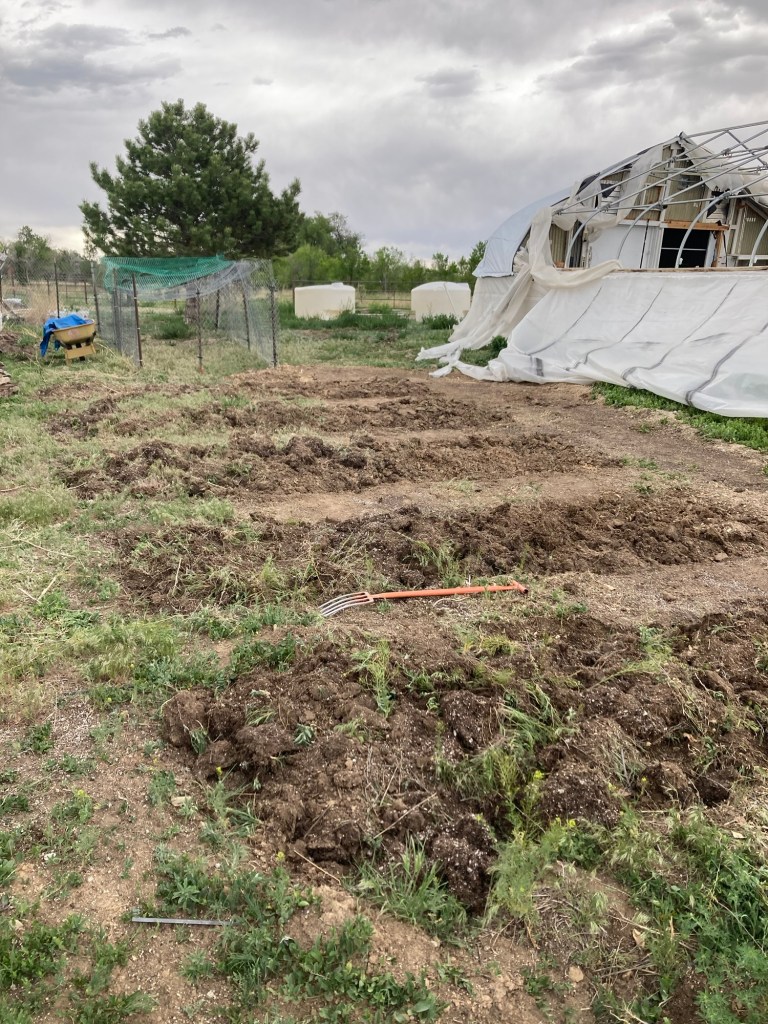
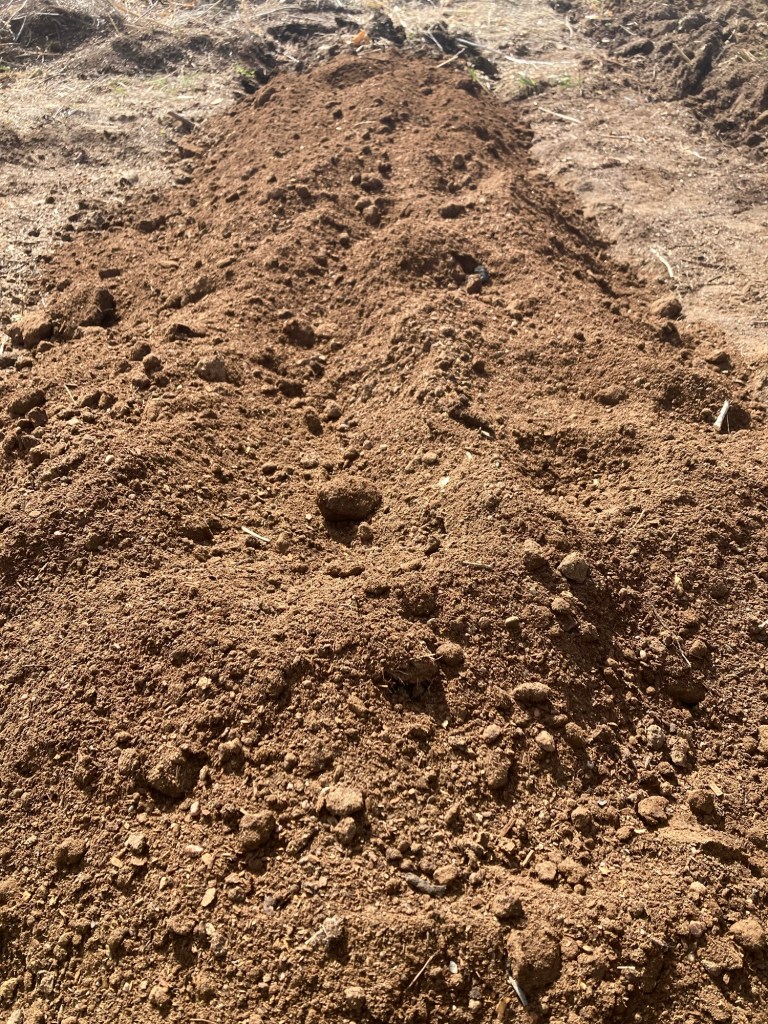
    Digging new garden beds in a field taken over by weeds.

    We are at our best when we are kept active in body, mind, and soul. Finding our goodwork means finding something that contributes to our mental and physical health as we attend to our duties. When I am attending to my farm and garden chores, I am using the muscles of my legs, back, shoulders. I get good exercise hefting feed bags or digging garden beds. My mind is engaged in planning projects, schedules, and organizing resources to fulfill the needs of my customers. These are just simple examples but one can see how such work can be fulfilling and engaging rather than stifling or overly monotonous.

    Goodwork is Peaceful, Voluntary, and Contented

    In this way, goodwork does not resemble the modern ‘hustle culture’ that you see online. Hustle culture asks you to just grind and hustle no matter the idea, the method, or the outcome. This kind of senseless frenzy may sound appealing at first but it is soon found to be exhausting, self-defeating, and empty. If you do not care what you are hustling for, what will you care when you achieve it? Don’t get me wrong, I believe in working hard, in self-discipline, and pursuing and achieving goals. But the way of the hustle is typically smoke-in-mirrors, empty promises, and multi-level marketing schemes that sell a dream rather than provide tangible value.

    Goodwork, then, sets itself apart from hustle philosophies and aligns itself more with conscientious, consistent work that builds upon itself until it compounds into something valuable and sustainable, providing meaningful work and wealth for generations rather than a flash in the pan windfall that the grind promises.

    Those involved in pursuing their goodwork are able to look their customers in the eye when it comes to upholding quality and consistency and these people often want to engage with their client base or community in long term relationships. Steady gain paired with consistent quality, all made possible by the principles outlined here, mean strong and resilient businesses and communities founded on mutual trust.

    When I say peaceful, I mean goodwork lacks much of the self-imposed stress that follows from meaningless grind and hustle culture allure. When I say voluntary, I mean customers know exactly what they are getting and from whom they are getting it, and the producers know exactly what they are producing and go to great lengths to be the best to offer their product. When I say contented, I do not mean complacent. I mean that the work is not filled with a desperate dash for validation or recognition but is allowed to unfold with the dedication necessary for a long-lasting enterprise worthy of respect. If you have aspirations of becoming the biggest, you may not be the best when you get there. If you aspire to be the best, you may become bigger than you ever thought possible. When you get there you will be able to stand by your systems with pride and confidence.

    Goodwork is About Connection

    As someone who has worked in many different roles and in different trades, I believe that our work is important and can be approached in a positive and healthy way, regardless of what we may be led to believe. I want to share my work with the world and I want the world to share its work with me. If I could be so bold, I would love to help others find their goodwork and help them to put their corner of the universe in order.

    “No matter how isolated you are and how lonely you feel, if you do your work truly and conscientiously, unknown friends will come and seek you.” – Carl Jung

    Like nodes in a network, we connect and spread the information we need to grow in every way. The information I seek to discuss and share through this medium is not new or unique but it is my duty to pass along all useful experience to my network.

    My goodwork is Goodwork. Through this blog and other written works going forward, I want to discuss relationships with work, wealth, and nature. I am not an expert in any of these areas. These writings are about musings, discussion, and progress. Perhaps more than its fair share of daydreaming. I draw on the wisdom and practicality of dozens, if not hundreds, of people that came before me and are much more articulate and qualified than I am. The areas I enjoy exploring – gardening, psychology, soil science, history, economics, bugs, personal finance – have been around much longer than I have. I have no illusions of adding any remarkable insights into these things but wish to provide a field guide in order to explore them more easily. I want to synthesize the widespread information that others have made the effort to pass along. I hope I can present this information in a way that each person finds something relevant to themselves and their life’s journey.

  • Good Work Wastes Not

    Good Work Wastes Not

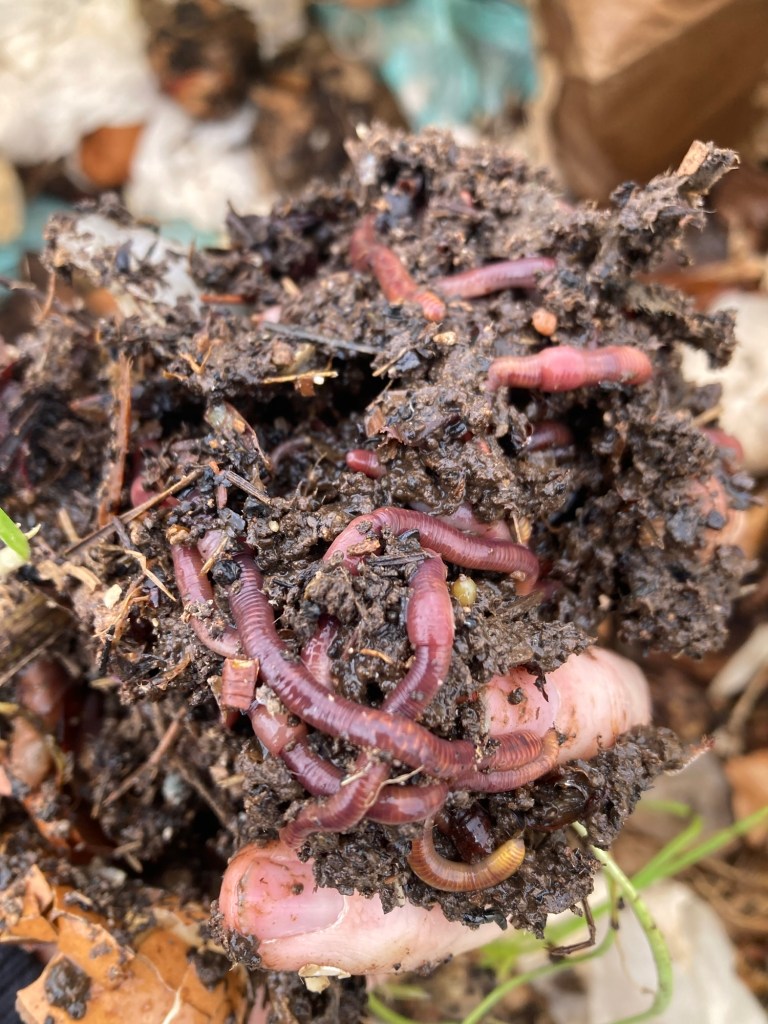
    Composting worms hard at work after a long winter.

    Poop is king. This may make me sound insane but once you get involved in farming and gardening, you really learn to love poop. Big ol’ piles of manure are like gold to me now. I fancy myself a collector of poop, a veritable poop connoisseur, if you will. Right now, I am actively collecting chicken poop as well as worm poop for amending the soil in our garden. Recently, I traded three dozen eggs for a trailer full of composted horse manure.

    Gardeners and farmers are not really in the business of growing plants or animals but in growing soil. From the soil comes all the abundance we are looking for so we must look to growing the highest quality soil we can if we are to accomplish our aims. Poop is the way.

    Okay, I’ll stop saying poop so much. Let’s call it “waste.” But what is waste, and how do we classify it as such when looking at the inputs and outputs of a system? Other than manure, what other types of “waste” can be made use of? Is the waste really waste if we can find some value in it?

    Let’s take a look at common waste streams as an example. In the U.S., it is estimated that 120-130 billion pounds of food goes to waste per year. From consumer and retail sources, this waste goes directly into landfills. There are a number of reasons for this food to be considered waste – it sits around too long and falls outside of its ‘best consumed by’ lifespan, it is post-consumption material that people would not consider worth saving, or it is deemed unacceptable for consumption by producers, wholesalers, and retailers and must be disposed of. No matter the reason, the core principle of this waste stream is: it falls outside of the circle of value to people. It is not considered as having value to people so it is not considered as having value, period.

    One of our garden beds, amended with composted horse manure we traded for eggs.

    The typical laying hen may eat approximately 1 to 2 pounds of scraps per week. Mine may eat much more than that, they are like little pigs with wings! Composting worms may eat approximately half their weight in scraps per day. Black soldier flies, another popular feeder insect, can eat about twice their body weight per day as larvae. And what are these critters eating? Food “waste” that humans have considered inedible.

    All three of the above-mentioned critters can eat fruit peels and cores, rotten and spoiled vegetables and post-process vegetable scraps. The chickens can typically pick through the leftovers of an old meal for the tasty morsels they really love, leaving the things they don’t like for the compost heap. Worms can eat coffee grounds and composted manure, as well. Black soldier flies eat ANYTHING you throw at them other than carbonaceous material (paper, cardboard, wood bedding, etc.)

    This means our flock of forty chickens can eat between two and four thousand pounds of food scraps per year. Our worm bins can process about the same amount of food scraps per year, depending on how their numbers fluctuate throughout the warm and cold seasons. The black soldier fly system is in its infancy but as it begins to rival the scale of our worm bins, it will consume roughly the same amount as the chickens and compost worms. That means about six thousand pounds of food scraps – material that nobody wants, material that people are paying to take to a hole in the ground – are turned into valuable resources. Feeder insects and farm-fresh eggs. This is the closest I’ve ever come to getting “something for nothing.”

    These old shoes were covered in plenty of poop! And my pants, and shirts and… all of it, really.

    And then we return to poop. I know, I have to say poop a bunch more. We got rid of the food scraps by putting it through these livestock and insect systems but what do we do now with all this s**t ?! Remember how I mentioned the farmer and gardener being a grower of soil? The worm poop, the soldier fly poop, and the chicken poop all make fantastic composted manure material that we can use for growing the soil. Anything they can’t eat is processed in a compost pile by billions of microbes. It’s almost as if this system was developed over millennia as a means of managing a multitude of waste materials created by diverse groups of flora and fauna.

    In nature, there is no such thing as waste. Every output created by one system is picked up by another system and used as fuel. Flocks of birds follow behind roving herds of ungulates, picking through their manure for fly larvae. The worms eat whatever is left over of the grass nobody munched on and the droppings they left behind. The soil keeps growing thicker and more fertile year after year. It is a closed system.

    It is only when we consider the human system in isolation to other systems that we get waste streams we don’t know what to do with. If we consider something without value, then it must have no value. But many people in various fields, driven by the desire to take advantage of these unappreciated and underappreciated materials, have brought them back into the fold of the human system. The more we do this, mimicking nature’s methods of “zero-waste”, the more value we can derive from human systems without creating resource mismanagement and untenable waste streams. What would a zero-waste world look like? What systems could create this, and what incentives would drive us to create the necessary processes? How would it reform the systems we have come to take for granted, and how would the institutions and systems of humanity be changed in order to achieve this level of organization?

    Many might think of business and waste as going hand-in-hand. Businesses create waste. Perhaps businesses are thought of as wasteful, in general. Here is where my experience in “lean manufacturing” comes into play. In the world of manufacturing, the old ways are being seen as ineffectual, unsafe, and downright inefficient. Made manifest in the principles put down by The Toyota Way, the philosophy behind manufacturing has changed in order to both respect the individual person and to continuously improve systems to lower the levels of waste present. Why? Because respected individuals are much more productive and lower waste means higher profitability.

    I would highly recommend looking into this philosophy and the systems associated with it. I may write more on these topics later, as well, as I feel they align with several principles inherent in the tenets of goodwork.

    Whenever I have need of visiting a landfill, I am somewhat overwhelmed and disheartened. They are feats of engineering and problem-solving, to be sure, but the implications of the systems that must produce these as a necessary tool are staggering. The amount of trash creates an image of post-apocalyptic wastelands. How nice it would be if we developed systems to render these pockets of sequestered garbage unnecessary. I am also not so naïve as to think that this will happen anytime soon. But we focus on what we can control and we make continuous improvement. If each family owned half a dozen chickens and a worm bin, that would be a great start! If neighborhood compost heaps became the norm alongside their community garden counterparts, even better. One step towards a happier, healthier world.

    Coming down from my soapbox daydreaming, I return to our daily work that we must do — our goodwork. I can talk about getting rid of XYZ waste stream and having ourselves a local food and gardening frenzy all day but what really matters is how this relates to the work we are doing now, today. Is there a waste stream in your work that you find inconvenient, unsightly, or high cost? Is there a waste stream in your personal life that may be draining valuable time, energy, or money? We take advantage of our food waste in order to feed our chickens, insects, and gardens, but maybe you take advantage of yours to cut down on expenses, save some time that you could spend with your loved ones, or give you more energy throughout the day to tackle the tasks of daily life.

    Whatever you find in your journey towards a more efficient, fulfilling life, I hope you keep going, keep getting better, and keep doing your goodwork.

  • Abundance is Natural

    Lessons from My Chickens Series

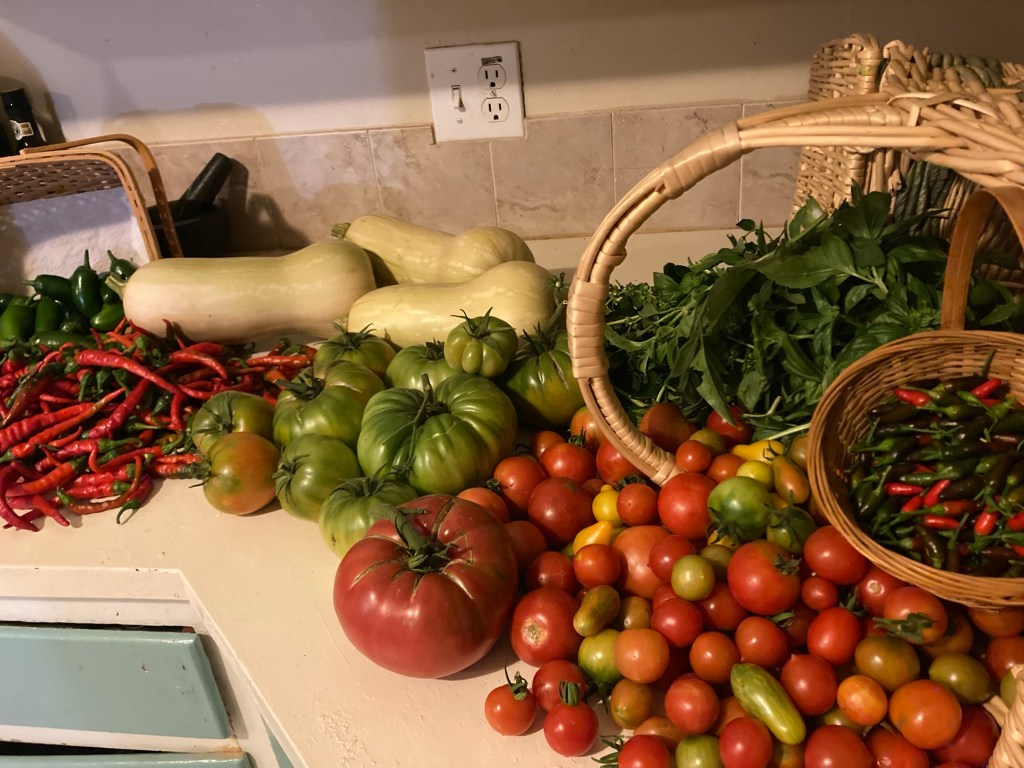
    When we started gardening, we harvested maybe two or three pounds of produce our first year. We were so proud of our shriveled, little radishes and our fistful of basil. Last year, we managed to produce in excess of three hundred pounds of produce as well as collected thousands of eggs from our chickens. We could not believe how simple it had been. I won’t say easy because, at times, it was some of the most tedious and grueling work I could have chosen to do. But after caring for the chickens into their adulthood, the eggs just kept on coming! Day after day after day, the chickens did their goodwork and laid egg after egg. In the later part of the summer when most of the vegetables were ready to harvest, we were drowning in good, quality food we had grown ourselves. It felt like printing our own money. We realized that this should not have been surprising at all. Nature is abundant and abundance is natural.

    I think there is a tendency for us to look at our work from the standpoint of pure effort. I built this house, I grew this food, I fixed this motor, I achieved this, I made that. When it comes to gardening and other pursuits that are more intimately related to nature, you may eventually realize something. That you never really grow anything.

    That may sound strange, but it is true. I don’t grow my tomatoes. The tomato plants grow themselves. I can’t grow squash or basil or peppers, only the plants know how to do that. I may put them in the ground and water them occasionally but the plant knows what it needs to do and does it even without my supervision. It is the same with the chickens. I may bring them feed but they are the ones turning their feed into eggs. I come along and collect when it’s time.

    Nature is inherently abundant. We simply arrange things to allow for nature to do what nature does best, which is produce things in abundance.

    This flies in the face of some preconceived notions I had about living this life. I thought the effort I was putting in was translating into the things I received. When I stopped trying so hard, things kept going on producing without me. It didn’t have to be about struggle, effort, and exertion. I still worked hard and was diligent about completing my part in the process but I didn’t have to exhaust myself in trying to achieve these things. I set the stage and then let nature do its thing. I think our nature works along the same lines.

    By our nature, I simply mean becoming whatever you are and acting this process out every day. I think we have all been around people who are not doing the thing they were made for. They are frustrated and angry, which are surface level signs that they are most likely depressed and filled with the anxiety of something that has not been allowed to become itself. We have met with the mechanic who doesn’t want to be a mechanic. A striking difference between them and the mechanic who actually wants to be a mechanic, wouldn’t you agree? In the first case, they are annoyed to the point of rage by any obstacle or setback, they are short and impolite with their coworkers and customers, and they treat their tools and surroundings with disdain and contempt. Why? Because they do not want to be there, and every part of their daily reality reminds them of that.

    To the person who is naturally a mechanic, a setback is just that and nothing else. Something to get through and get over. But to the person who is already at the edge of their limits, engaged in something they would rather not do, any inconvenience becomes a reminder of their underlying disappointment.

    We each have a nature that cannot be denied. It can be worked with, improved, built upon, and developed but when an individual denies their nature they are in for a world of hurt. The introvert is not going to naturally be inclined to public speaking, an extrovert outdoorsman is not going to be inclined to solitary work in a dimly lit cubicle. That would be like trying to milk a chicken or pull eggs off a tomato plant. If we align ourselves with our nature and with the limits and properties of nature in general, we can achieve great things.

    When things are aligned with nature. then productivity becomes a pleasant process. In the garden, plants that are healthy, happy, and allowed to fully express their nature provide in abundance. I have never seen a tomato plant harassed into abundance, or a chicken starved into increased production. This is why every aspect must be respected in due course. Natural things are productive, and productivity is natural.

    It may not be as obvious in natural settings that there are exchanges being made and mutually beneficial situations being sought out but it is quite common to see these kinds of cost/benefit relationships cropping up in the natural world. They may not use money and factories but make no mistake, plants and animals profit from different resources that are available at different times and they make the use of these benefits in order to grow, adapt, and overcome the challenges of their unique situation.

    Someone’s goodwork may be making shoes, welding, carpentry, teaching, accounting, raising children, cutting hair, sweeping streets, stirring a pot of soup. I believe all work has in it a certain sacred duty that the individual can be a part of and be proud of. We are, each of us, putting in order our little corner of the universe.

    Finding our goodwork means finding positive relationships with work, with wealth, and with nature. Building a community that believes in the benefits, nuance, and the potential of doing good work. Opening discussions as to how we will improve our work going forward, how we will build a world we want to live in and not one we just put up with. This is what Goodwork is about.

    I wanted to share this idea in case there were potential farmers or gardeners who were dissuaded from this pursuit by the thought that the workload would slowly kill them. It is also applicable to anyone who wishes to pursue their own goodwork and fears the immensity of the tasks ahead of them. Look to your nature, and to Nature in general. Nature does almost all the work we claim to do and does it silently, at that. It demands no attention and achieves all its ends.

    “Nature does not hurry and yet everything is accomplished.” – Lao Tzu