Tag: butterflies

  • Project Milkweed

    Cultivating the Monarch

    Driving by the irrigation ditches in the countryside, you see them pop up out of the grass, open their otherworldly flowers, and sag in late summer with their seed pods. Milkweed grows in the most unassuming and difficult spots. And I would see them mowed down or pulled out of the edges of people’s landscaping and it felt like a kind of insult. Something so weird and spectacular and thriving in the most difficult circumstances, cut down without a second thought. The world must go on but we don’t have to be anything like the world. I love milkweed and I want to cultivate it as widely as I can. I want to sow its seeds in the soil of the mind.

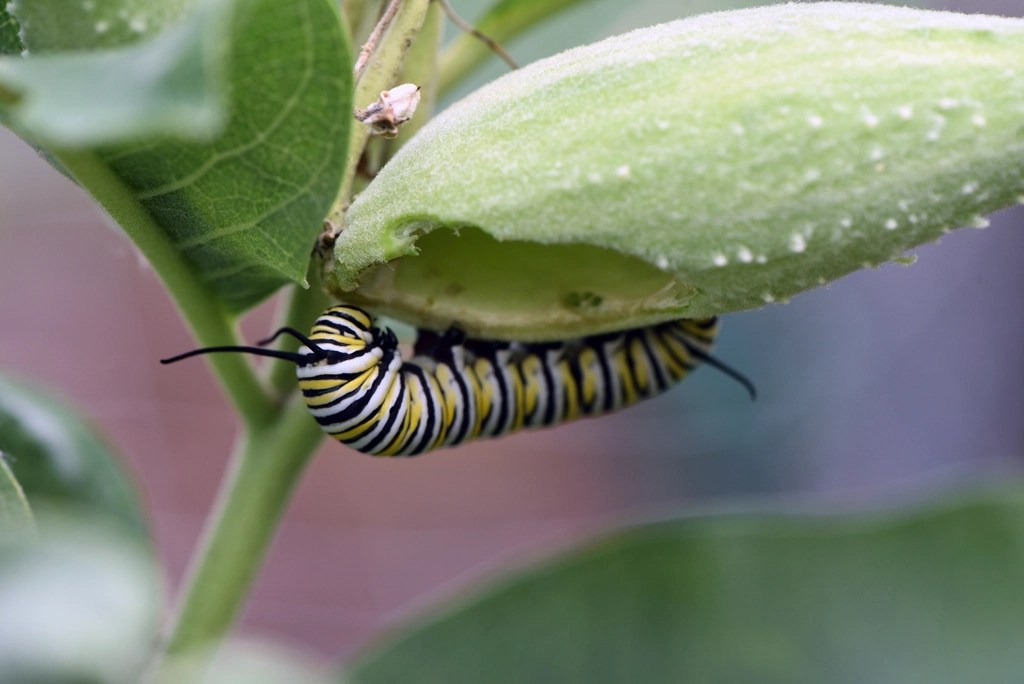
    Milkweed is the primary source of food for the Monarch butterfly in their caterpillar stage. The black, yellow, and white striped caterpillars are beautiful to behold and seem made for milkweed as a natural pair of alien creatures. The Monarch’s numbers dwindle and struggle with continued loss of habitat and its main host plant, the lovely milkweed.

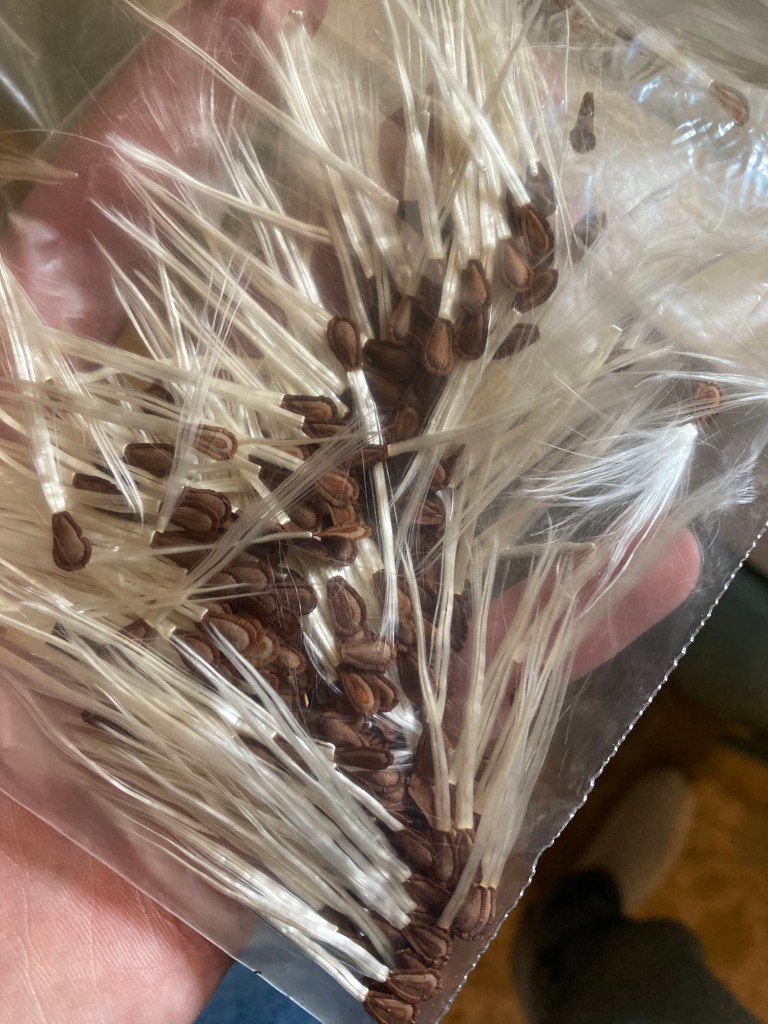
    This is where we may enter, if we wish. A long time ago, I noticed a tenacious milkweed plant setting its strange-looking seed pods at the edge of a field butting up against my vegetable garden. In the beginning of winter, I took a seed pod and opened it to collect the seeds. I spread them in the field and in the garden. I took some home to winterize them, a practice called ‘cold-stratifying’. In the spring, I planted the seeds and hoped they would flourish.

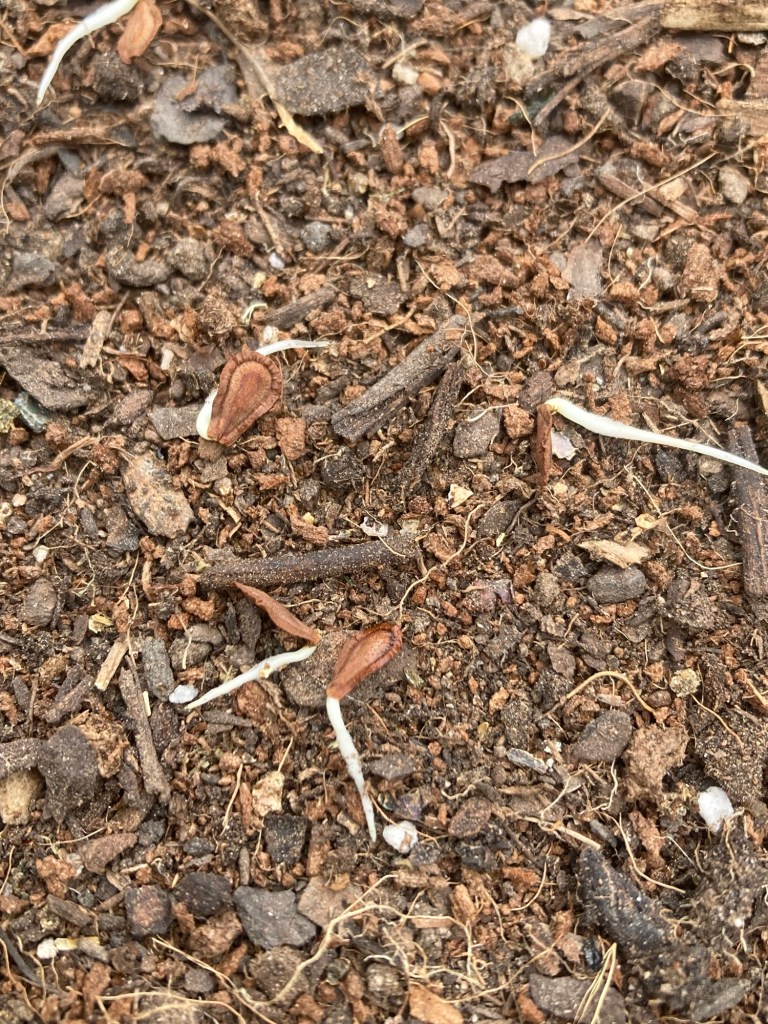
    If you decide to undertake this project with me, be careful when handling any part of the milkweed plant. They exude chemicals which can really irritate your skin and eyes. I knew this in theory but still learned the hard way when handling the seeds. Don’t repeat my mistake!

    The plants sprouted and rose to about five or six inches tall. I was elated. Then the heat of late summer hit, they didn’t grow much more, and the first frosts of fall came with no promises for next season. When the following spring came (this spring, 2026), I waited for the first signs of milkweed coming up. I was pleasantly surprised to see a handful had survived the dry winter.

    We did not get as many as we would have liked but it was a blessing even to get a few in our garden. As stated in previous posts, I would be ecstatic if we got a Monarch to visit our garden and would be surprised if they selected our garden to lay their eggs but we still keep hope alive.

    Monarch butterflies will overwinter in Mexico and then migrate North during the summer months, searching for milkweed on which to lay eggs. I have not personally seen them use any milkweed plants in our area but that is also because the plants are few and far between.

    The goal of this project is to spread the milkweed plant in order to cultivate more breeding grounds for the Monarch. It is a project I hold dear and which is in its initial stages, to be frank. I have about three clumps of milkweed in my garden and cannot do much more, as I rent my current living space. I figure every little bit helps for now but I dream of one day being able to plant whole fields of milkweed and to witness the Monarch migration and to be part of it in some humble way. I also wanted to spread awareness and invite others to be part of the project as well.

    There are many resources online to assist in this aim. You can order milkweed seeds online or get them from local vendors. There are several types of milkweed to select from. Showy Milkweed and Common Milkweed are the most frequently recommended for growers in North America, though do your research as to the types which are native to your area or would thrive the best in your climate.

    Adult monarchs also need nectar, meaning other plants can be valuable in their lifecycle as well. Blanketflower, aster, and many types of Goldenrod can provide nectar for the adult butterflies, while your milkweed provides a home and food for the larvae. Avoid using insecticides and other chemicals that may damage the lifecycle of insects in your garden.

    One may also spread milkweed seeds in marginal spaces or wild areas. I take pleasure in my evening walks when I pass by a few milkweed plants that thrive in the stone borders of a neighbor’s yard, just outside their fence. No one seems to mind their presence and they are typically allowed to grow to maturity throughout the season.
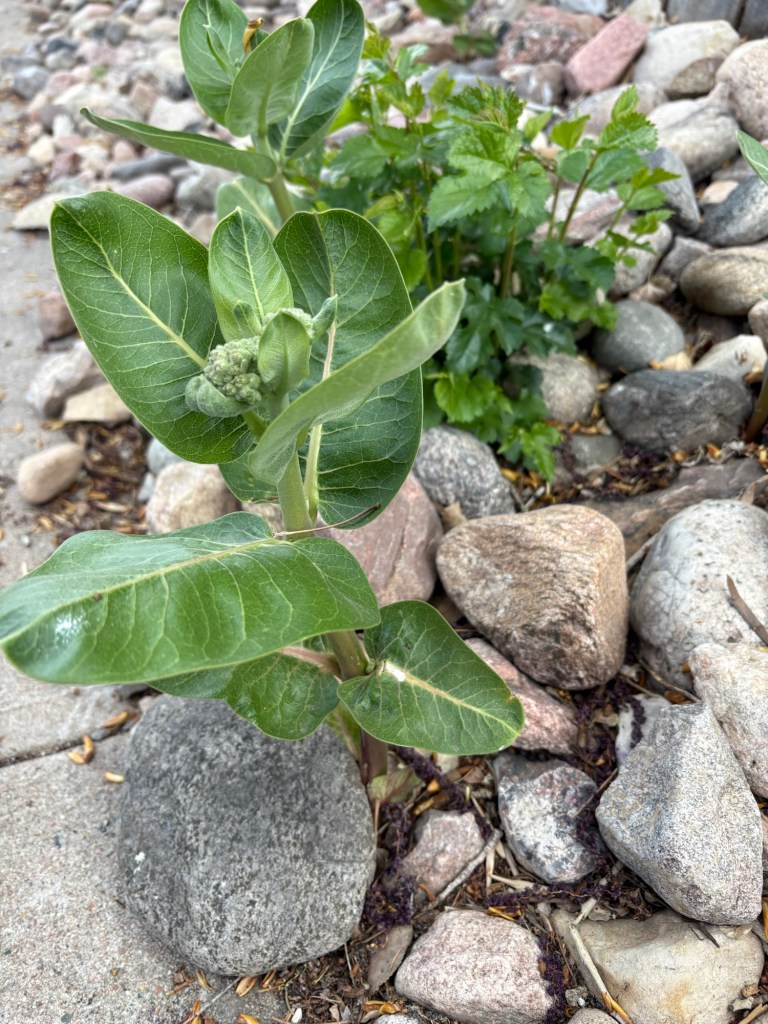
    I always keep my eye out for any Monarchs that may use these as a home for their larvae. And I hope nobody cuts them down, taking them for a nuisance weed. We focus on what we can control. Adding a few clumps of milkweed to our gardens may not seem like much but if many people did this, there would be many potential sites for a Monarch to choose from. Every little bit helps.

    I will continue to document the efforts of Project Milkweed in future posts and will, of course, provide updates if a Monarch chooses our garden as a home. This is one of those long term projects that takes place over the course of a lifetime. Each year I hope to do a little more and to bear witness to the growth of it.
  • June in our Garden

    What’s Happening in the Garden?

    There are so many things happening in our garden in June. It is hard to believe the year is nearly half over. In the late winter and early spring, you think things are taking forever and then June hits and the garden explodes, the days are as long as they’ll get, and you can hardly keep track of all that is happening. I wanted to keep a record of where we are in the garden’s journey and encourage you all to take a closer look at your own gardens and the visitors that come and go throughout the season!

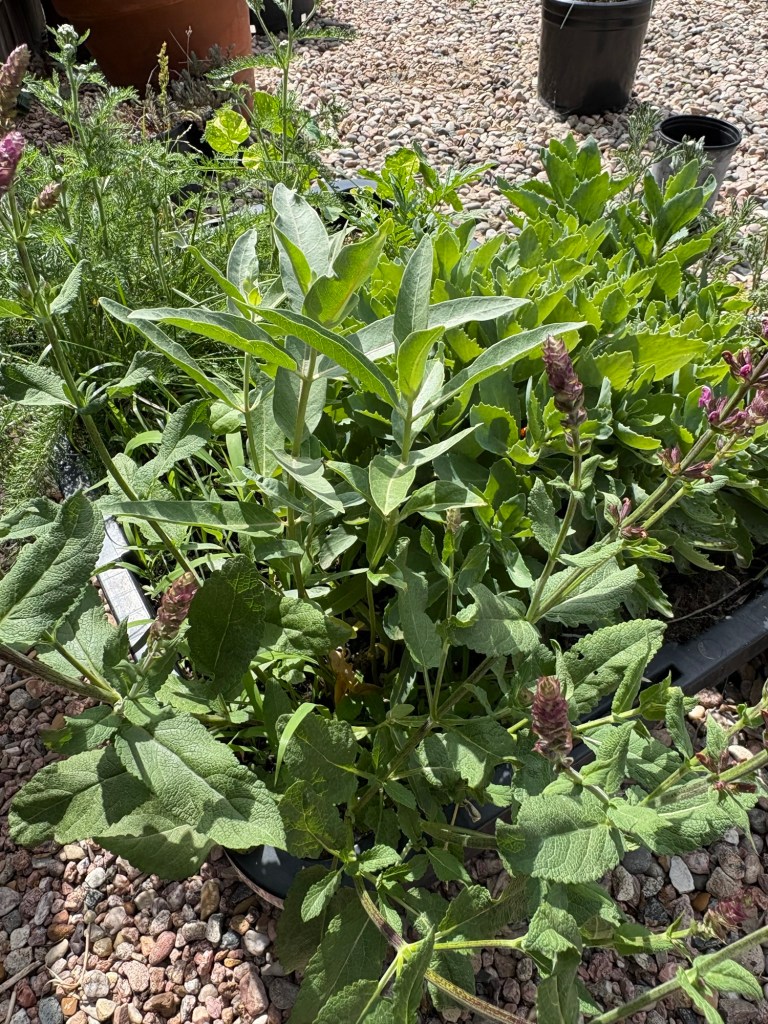
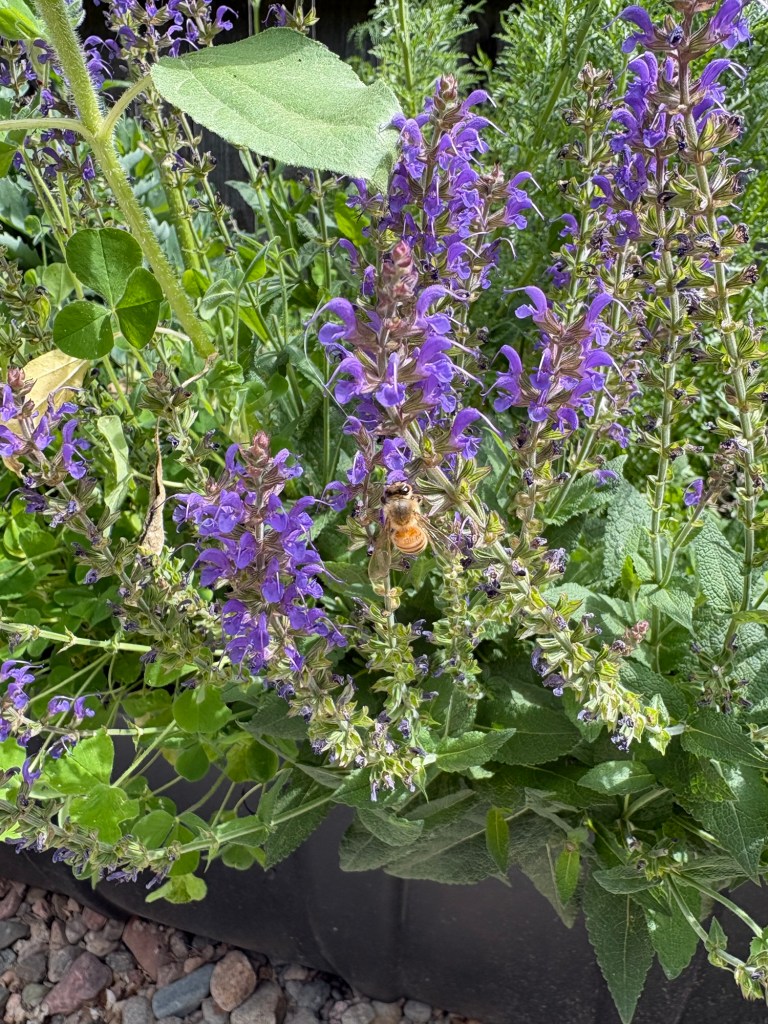
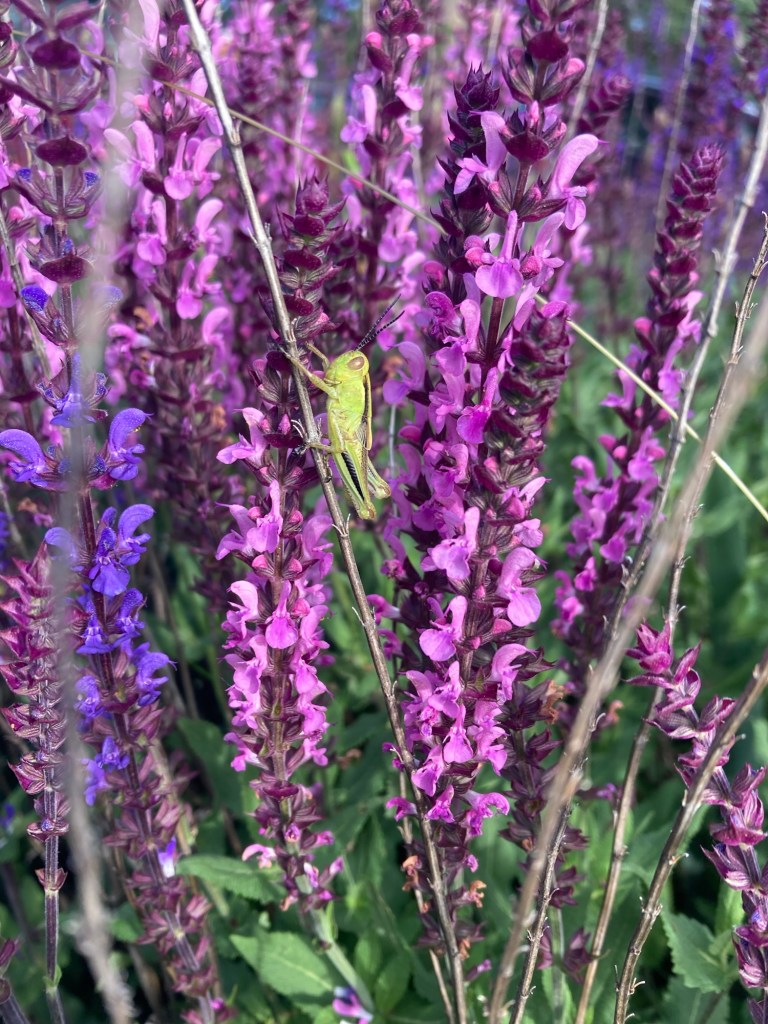
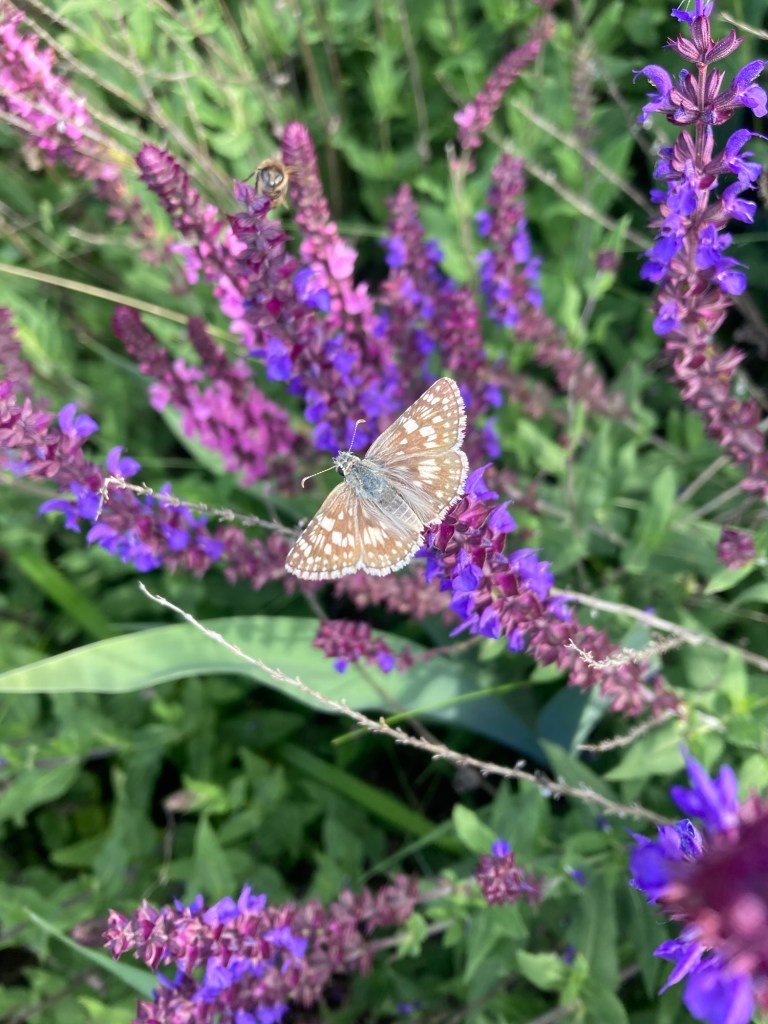
    Right now, in the middle of June, we have a few different flowers ready to pop and a handful that have already started blooming. Our salvia comes back year after year without much worry or fuss. In fact, our neighbor tried to replace a beautiful patch of perennials with a sterile rock garden and a few sad looking rose bushes and the old salvia came back with a vengeance. While I have nothing in particular against rock gardens or roses, it was nice to see the old natural garden return for one last victorious flush of purple flowers. The bees love these — as my picture shows! Honeybees are usually one of the first visitors to the garden and salvia is there waiting for them starting early.

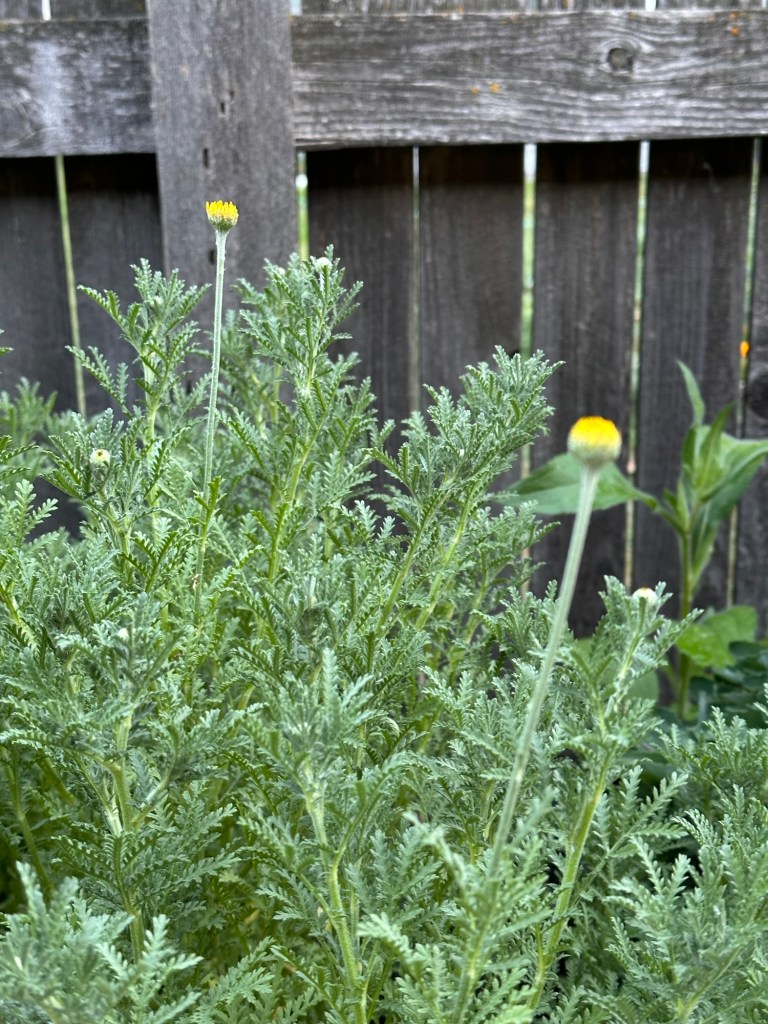
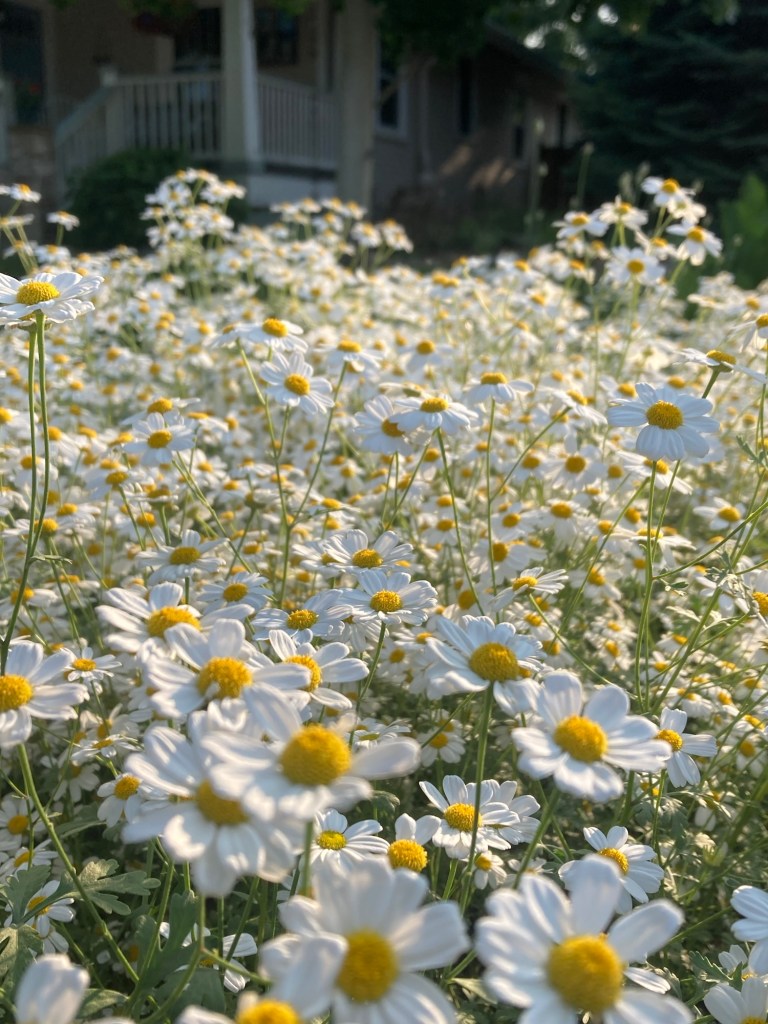
    Next, we have had several bunches of German chamomile crop up from one seeding several years ago. They are tremendously hardy and self-seed better than other chamomile varieties we have grown. I always appreciate volunteer plants and try my best to protect them and keep them going until they get strong enough to do their own thing. These are usually the plants that end up doing the best in our garden each year.

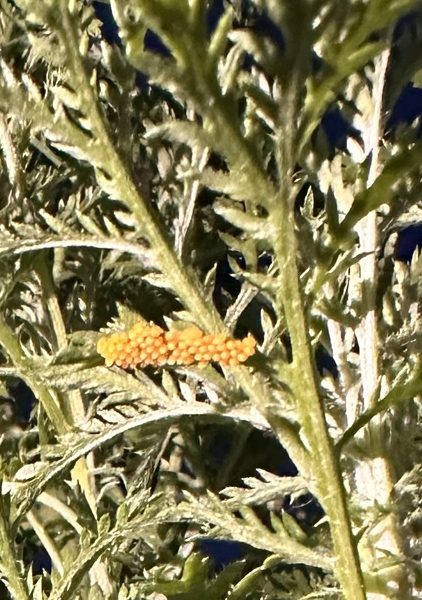
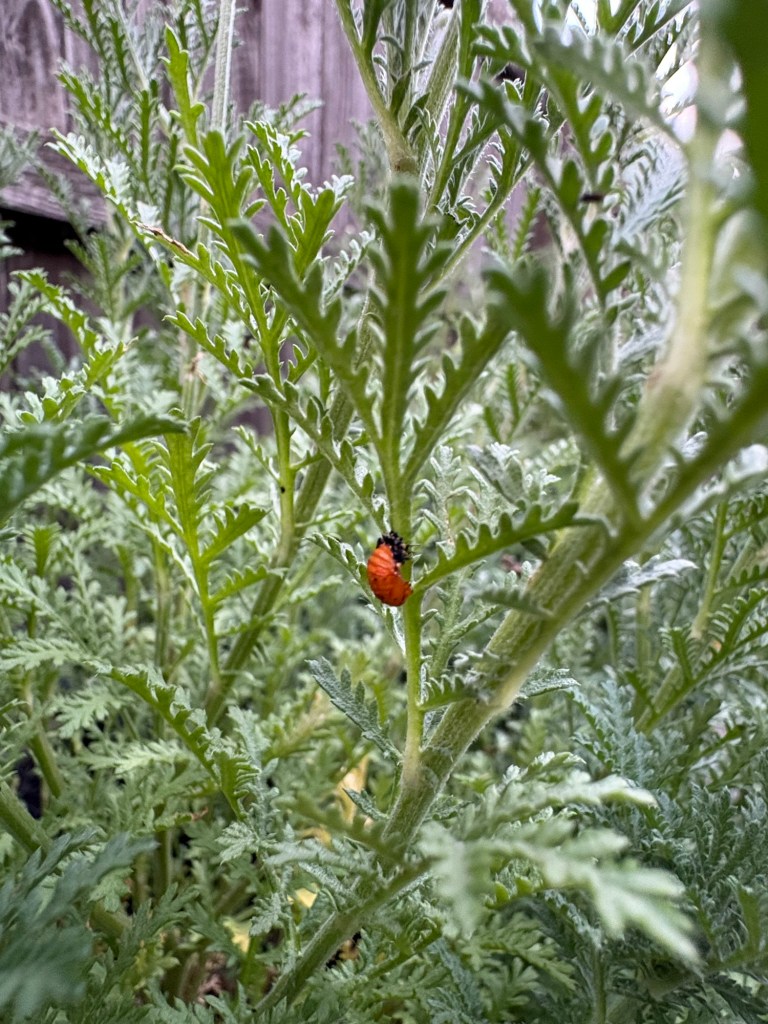
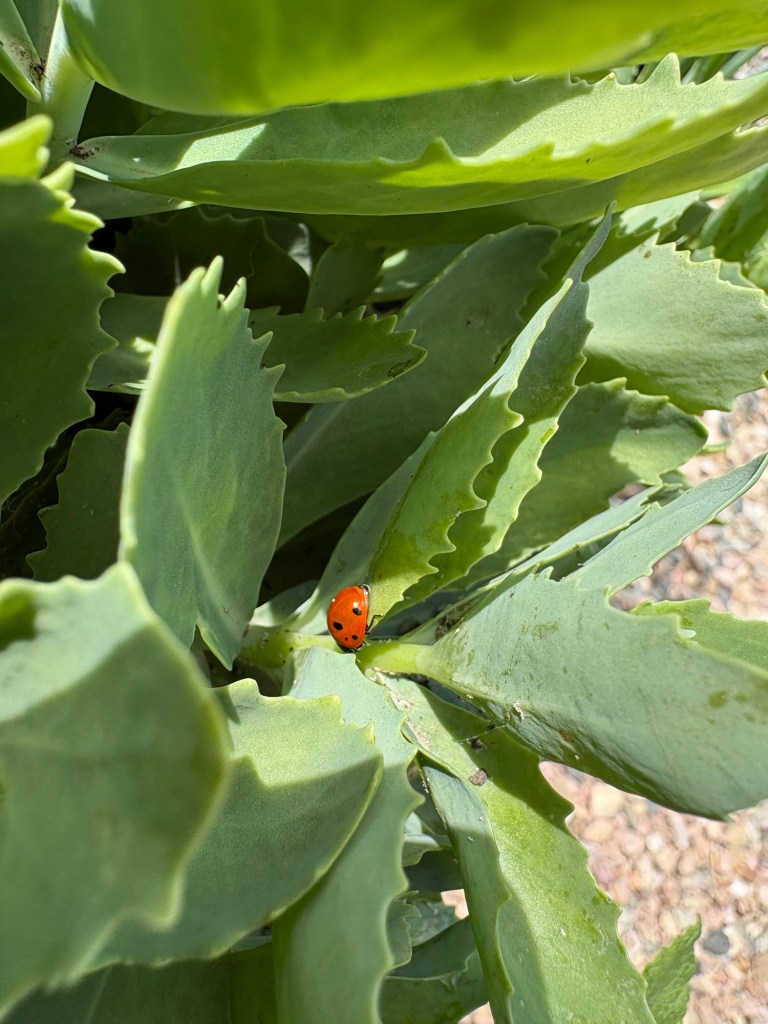
    As a bonus, some lovely ladybugs decided to make our garden their home this year and laid some eggs in our chamomile. We got to see them hatch and the little black larvae crawled all over the garden for a few days. Now they are in chrysalis and soon our garden will be filled with ladybugs (we hope). We think the presence of aphids on our Sedum Autumn Joy may have attracted them.

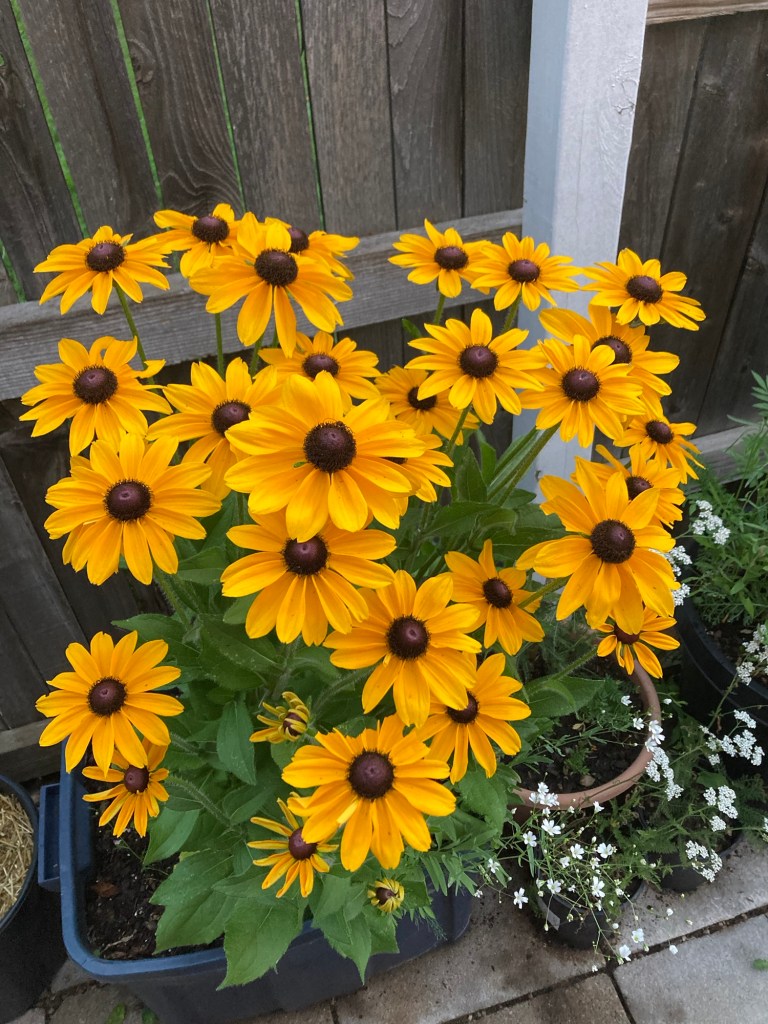
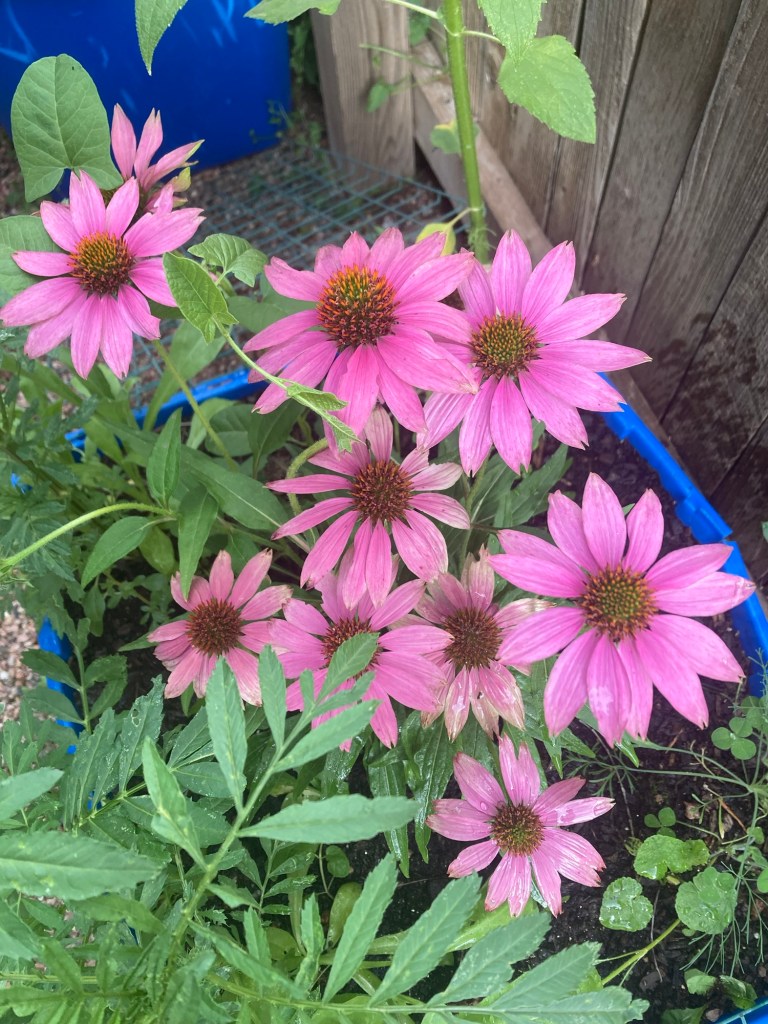
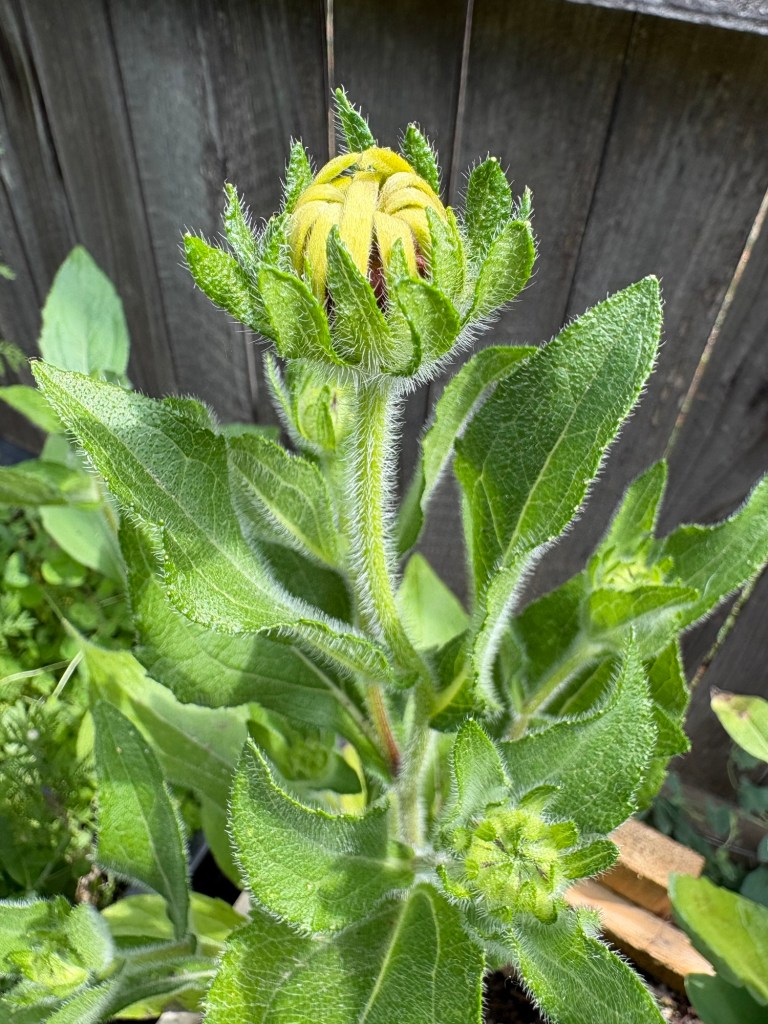
    Then we have our Black-Eyed Susans and our Purple Coneflower (Echinacea) which have returned from last year’s garden, even with the devastatingly dry winter we have had this past year. It just goes to show how resilient and robust these native wildflowers are and what an integral part of any low-effort garden they can be. They have not bloomed yet but the flowers have formed and are just about to open any day now. I cannot wait to see what kind of visitors these flowers bring to the garden. They often attract pollinators of many different types, but more on that later.

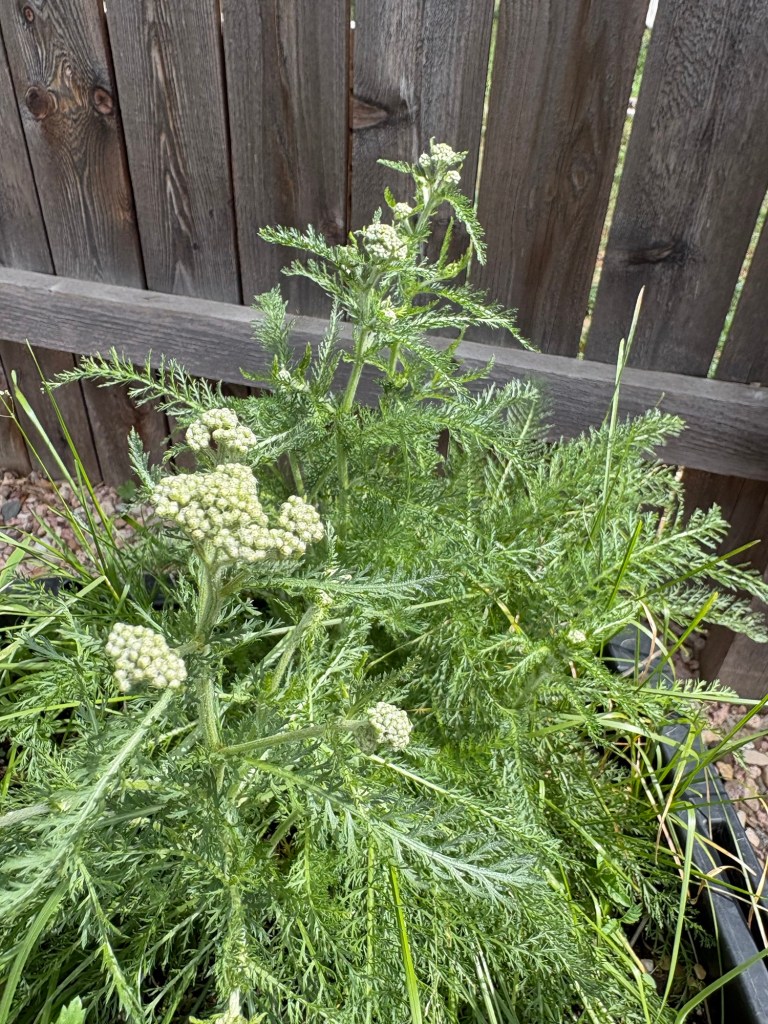
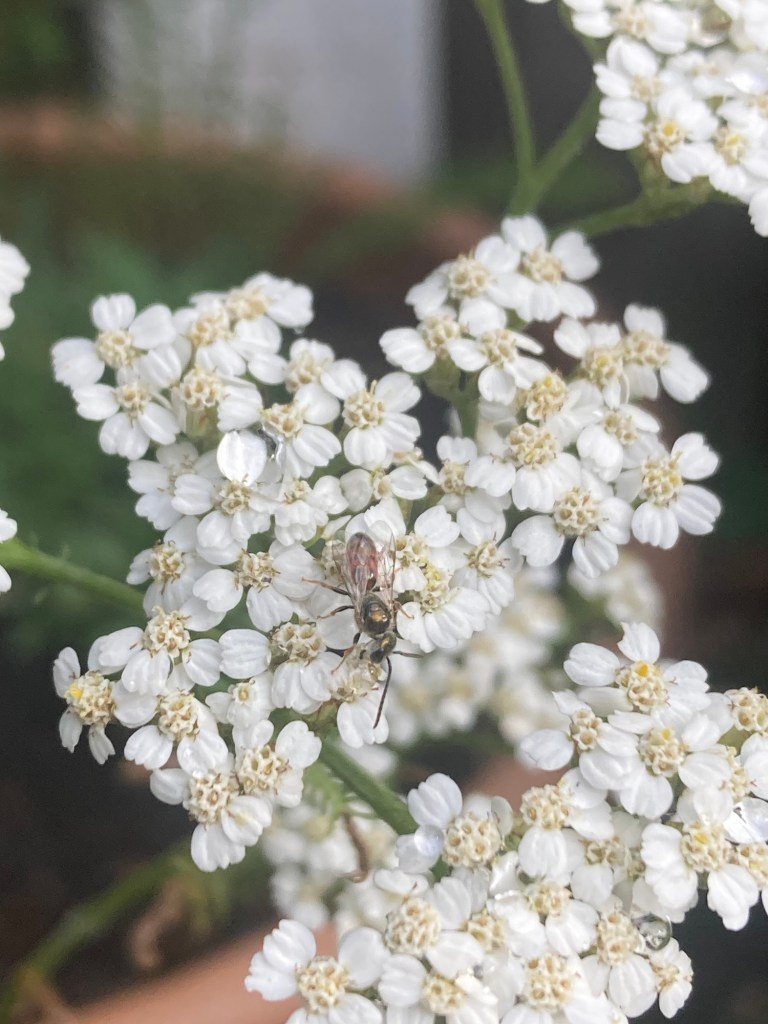
    In addition to these beauties, we have also had a couple star players return in spite of my almost having killed them (several times). We tried to transplant a few Yarrow plants into our container garden last year and then proceeded to not water them for six months. There was also so little rain or snow this winter, I thought they were dead for sure. Then they came sprouting up with the first wet days of April and May and now they are just about to start blooming. Keep hope alive!

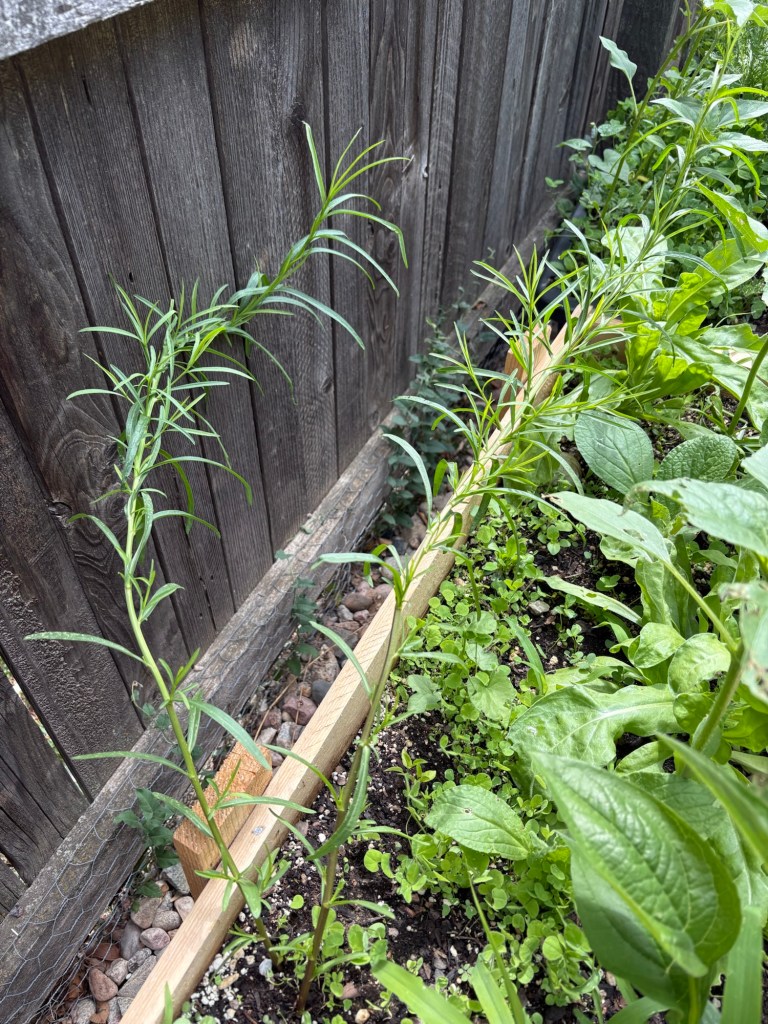
    There were also a few sprouts coming up in April that I misidentified as Milkweed but which turned out to be Goldenrod. This was an absolute shock and joy to discover because I must have done everything I could to kill them last season. I transplanted them late and they shriveled up and died where I planted them — their little brown twig bodies reminded me of my failure each day I passed them. Then, this spring when I thought they were Milkweed, I tried to transplant them into a larger container and they soon looked quite sad on our first few hot days in May. Now they are continuing to surprise me and prove their resilience, as they have taken off and look like they are going to be fascinating plants to watch. I have never grown them myself but I am excited to see them. Goldenrod are known to be host plants for a huge variety of insects and wildlife so I will keep my eye on these superstars!

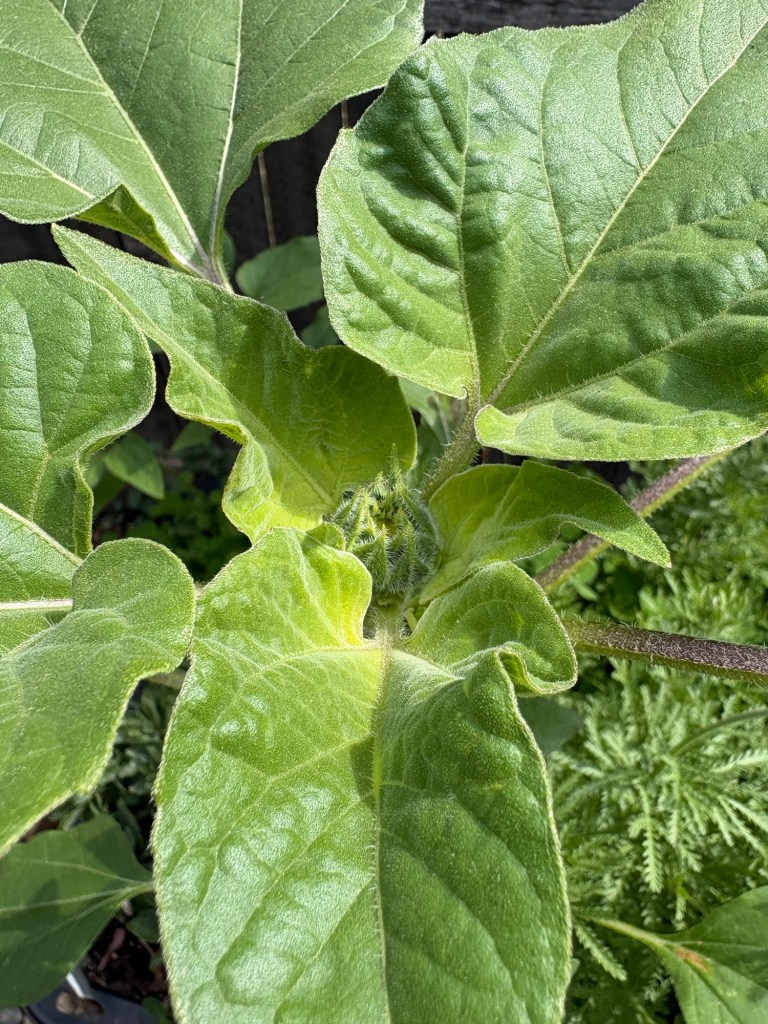
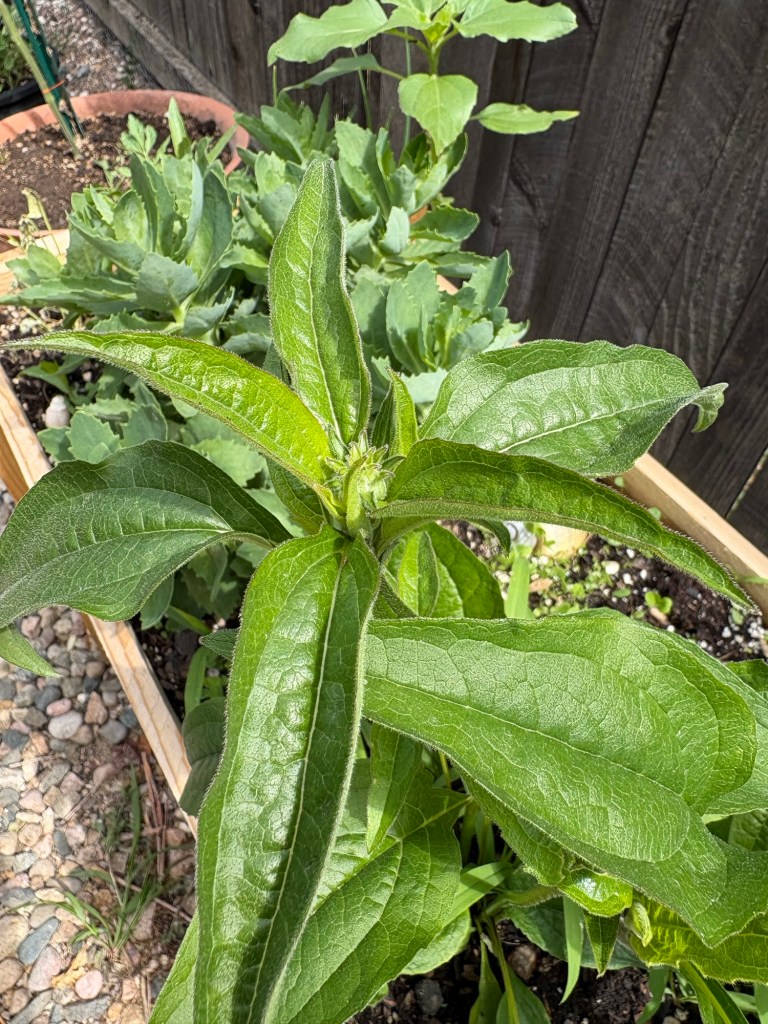
    Goldenrod is on the left, Yarrow in the middle, and our Milkweed plants are on the right in this gallery above. Milkweed is known as the sole host plant and food source of the monarch butterfly. I would not hold out hope that a monarch would use our milkweed as their home but that would be high up on my wish list for garden visitors.

    Then we have a few of my favorite flowers that I love to see come up each year. They are known to be aggressive self-seeders, and are probably deemed a weed by most people, but I love the Prairie Sunflower. So many insects come to our garden just for these sunflowers and in the later summer I have even seen Goldfinches come to perch on them and feast on their seedheads. It is a lovely sight to behold at the end of the garden season and really connects you to the cycle of the year and the beginning of autumn.

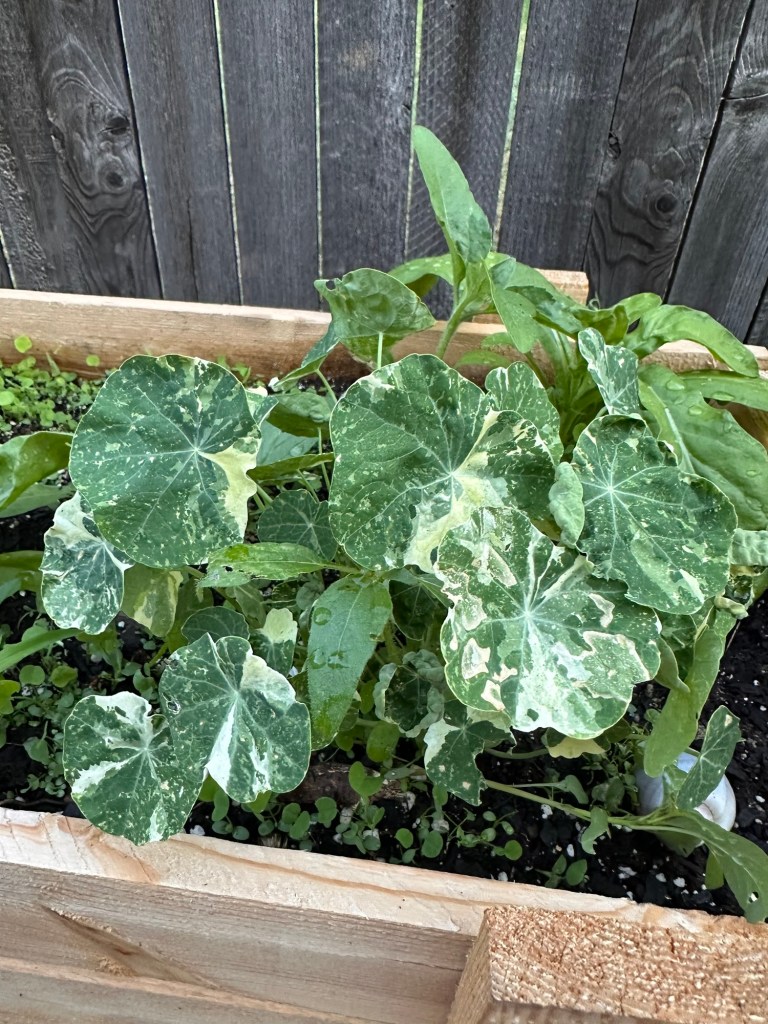
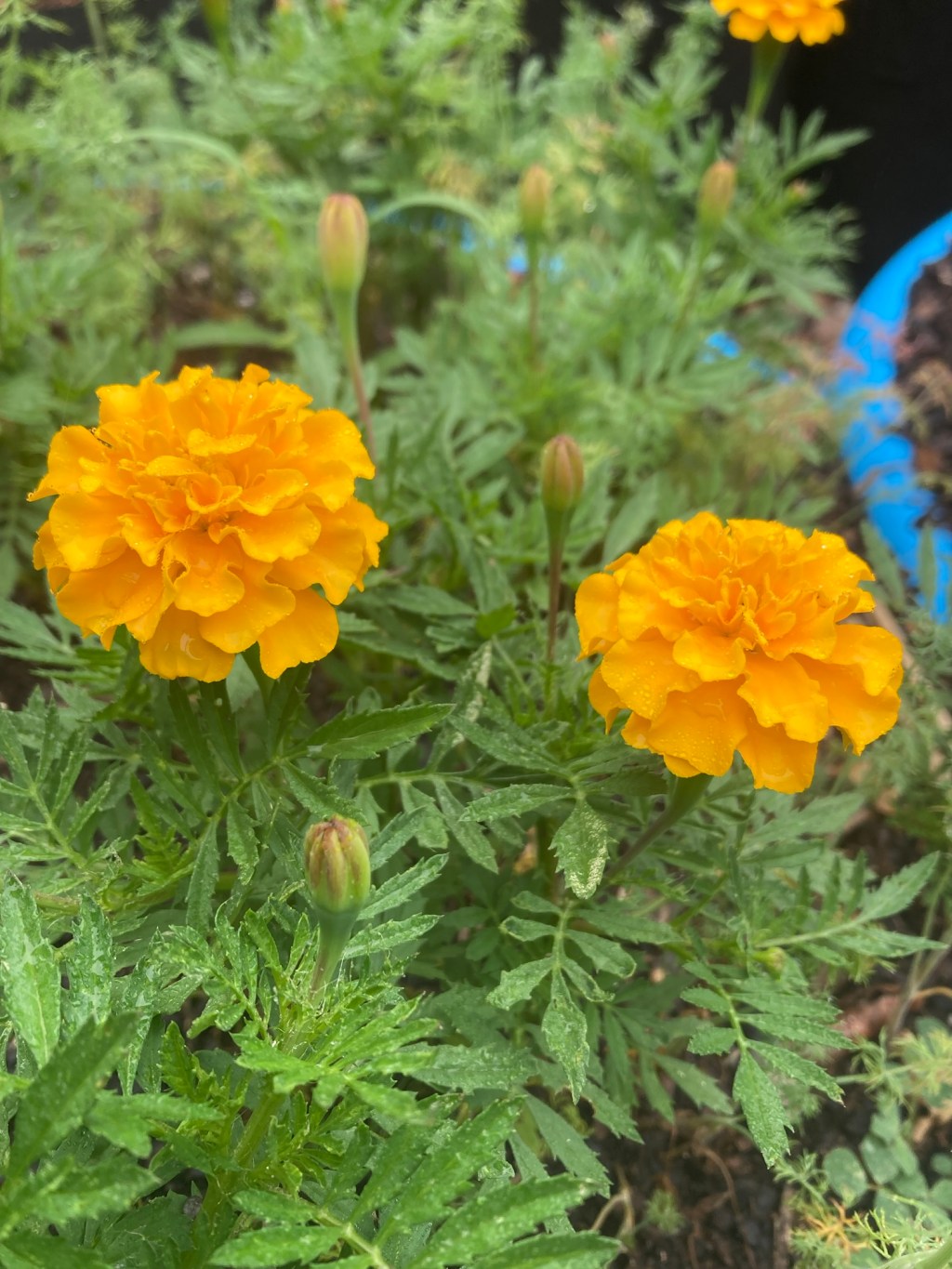
    We are also trying Marigold, Nasturtium, Calendula, and native Purple Clover (not a true clover, I believe). These will be beautiful summer and autumn blossoms if the grasshoppers don’t get to them first. I am looking forward to a long season of growing!

    I thought I would include in this post a “Garden’s Most Wanted” list as a way to track the garden visitors we get this year. It’s a fun way to stay involved in your garden throughout the year and a reminder that we are part of nature and can make welcoming homes for all sorts of critters without trying very hard. If you’d like to, make your own wish list for garden critters and see what you can find throughout the season — this also makes an enjoyable activity for kids and gets them outside in the dirt. Think of it as a nature-themed scavenger hunt.

    GARDEN VISITORS (no particular order)

    Monarch Butterfly

    Toad or Frog

    Bumble Bees

    Praying Mantis

    Goldfinch bird

    Ladybug (check!)

    Lacewing

    Dragonflies/Damsel Flies

    Yellow Garden Spider

    Orb Weaver Spider

    I’ll leave this list at 10 for now and see how many we can spot in the next few months. Of course I will update with pictures if I spot any and this list is not definitive so I am sure there will be many more entries to make that I am not even thinking of right now. I hope you’ll join me in this fun garden activity and share whatever you find with me.

    Thanks for reading!

  • Chaos Gardening

    Chaos Gardening

    C – Choose and collect your plants. This is a fairly straightforward step. It doesn’t have to be a specific type, it doesn’t have to be native plants (although that would be cool). The first consideration that you should make is what you like and therefore what you want popping up in your garden. Explore different colors and different heights, different textures. Try a mix of perennials that come back year after year and annuals that you start each season. Try to line up blooming windows to keep something always blooming in your garden throughout the year.

    I started out gardening with an affinity towards vegetables and that was basically it. It wasn’t until later I started to appreciate annuals like marigolds because of what they did for my vegetable garden. After that, I started to explore perennials. I enjoyed them because I didn’t have to start them every year. They became a big part of celebrating spring and watching the garden come back to life after hard winters. When the sedum would start creeping back out of the soil or the yarrow’s green leaves first pressed their way past the mulch, it fills you with joy that the winter is ending and the garden is returning.

    Over the years, I have also collected the seed heads from any attractive flowers I find blooming in our neighborhood. We take walks down an alleyway nearby and it is filled with Feverfew and Flax. Pinching the seeds off, I spread them in my garden and wait for them to grow. The added benefit of collecting seeds from local plants is that you know they grow well in your area with minimum care.

    Feverfew, in the daisy family. We collected seeds this year and spread them in our garden.

    We are currently growing Yarrow, Echinacea, Sedum, Mint, Anise Hyssop, Salvia, Bachelor’s Button, Knautia, Lamb’s Ear and Black Eyed Susans in our container garden. Our Chamomile, Prairie Sunflower, and Borage are such aggressive self-seeders that they are almost like perennials – I hardly ever have to plant any new ones. I enjoy annuals like Aster, Marigold, and Red Clover. The clover is nice because it grows prolifically but does not crowd the other plants, keeping low and sending up little red flowers here and there during the early summer. If grown densely enough, it can act as a living mulch or groundcover to help retain more moisture.

    H – Host plants. Once I began to appreciate flowering perennials, I took an interest in choosing native plants to our area in order to attract local pollinators and beneficial insects. Looking online, I could find native perennials as well as a list of insects that use these plants as hosts. This means they use the plants during a significant portion of their lifecycle, not only for food. I began to plant native grasses, as well as hardy groundcovers – some without flowers and some with flowers.

    Praying mantis. There is a native variety and an introduced variety.

    Once I took an interest in pollinators and beneficial insects, my gardening style changed dramatically. I was no longer interested in vegetables alone, isolated from everything else. I was no longer interested in straight lines and rows or arrangements. This is perhaps the moment ‘chaos gardening’ took hold in me. I began to buy wildflower seeds and spread them in every nook and crevice I could find. This year we are beginning a Goodwork project in cultivating milkweed plants.

    Milkweed is the host plant and main food source of the monarch butterfly. The prairie sunflower that grows so aggressively in our area attracts the beautiful yellow goldfinch that pecks at the little sunflower seeds in the early mornings. Our grasses attract dragonflies. The chamomile is a favorite of the hoverflies and the bumblebees. This post is not about insects, though they’d be elated if your garden went native!

    Milkweed seeds collected in the fall. Milkweed requires a cold period before germination.

    A – Abandon lawns. This one may ruffle some feathers. I understand the utility of a manicured lawn and I understand there is no doing away with lawns completely. But if I can inspire someone to turn a portion of their labor-intensive yard into a chaos garden, host to half a dozen or more species of beneficial insects and wildlife, I would be glad.

    In talking to the adults of my life who must care for their lawn, either as required by an HOA or out of a sense of duty and order, I have found that lawns tend to be expensive nuisances. They tend to become patchy during periods of inconsistent care, they require regular mowing during the summer months which either costs time and effort or money in outsourcing this chore. Water isn’t cheap and a good portion of it is wasted on lawns due to evaporation or runoff. Products for fertilization or the killing of weeds can become costly – as well as killing the beneficial biology in both the soil and surrounding areas. Not to mention the various mechanical equipment requirements needed – lawnmower, aerator, de-thatcher etc.

    Why not save your back and your budget by switching all or a portion of your lawn to low-maintenance, low-tech chaos gardening methods? Maybe keep the front lawn for appearances and turn the back into a tapestry of colors and textures bursting with all sorts of characters. Spare your back, save some cash, replace your grass.

    Purple blooms and a little green alien visitor,

    O – Organized disorder. That is the name of the game. The more straight lines and clean areas, the less life a garden is going to support. Gardening is dirty, it can be downright disorganized and ugly at times. That does not mean it is an unhealthy garden. The chaos garden doesn’t have different areas for different types of plants. Old, decaying material is not cleaned up right away. That’s okay, more space for bugs to overwinter and food for worms as it breaks down. It is all part of the plan – maybe not your plan as the gardener, but the garden’s plan as a unified and healthy entity.

    Your chaotic garden should also suit your needs and interests, too –after all, you are the gardener and you should enjoy gardening. One should account for seating areas, paths for easy access to every part of your garden, and the occasional marker in order to remember what is growing where. I love it when I can walk people through my garden and rattle off the names of all the plants I have going. Not sure if they care but I like it! And when you have a chaotic garden, it sometimes helps to have a little signage here and there to identify the main players.

    S – Sprawl and Serendipity. Happy surprises. It brings such joy to see things start to thrive in your garden. You can feel a sense of pride that you have created such a fertile corner of the world, that things grow naturally and without much assistance. A sense of creativity pervades this practice – you almost feel like you were the one to create this world, or at least that you had a hand in it, and this makes you feel close to divine.

    Black eyed susans. They attracted a whole bunch of different insects!

    This sense of mastery and creation is also overshadowed, from time to time, by the many little surprises that take place in the garden which you know you had no hand in. It may be a ‘volunteer’ sprout that comes up unexpectedly in the corner. We get volunteer radishes occasionally, due to some neglect in previous years that allowed several radishes to set seeds. Or maybe it’s a bundle of insect eggs you find beneath a leaf. An earthworm, a ladybug, a praying mantis. We found a handful of baby toads in our garden one year, using our thai red chili plants as protective cover from the hungry birds. It always made our day to see them hopping from plant to plant as we watered.

    As your chaos garden begins to thrive, you may notice yourself collecting the seed heads and spreading seed haphazardly. You may take an unprecedented amount of cuttings that all begin to explode with life. Don’t worry, there is always room in the garden for more plants. The garden has a special way of expanding each year. Let its sprawl slowly take over your life.

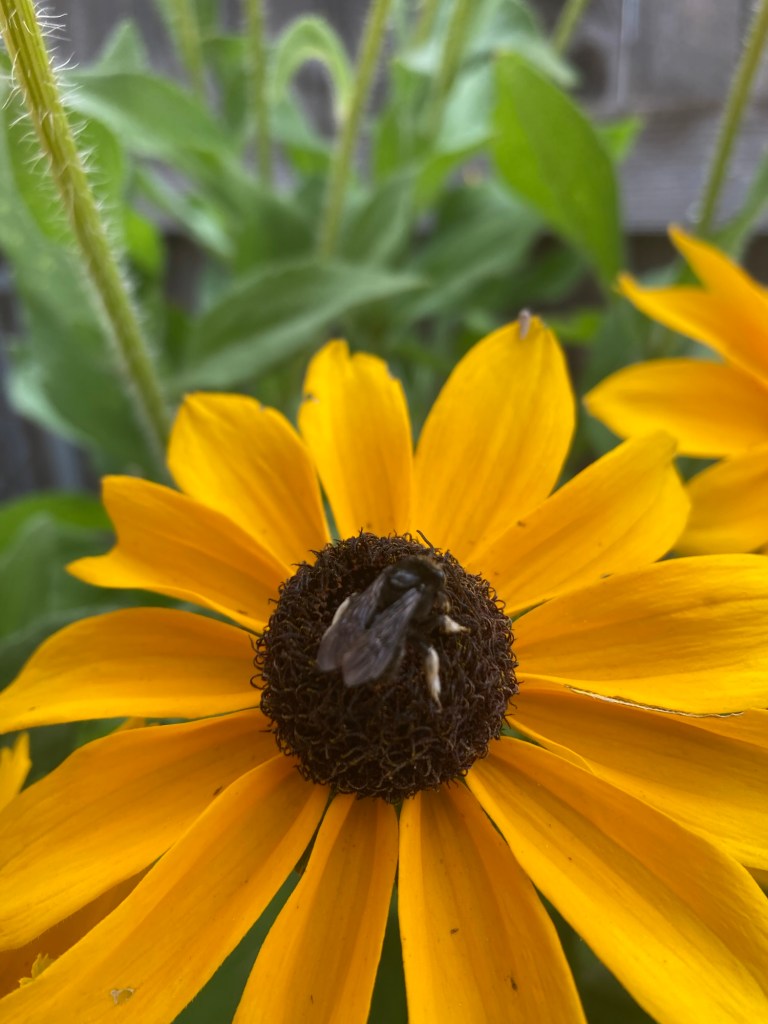
    A bee on our Black eyed susans.

    John Muir noted that if you pulled something in Nature, you would see that it was attached to everything else. These happy surprises in the garden remind us that we are part of nature, too, and witnessing that fact each day can do wonders for your mood and outlook. Wander the garden with your hands clasped behind your back and your eyes calmly fixed on each plant as you pass by. Smile quietly and take it all in as you meander through. When you slow down, when you pay attention, you get to be part of some truly remarkable events. Events so small and so quick, it is almost as if they hadn’t happened. Yes that is a line from Watchmen, that doesn’t make it any less poignant.

    Anyway, here are some photos for your scrolling pleasure.