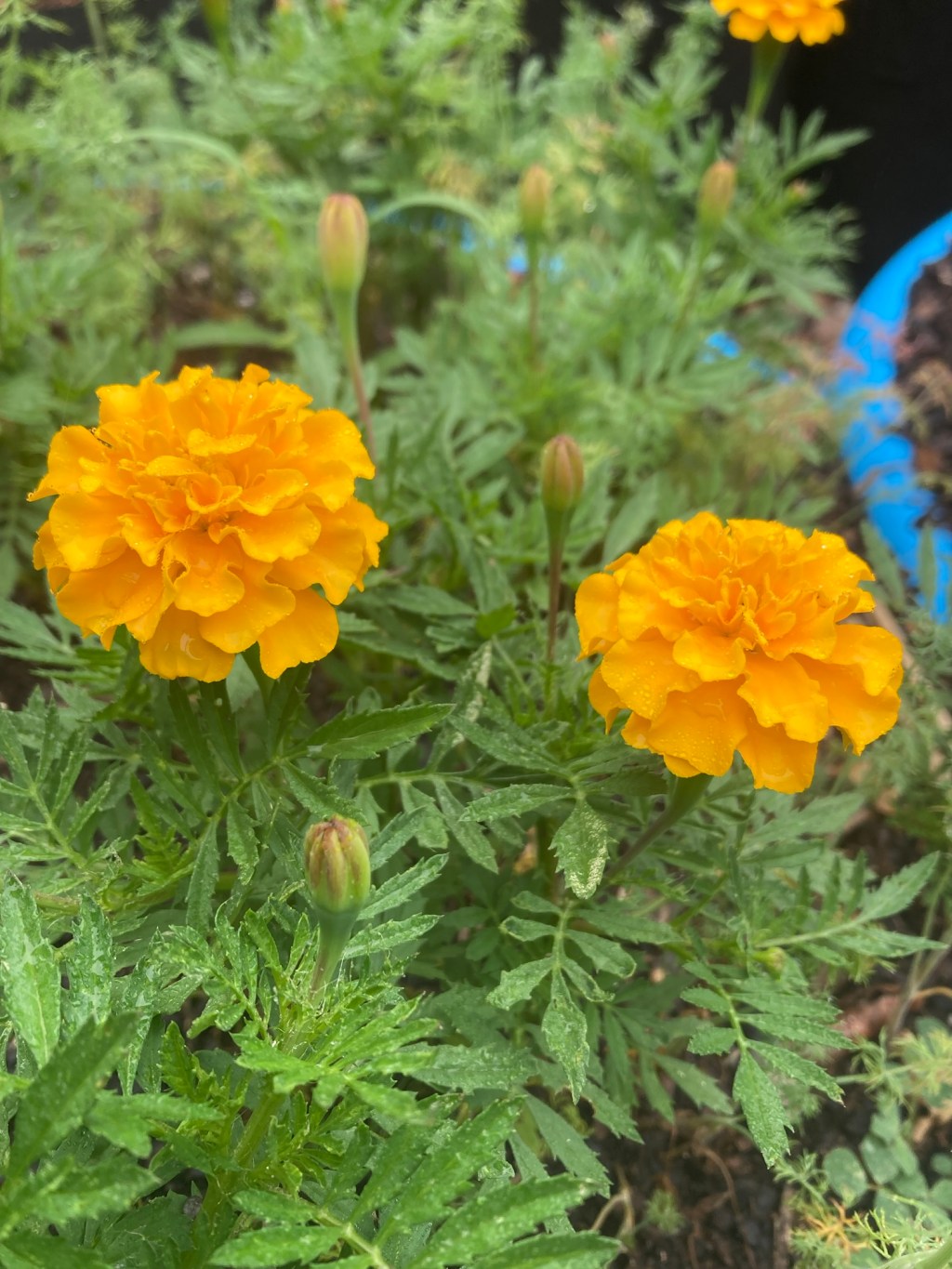
C – Choose and collect your plants. This is a fairly straightforward step. It doesn’t have to be a specific type, it doesn’t have to be native plants (although that would be cool). The first consideration that you should make is what you like and therefore what you want popping up in your garden. Explore different colors and different heights, different textures. Try a mix of perennials that come back year after year and annuals that you start each season. Try to line up blooming windows to keep something always blooming in your garden throughout the year.
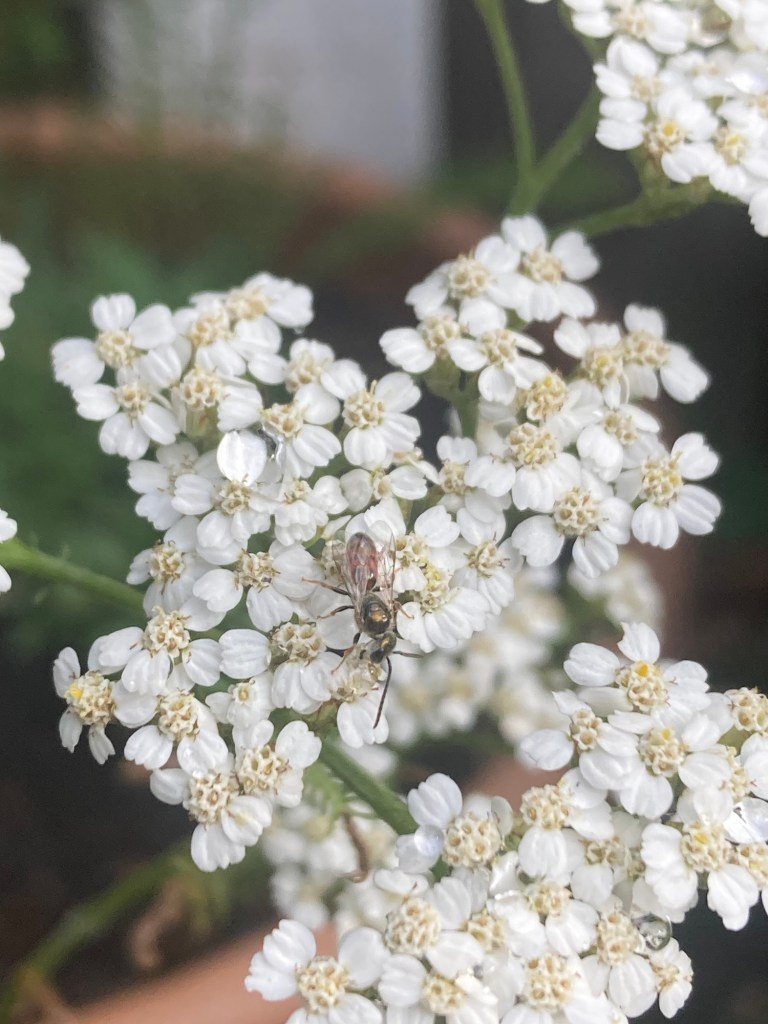
I started out gardening with an affinity towards vegetables and that was basically it. It wasn’t until later I started to appreciate annuals like marigolds because of what they did for my vegetable garden. After that, I started to explore perennials. I enjoyed them because I didn’t have to start them every year. They became a big part of celebrating spring and watching the garden come back to life after hard winters. When the sedum would start creeping back out of the soil or the yarrow’s green leaves first pressed their way past the mulch, it fills you with joy that the winter is ending and the garden is returning.
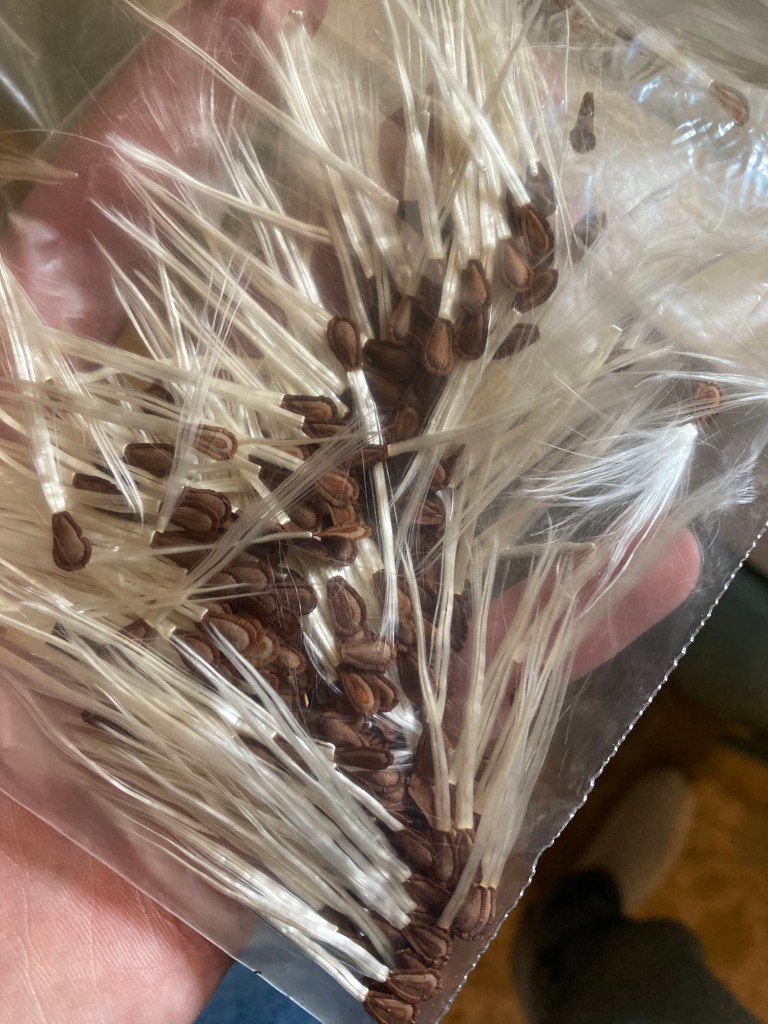
Over the years, I have also collected the seed heads from any attractive flowers I find blooming in our neighborhood. We take walks down an alleyway nearby and it is filled with Feverfew and Flax. Pinching the seeds off, I spread them in my garden and wait for them to grow. The added benefit of collecting seeds from local plants is that you know they grow well in your area with minimum care.
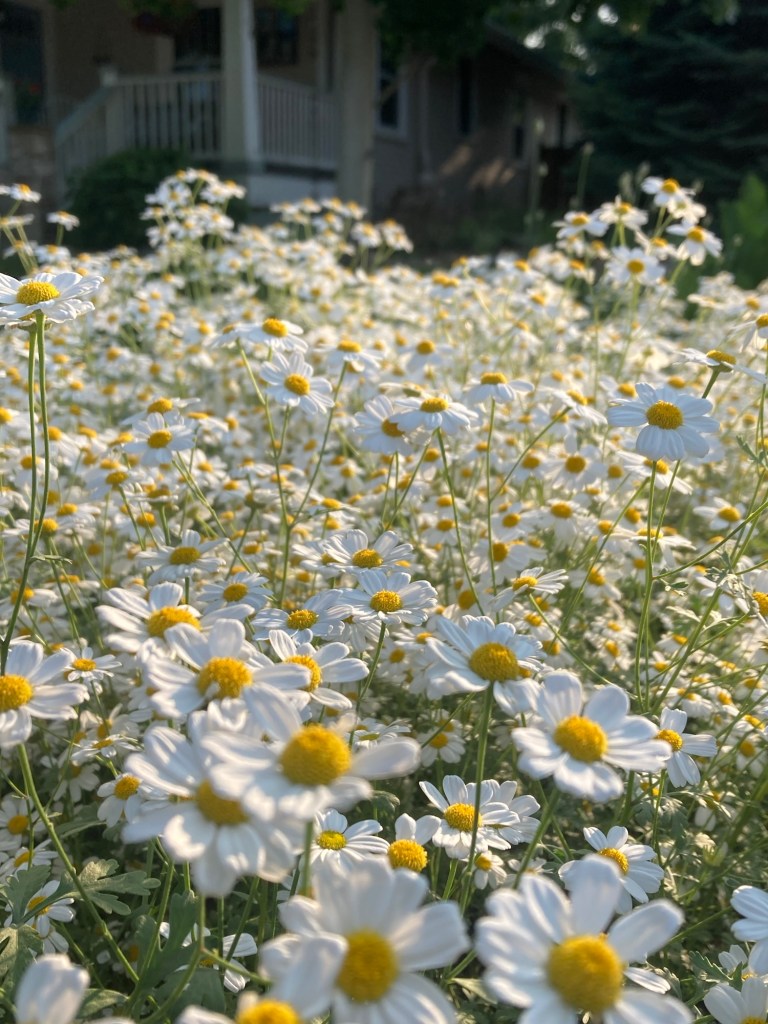
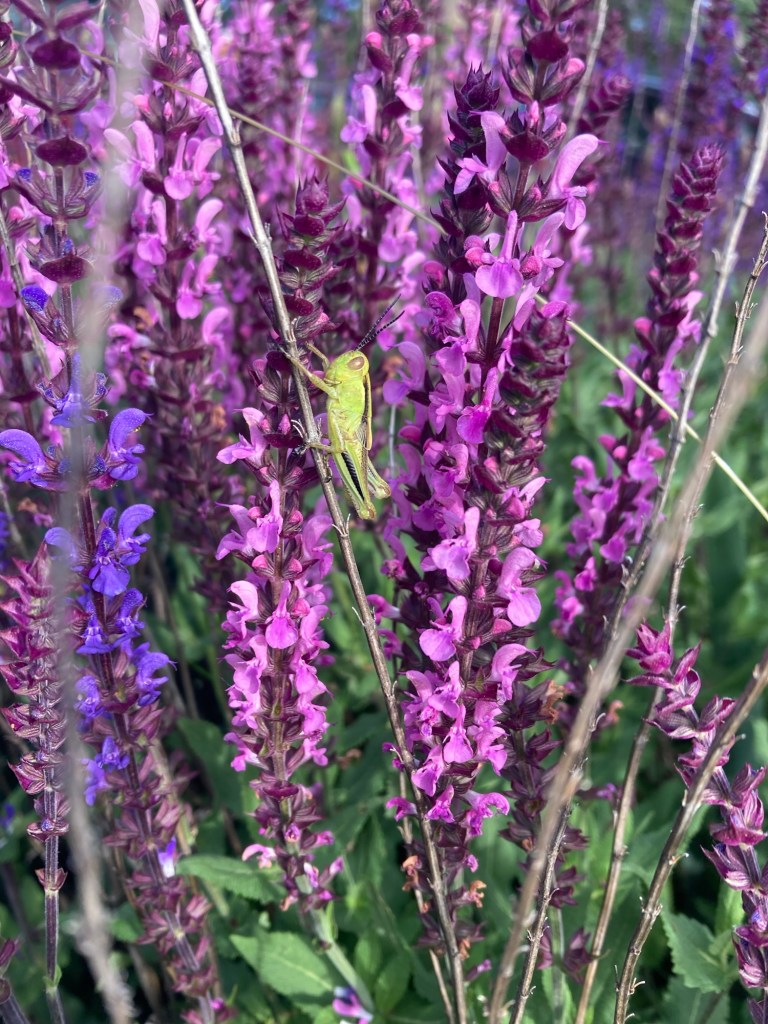
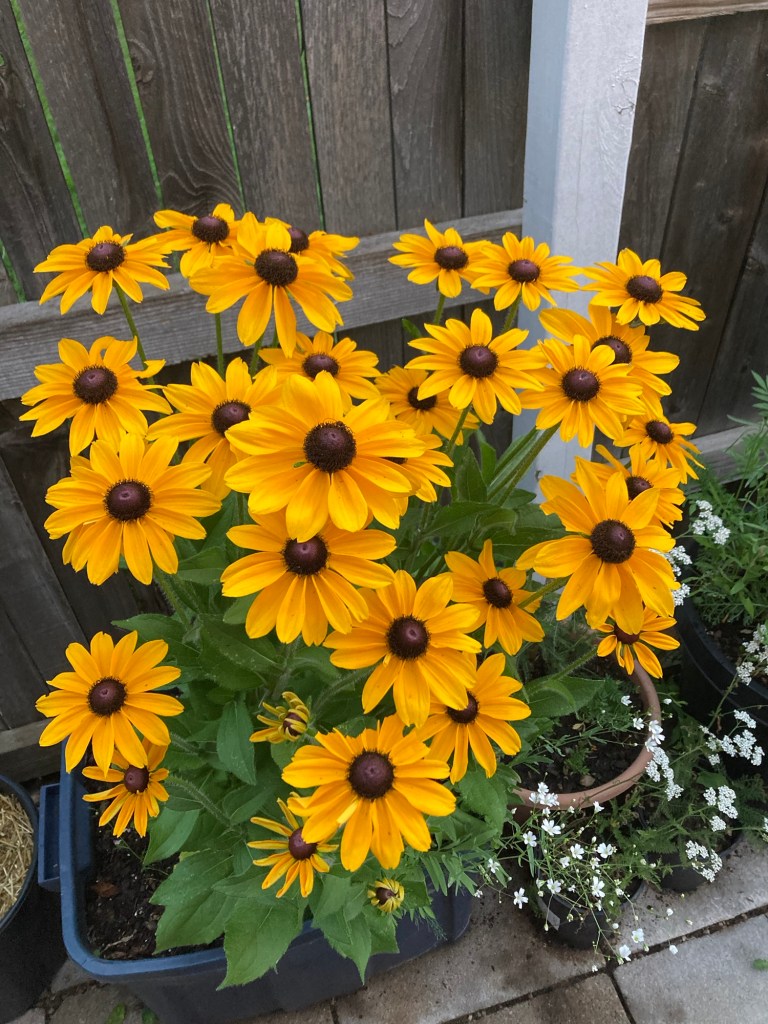
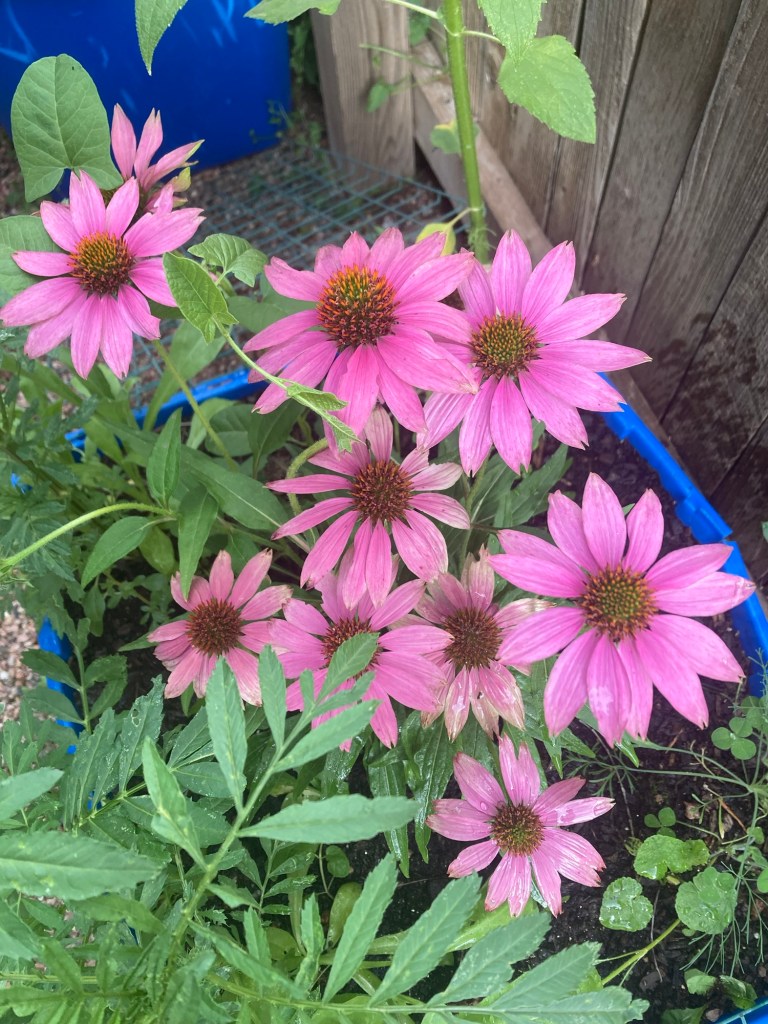
We are currently growing Yarrow, Echinacea, Sedum, Mint, Anise Hyssop, Salvia, Bachelor’s Button, Knautia, Lamb’s Ear and Black Eyed Susans in our container garden. Our Chamomile, Prairie Sunflower, and Borage are such aggressive self-seeders that they are almost like perennials – I hardly ever have to plant any new ones. I enjoy annuals like Aster, Marigold, and Red Clover. The clover is nice because it grows prolifically but does not crowd the other plants, keeping low and sending up little red flowers here and there during the early summer. If grown densely enough, it can act as a living mulch or groundcover to help retain more moisture.
H – Host plants. Once I began to appreciate flowering perennials, I took an interest in choosing native plants to our area in order to attract local pollinators and beneficial insects. Looking online, I could find native perennials as well as a list of insects that use these plants as hosts. This means they use the plants during a significant portion of their lifecycle, not only for food. I began to plant native grasses, as well as hardy groundcovers – some without flowers and some with flowers.

Once I took an interest in pollinators and beneficial insects, my gardening style changed dramatically. I was no longer interested in vegetables alone, isolated from everything else. I was no longer interested in straight lines and rows or arrangements. This is perhaps the moment ‘chaos gardening’ took hold in me. I began to buy wildflower seeds and spread them in every nook and crevice I could find. This year we are beginning a Goodwork project in cultivating milkweed plants.
Milkweed is the host plant and main food source of the monarch butterfly. The prairie sunflower that grows so aggressively in our area attracts the beautiful yellow goldfinch that pecks at the little sunflower seeds in the early mornings. Our grasses attract dragonflies. The chamomile is a favorite of the hoverflies and the bumblebees. This post is not about insects, though they’d be elated if your garden went native!
A – Abandon lawns. This one may ruffle some feathers. I understand the utility of a manicured lawn and I understand there is no doing away with lawns completely. But if I can inspire someone to turn a portion of their labor-intensive yard into a chaos garden, host to half a dozen or more species of beneficial insects and wildlife, I would be glad.
In talking to the adults of my life who must care for their lawn, either as required by an HOA or out of a sense of duty and order, I have found that lawns tend to be expensive nuisances. They tend to become patchy during periods of inconsistent care, they require regular mowing during the summer months which either costs time and effort or money in outsourcing this chore. Water isn’t cheap and a good portion of it is wasted on lawns due to evaporation or runoff. Products for fertilization or the killing of weeds can become costly – as well as killing the beneficial biology in both the soil and surrounding areas. Not to mention the various mechanical equipment requirements needed – lawnmower, aerator, de-thatcher etc.
Why not save your back and your budget by switching all or a portion of your lawn to low-maintenance, low-tech chaos gardening methods? Maybe keep the front lawn for appearances and turn the back into a tapestry of colors and textures bursting with all sorts of characters. Spare your back, save some cash, replace your grass.
O – Organized disorder. That is the name of the game. The more straight lines and clean areas, the less life a garden is going to support. Gardening is dirty, it can be downright disorganized and ugly at times. That does not mean it is an unhealthy garden. The chaos garden doesn’t have different areas for different types of plants. Old, decaying material is not cleaned up right away. That’s okay, more space for bugs to overwinter and food for worms as it breaks down. It is all part of the plan – maybe not your plan as the gardener, but the garden’s plan as a unified and healthy entity.
Your chaotic garden should also suit your needs and interests, too –after all, you are the gardener and you should enjoy gardening. One should account for seating areas, paths for easy access to every part of your garden, and the occasional marker in order to remember what is growing where. I love it when I can walk people through my garden and rattle off the names of all the plants I have going. Not sure if they care but I like it! And when you have a chaotic garden, it sometimes helps to have a little signage here and there to identify the main players.
S – Sprawl and Serendipity. Happy surprises. It brings such joy to see things start to thrive in your garden. You can feel a sense of pride that you have created such a fertile corner of the world, that things grow naturally and without much assistance. A sense of creativity pervades this practice – you almost feel like you were the one to create this world, or at least that you had a hand in it, and this makes you feel close to divine.
This sense of mastery and creation is also overshadowed, from time to time, by the many little surprises that take place in the garden which you know you had no hand in. It may be a ‘volunteer’ sprout that comes up unexpectedly in the corner. We get volunteer radishes occasionally, due to some neglect in previous years that allowed several radishes to set seeds. Or maybe it’s a bundle of insect eggs you find beneath a leaf. An earthworm, a ladybug, a praying mantis. We found a handful of baby toads in our garden one year, using our thai red chili plants as protective cover from the hungry birds. It always made our day to see them hopping from plant to plant as we watered.
As your chaos garden begins to thrive, you may notice yourself collecting the seed heads and spreading seed haphazardly. You may take an unprecedented amount of cuttings that all begin to explode with life. Don’t worry, there is always room in the garden for more plants. The garden has a special way of expanding each year. Let its sprawl slowly take over your life.
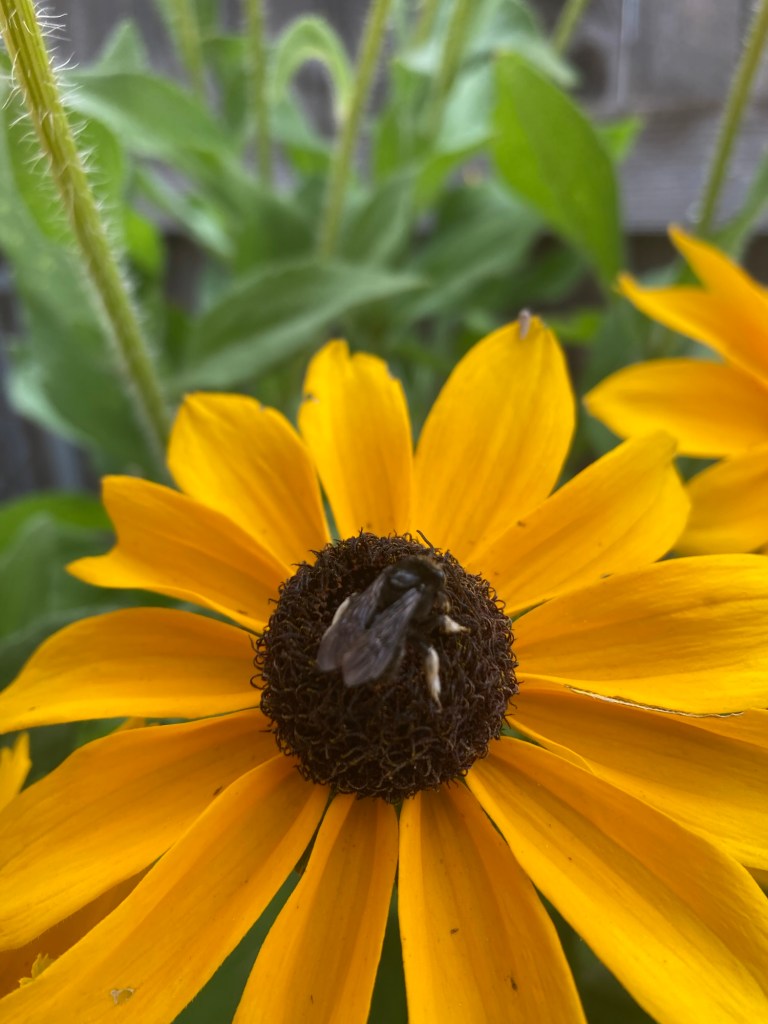
John Muir noted that if you pulled something in Nature, you would see that it was attached to everything else. These happy surprises in the garden remind us that we are part of nature, too, and witnessing that fact each day can do wonders for your mood and outlook. Wander the garden with your hands clasped behind your back and your eyes calmly fixed on each plant as you pass by. Smile quietly and take it all in as you meander through. When you slow down, when you pay attention, you get to be part of some truly remarkable events. Events so small and so quick, it is almost as if they hadn’t happened. Yes that is a line from Watchmen, that doesn’t make it any less poignant.
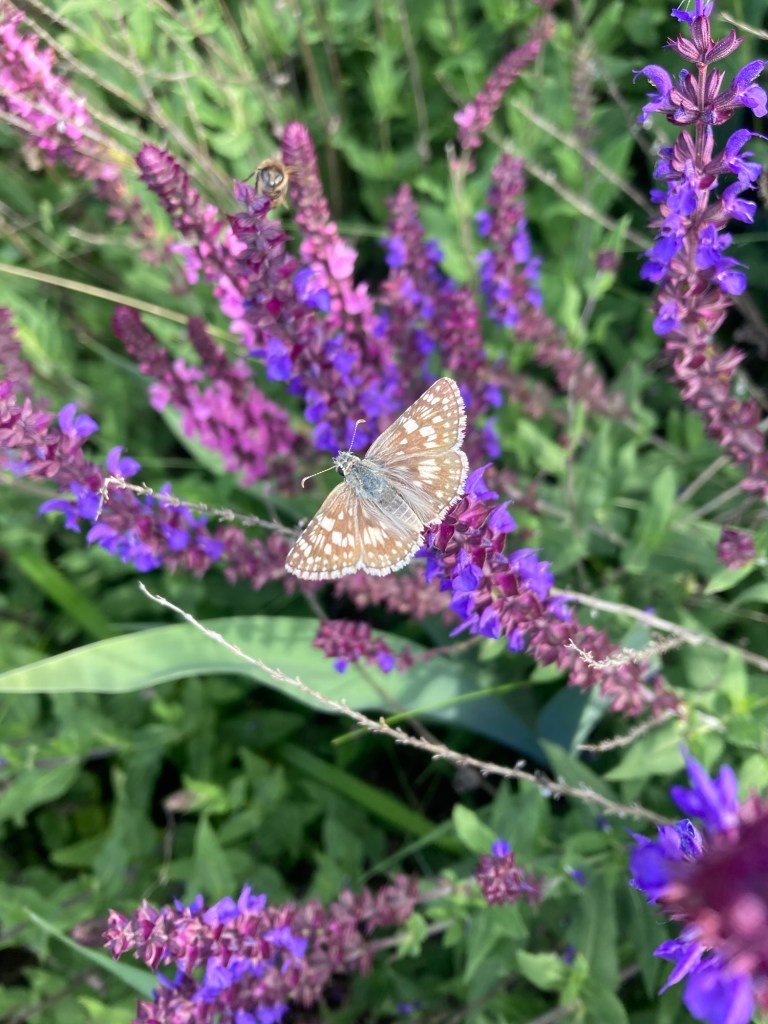
Anyway, here are some photos for your scrolling pleasure.

 Goodwork Almanac