Tag: book-review

  • Three Lessons from Poor Richard’s Almanack

    Disclaimer: Although I am working toward it, I am currently a professional in nothing and an amateur in many things. At the end of the day, I am simply someone who likes to write and to garden. Always do your own research or seek out guidance from professionals doing goodwork in their field.

    As a younger man just getting my start in the world of work, I found myself wanting more structure and consistency than I was used to having. I had just finished a modified trade school experience amid the covid lockdowns and there was still a lot of uncertainty – there would be a lingering sense of it for quite some time. Not knowing what to do with my undeveloped welding skills, I got the first decent job I could find in manufacturing.

    At the time, I was living in the basement room of a house I shared with two roommates. I desperately wanted better but was happy to have my basic needs met. Each day, I went into work to spool cables and solder connector pins.  It was not glamorous, but it wasn’t the horrific stress and strain I thought manufacturing would be, either. There were many nice people and even some friends to be had there. But I couldn’t shake the feeling that I was wasting my time. I was impatient for a better life in which I had the resources I needed to enjoy myself, to pursue meaningful goals, to create projects and art, to travel and meet people, to provide opportunities for others and to help them when I could. But I felt stuck, dragging myself into work each morning to continue the same drudgery as the day before. It never let up and it never meant anything more. I wondered how to get out.

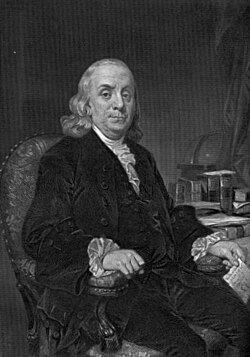
    I started to listen to the sayings and proverbs of Poor Richard’s Almanac, written by Ben Franklin, while I worked on my cables. Maybe it was the sayings themselves or the soothing voice reading them but for whatever reason, they brought me great comfort. They would talk about work, money, time, or virtue and I was slowly convinced that these messages represented the way forward. I wanted structure and consistency and here were these proverbs preaching just that. I wanted a plan to move forward, to get out, and these one-or-two-line sayings helped me take the first steps. Below are some of the lessons I learned from the sayings of Ben Franklin, collected from Poor Richard’s Almanac.

    Lesson One: Don’t Waste Your Time.

    Photo by Ono Kosuki on Pexels.com

    Do you love life? then don’t squander time, for that is the stuff life is made of.

    Poor Richard’s sayings about time are geared toward encouraging productive activity. It is painfully true that we only have a limited time allotted to each of us. He encourages us, “To be up and be doing and doing to the purpose.” The idea is to find your purpose and to use your time as efficiently and as wisely as you can. I wanted that daily trip into work to mean something, I wanted those forty hours of work to work for me. I realized that how I spent my time would deeply affect the trajectory of my life. The paycheck I got every two weeks represented eighty hours of my life that I had exchanged and I wasn’t going to let it be for nothing.

    This may be more relevant than ever with the tools we have at our disposal to waste our time in ever more ingenious ways. With our wasted time, could we learn an instrument, a second language? Could we write a book, play a sport, connect with community? There is always a minute here or there that will be wasted or lost to distractions, but the point is to find your focus again and to take up the responsibility of using your time productively –whatever that means for you and your specific purpose.

    It is at this point we must understand a kind of paradox. We want to live today because tomorrow is not promised to us, but we must act as if tomorrow is promised if we are to make the best decisions today.

    Every day I went into that dead-end job, I felt I was wasting my time. I wanted to live now. What if all the time I had left was wasted going to work, doing these pointless things? But I also realized that in order to build a life that included all the wonderful things I wanted – travel, connection, creativity – I had to believe in the future first and begin to build a life that looked nothing like my dream in order to eventually attain it. In short, I began to believe in effort, patience, and productivity. Though I still struggle with these things, I have made them a practice of my daily work.

    Lesson Two: Work can be a wonderful – and helpful – part of your life.
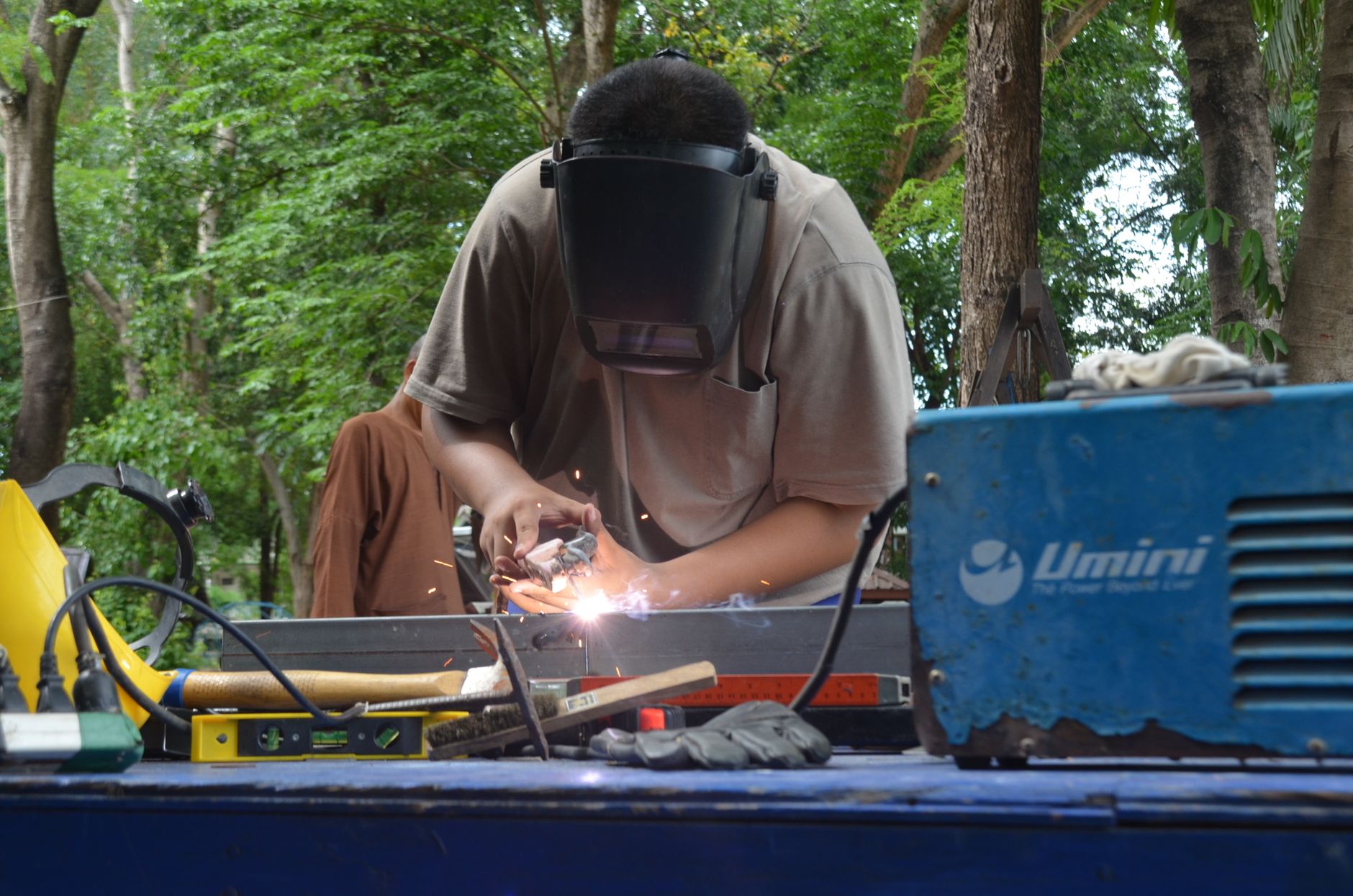
    Photo by Meaw Zara on Pexels.com

    Industry need not wish.

    Poor Richard’s admonitions usually include some mention of industry or hard work. He constantly reassures us of the ability of our work to sustain our lives — “Keep thy shop and thy shop will keep thee.”

    Our relationship to work can become somewhat murky and impersonal. Work can also be an integral part of life, meaning it is integrated into your life, rather than kept at arm’s length. In the past, a craft was so deeply personal that someone’s surname was their profession, and they taught their children and their children’s children their craft, weaving it into the identity of generations.

    It is more common nowadays to have an ambivalent or even negative relationship towards one’s work. For many now, work is just some place they go to in order to pay the bills. Resentment can build toward work when you have no intentional relationship with it.

    I would say it is a rare case that someone will find their most meaningful work right off the bat. For many of us, we will have to wade through several years of dead-end or pointless jobs to make ends meet before we find a mission or calling that inspires us to pursue something greater. I started working in a movie theater at sixteen. I have been a painter, a plumber, a grocery clerk, a nomad farmer. I have worked in manufacturing for several years. It has all continued to develop the skills I need to do the work I really want to do. The moment where everything clicks still eludes me, but I work toward that every day.

    Even after this click occurs, it can be quite some time before you feel effective and competent enough in your work for it to be truly rewarding. But the point is to seek this out. I have known many who wallow in their pointless jobs until they retire. They make sure to remind you that they are not where they want to be. But they also don’t do anything to work toward a more purposeful calling. Their association with work is that it is terrible, something to avoid, and they never pursue a work that can help them fulfill their potential while also providing meaning and order for others. “The trade must be worked at and the calling well-followed,” Poor Richard says.

    As I mentioned, I wanted work to mean something and that means coming away from it having gained more than I’ve lost. I had lost time and energy that I would have rather put towards other things but that meant I wasn’t going to let my gain be for nothing. At times, I denied the things I wanted briefly in order to work towards the things I wanted the most. I followed Poor Richard’s wisdom, “It is easier to suppress the first desire than to satisfy all that follow it.” No small contribution to my eventual success was going to be scoffed at, or, as Poor Richard says, “Many a little makes a nickel.”

    The path is not straightforward or easy but with consistency, we can begin to make our moves.

    Lesson Three: Consistency will take you where heroic effort can’t.

    Photo by Thanh Long Bu00f9i on Pexels.com

    Little strokes fell great oaks.

    Huge undertakings and overnight successes can be enticing concepts to those who have much ambition and not enough patience. You want to work eighty hour weeks, make a massive return on a penny stock, win the lottery, strike it rich. The consistency and patience of daily work can hardly be made to be romantic compared with the richness and aesthetic of the overnight success. But the possibilities of consistency are always far greater than the short-lived win. They are certainly greater than waiting for luck to come save us.

    Once again, Poor Richard’s world involved plain, regular people making a life for themselves and for others. Many of his sayings preach patience, contentment, and consistency as the means to attain the good life.

    It is part of the Goodwork philosophy that we must find work that appeals to our nature and our purpose in order to live a fulfilled life. In this philosophy, work is not merely a means to an end, it is not something you use just to get enough money in order to do what you really want. Work should be a purposeful and meaningful act which allows you to express something deeply personal about yourself and your relationship to the world. And when that is not available, we should be steadily working to get to that point.

    I knew if I quit that awful job, I would find myself in another one not long after. As long as I refused to engage with the inconvenience of work I did not like, I would never have the resources or skills to find the work that was meant for me. I looked to the summit of the mountain, but I had no respect for the first steps, so I never moved. I wanted to fall into my ideal rather than work up to it. Having found respect for the process, one can begin to move within its channels. But we must be content to be beginners, humbled by new experiences every day, in order to attain to the level of masters.

    I am a huge fan of any philosophy that includes some element of continual improvement. Why? Because goals, aspirations, and ambition that swell beyond actionable steps can actually demotivate you and cause you to disengage from the work that could be accomplished now. This initial work is inevitably linked to the end goal, a goal which may be massive, and they are connected by a thread called continual improvement. We have to learn to be okay with being beginners. We have to believe that any progress is good progress. We have to believe that we have a hand in our future, that we have the power to continually improve our circumstances so that we may do the most meaningful work we can. For ourselves as well as for others, we make the slow trudge of consistent effort. Or, as Poor Richard says, “Vessels large may venture more but little boats should stick near shore.”

    Poor Richard sends a message throughout his collection of wisdom to be steady, settled, and careful in your daily business. This involves attention to detail and diligence in attending matters that we sometimes have impatience or disdain for. For it is true, “a small leak will sink a great ship.”

    Work hard, don’t spend more than you make, and use your time wisely. As you can see, these lessons are the same basic lessons we have always known and the same lessons we have always had to relearn as time goes on. While today we may have several schemes or hacks for going about these goals, Ben Franklin through his pseudonym Poor Richard, preached virtues like diligence, frugality, and industry as intentional, daily practices that would do more for people than their short-lived schemes. While I was certainly impatient when I was younger, I realize now that the best accomplishments come from the long game, the committed endurance of an entire life.

    For those who are interested, all of Poor Richard’s sayings have been collected in a work called ‘The Way to Wealth’ by Benjamin Franklin. I will include a link here.

    Thanks for reading!
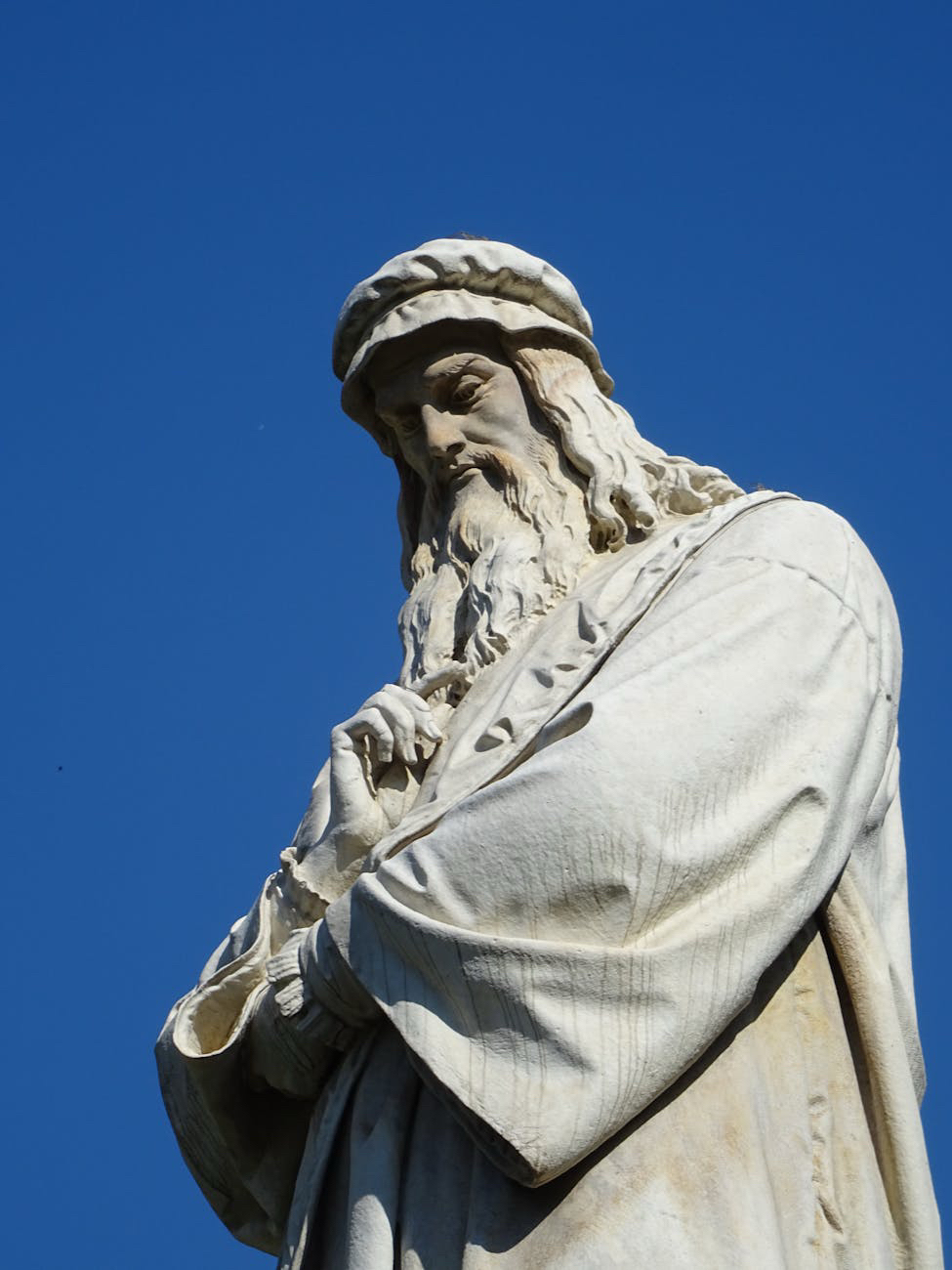
  • Leonardo Da Vinci

    Leonardo Da Vinci

    Spotlight on Goodwork

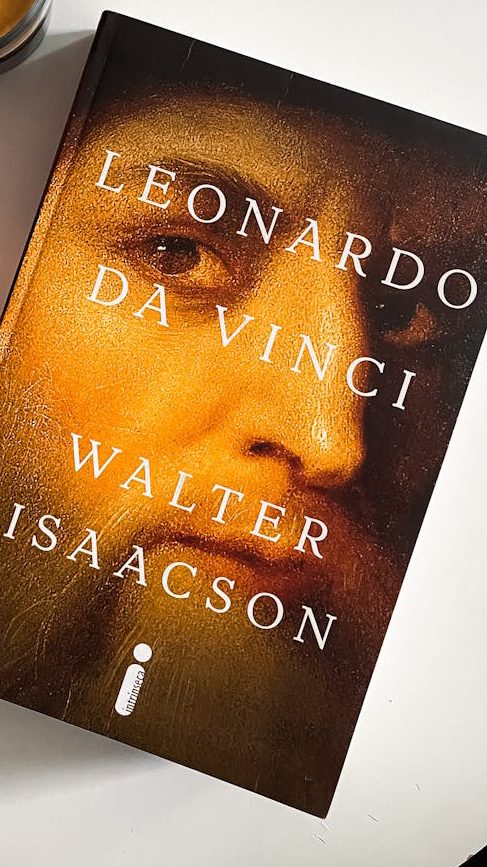
    I have recently had the pleasure of exploring the life, work, and creative mind of Leonardo Da Vinci, mainly through Walter Isaacson’s biography which I highly recommend and also through Leonardo’s collected writings from his notebooks. Originally, I had wanted to know more about Leonardo because of a vague attraction to the idea of a natural genius, the Renaissance man, as well as the mystery that surrounded him as a figure. Before reading into him, I only knew of a handful of his most famous artworks and very little of his actual life. I will not attempt to reproduce his biography here, though I recommend to anyone who is interested to research him more at your convenience. What I will attempt to put down here is a list of lessons I had gleaned from the man and his life while reading about his endeavors, his beliefs, and his character. I feel these lessons relevant to goodwork and to daily life in general.

    Lesson One – genius is comprised of boundless curiosity.

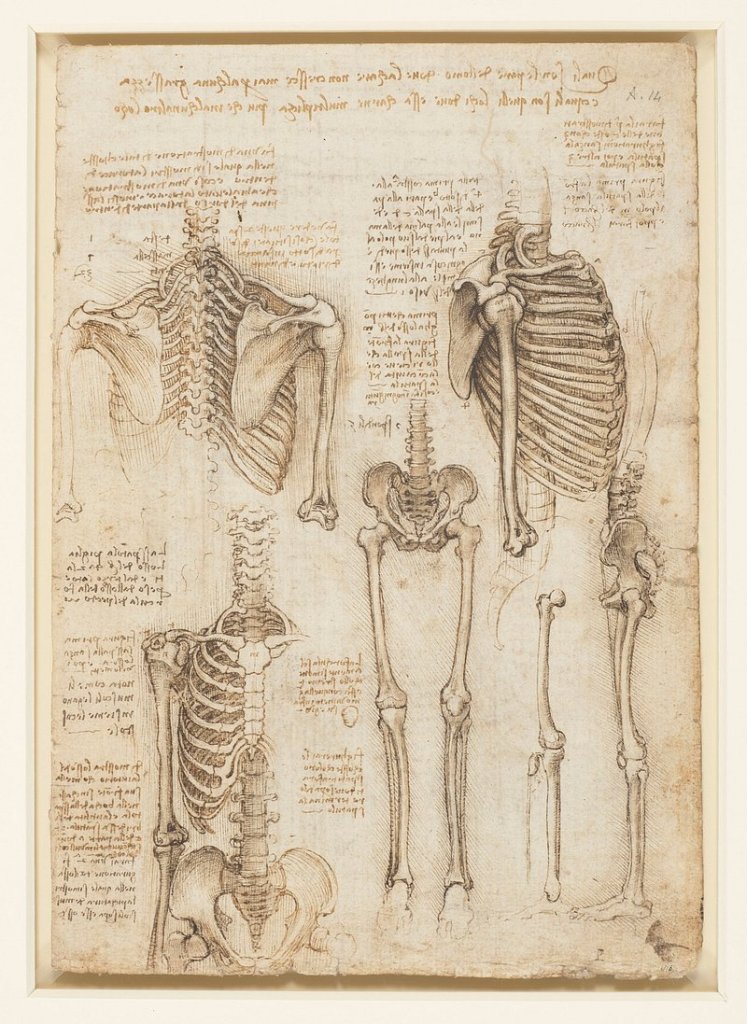
    Leonardo da Vinci’s Recto The skeleton.

    More:

    Original public domain image from Wikimedia Commons

    Leonardo was born as an illegitimate son to a prominent notary. Because his father did not recognize him as legitimate, he was not expected to follow him in his trade as a notary. This was quite fortunate, as it gave Leonardo the freedom to indulge in many other interests and paths throughout his life. Perhaps beginning in this way, without a prescribed path, forced him to consider every path as possible. As a young man he explored all of these possibilities with an insatiable curiosity, always attracted to questions of natural science and never satisfied with routine information.

    A famously quoted entry in one of his to-do lists was, “Describe the tongue of a woodpecker.” This gives us some insight into the level of detail with which he viewed the mundane, the things which are often taken for granted. Leonardo obsessively studied the nature of water to the point of hyperfixation. His notebook is filled with elaborate drawings of water in various states of motion and he attempted to learn more about the mechanics of water over the course of his life, pursuing many inquiries into the budding science of hydraulics. Einstein, similarly, said that his genius was due mostly to the fact that he “stayed with problems longer.” Not content with initial conclusions or the dismissive attitude of convention, the very curious explore details as far as they will lead them – in Einstein’s case it led him into the subatomic realm. In Leonardo’s case, it led him into a deep exploration of the natural world. They often went further than others in an attempt to understand and as a result they could not easily be understood by others. But in each case, Einstein’s as well as Leonardo’s, it was a great deal owing to curiosity that their genius was so developed and so famous.

    Lesson Two – the desire to be useful.

    Leonardo wrote in his journal, “The power of my limbs will fail me before the power of being useful.” Such a simple sounding and humble desire, to continue to be of use as long as one can. I would hardly have expected this to come from a genius of the Renaissance, who I had assumed would be intellectual and concerned with theory, hypotheticals, and fantastical daydreaming. And of course, Leonard was well versed in those things. But he also had this drive to bring his creative ideas into reality in order to make things better, even by small degrees.

    An entertainer and aspiring engineer, he wanted to bring his intense curiosity and exploration of the natural world back into the world of enjoyment, usefulness, entertainment, and fundamental humanity. This desire is actually one of the main tenets of goodwork as a philosophy, to be of use whenever one can. There is also much to say about what this does with one’s relationship with work and with their community. Often, we can lose ourselves in self-referential and abstract work which we do not see completed to its end. In my experience in manufacturing, I have only ever been part of the assembly and construction of certain products, and only in my limited involvement. Feeling immense joy for the completion of a meaningful project and seeing its benefits conveyed to its recipient, the community, or the world is an unfamiliar territory for a lot of modern jobs. That being said, I do believe there are many opportunities to cultivate a sensation of accomplishment and satisfaction and pursue it as part of the purpose of our lives. Not merely to fulfill our own wishes and ambitions but to aspire to be as useful as we can be to others. And not to be contented with one narrow skill or activity which may be of value, but to explore many facets of ourselves that could have valued and useful applications.

    Lesson Three – the multitudes of humanity; jack of all trades, master of none… or one… or two… or…

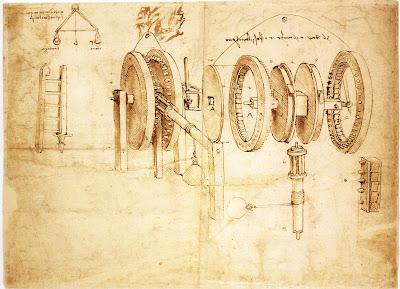
    Leonardo Da Vinci was a polymath, a person of varied and comprehensive learning and skill. As a young man, he was apprenticed to a local Florentine artisan named Verrocchio. Verrocchio was himself a painter, sculptor, and goldsmith, which was not unusual for the time. Many workshops involved interdisciplinary work undertaken by trained artisans who found it natural to combine semi-related pursuits under one roof. As such, Leonardo was trained in the use of many different tools and skills, not only as a painter. This work would benefit him greatly later in life when he found it necessary to build some ingenious tools and machines.

    In the modern age, starting before the Industrial Revolution, people found it wonderfully beneficial to specialize in their profession and to pursue specialization to a greater and greater degree. This can accomplish great economic feats and makes for a highly effective and productive civilization. But the drawbacks, seen in extreme specialization, are a kind of a dehumanizing effect in which one becomes just another cog in a mechanized framework. For some focused and dedicated people, specialization is the name of the game and they may become decorated surgeons of one specific organ, deeply passionate intellectuals involved in one area of academics, or the many outliers who distinguish themselves in physical, spiritual, or economic development which others cannot fathom. And for still many others, the development of multiple interests, skills, passions, and accomplishments feels more human, dynamic, and nuanced.

    Having multiple interests can, in fact, help the development of each of them more than if someone were to develop a myopic view of their pursuit in a vacuum. Leonardo was one of the first people to investigate human anatomy. He recorded his investigations in many intricate and hauntingly beautiful drawings of the musculature, the skeleton, the brain and nervous system, the heart and circulatory system. His science informed his arts and his arts informed his science. Combining different pursuits may shake something loose which helps your development in an unexpected way. One might catch a glimpse at the underlying principles of existence, just by looking at the world from different viewpoints, first as a painter, then a sculptor, then a scientist, then an engineer. Maybe not those things in particular, but in any case, the multitudes of interests you find it necessary to follow in your life. Whether we explore many paths in our lives or dedicate ourselves to a singular ambition, we can do our best work when we are familiar with many different tools.

    Lesson Four – Commitment to life, commitment to mastery.

    The irascible genius who neglects the obligations of his daily life in order to achieve greatness is such a popular story in today’s world that it is practically a cliché. Stories of unfettered obsession and of surpassing one’s limitations excite the mind. In Leonardo’s case, his genius was certainly, at times, of the isolating type. But his story is not one of self-sacrifice for the sake of his work but a story of an extremely disciplined and curious man who did his best to muddle through life while entertaining his drive for mastery.

    Leonardo wrote in his notebook, “A life profitably employed affords a happy death.” He did not mean profitably employed as merely earning a lot of money throughout one’s life but rather being continuously engaged in work that is beneficial, ambitious, beautiful, and meaningful. At the same time as he was engaged in this work, Leonardo always struggled with his attention to detail and his desire to achieve perfection. This led him to leave many works incomplete, such as St. Jerome in the Desert or the Adoration of the Magi. His aim for perfection also led him to spend so long on commissions that payments were refused or fought over and entire artworks abandoned.

    Throughout his life, Leonardo seemed to struggle with a commitment to life and a commitment to mastery. At times, his commitment to perfection prevented him from fulfilling some of those aims that may have been extremely useful and meaningful. At other times, the need to be pragmatic and tactful may have denied him the pleasure of pursuing the perfection he envisioned, spurring him forward. I am sure many of us can relate to this paradox. The obligations and practicality of daily life have us dreaming of a far-off perfection. Our dreams of perfection prevent us from the meaningful work which we could cultivate right here in our daily life. It is a hard lesson that one must learn the hard way, again and again: to balance the commitment we make to life with the commitment we make to mastery.

    Lesson Five – The Magic Square; Collaboration and Individual Achievement.

    One of Leonardo’s ‘hobbies’ was to do mathematical exercises in his notebooks. There are some geometrical calculations that are ornate and useful, though there are some mathematicians that say that Leonardo did not necessarily provide anything new or valuable to the field of mathematics. It was simply another part of his endless curiosity and his exploration of the world in which he found himself.

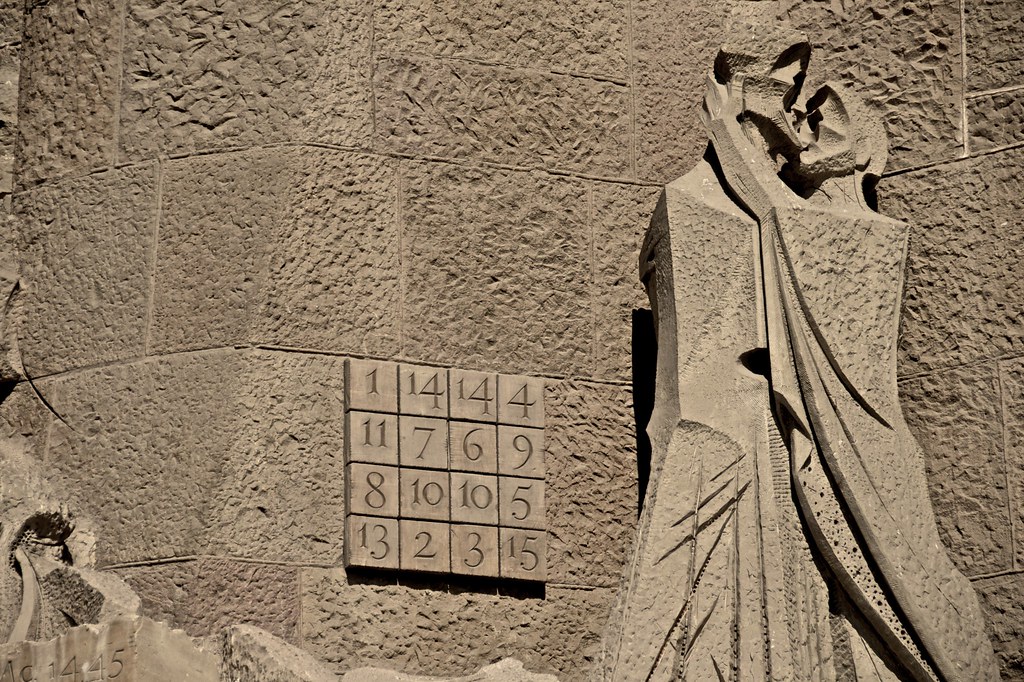
    One particular mathematical exercise he played with over the years is called a ‘magic square’. These magic squares are grids of numbers that add up to the same value whether you are adding the columns, rows, or the main diagonals. (An example is provided in the image above). I do not think the symbolic and metaphorical quality of these exercises were lost on Leonardo, who enjoyed finding harmonies in a complex system comprised of individual parts.

    In fact, the artisan workshops of that age were very much like a magic square, in that collaboration between many individual artists created a harmony that far exceeded any particular individual’s talent. While the products of these workshops were collaborative efforts, it was also important that each individual express themselves exactly as they were, or else the ‘magic square’ would be ruined.

    There are many art pieces of magic squares in Europe that are engraved with the phrase “Whatever thou art, act well thy part.” Whatever you are, act well your part. Paired with this image of mathematical harmony, it is a powerful message about the individual being valued, developed, and attaining natural expression, all while collaborating with others in a harmonious way to create something larger than each of them.

    There are many extreme views that say that only collective realities exist, or only individuals exist, but they lose the nuance of humanity which Leonardo was well aware of and practiced every day; individual expression is just as much a part of humanity as is connection, communication, and harmony. Imagine if Leonardo’s talent was stifled in order to exalt the artists’ collective workshop. Imagine if Leonardo had never made these valuable connections, or never collaborated with other prominent artists of the time. In either case, we would have been denied the beautiful and transcendent works of a genius, of the archetypal Renaissance man.

    Conclusion

    After doing a deep dive into the facts of Leonardo’s life, I have come away with many valuable lessons. While this post is by no means intended as a biography of the man himself, I wanted to put down a handful of these lessons in good work (and goodwork!). For anyone who would like an actual biography of Leonardo, I would recommend reading Walter Isaacson’s ‘Leonardo Da Vinci’ as it is so thorough and thought-provoking as well as being an enjoyable read. If you are interested in hearing some of the man’s thoughts themselves, I would recommend checking out a book on his collected works, typically snippets taken from his many codices.

    As for me, I want to begin following my curiosity more, I want to dedicate myself to mastery and idealism, I want to embrace and cultivate ideas of the fantastical and purely creative imagination, I want to engage in meaningful and useful work each day, and find a workshop of likeminded artisans to share my passion with. For Leonardo!